

Dangote and Ruto to Break Ground on $16bn Lamu Oil Refinery Despite Local Land Protests
Nigerian industrialist Aliko Dangote and Kenyan President William Ruto are preparing to formally launch construction of a $16bn (£12bn) oil refinery in Lamu, a historic coastal tow
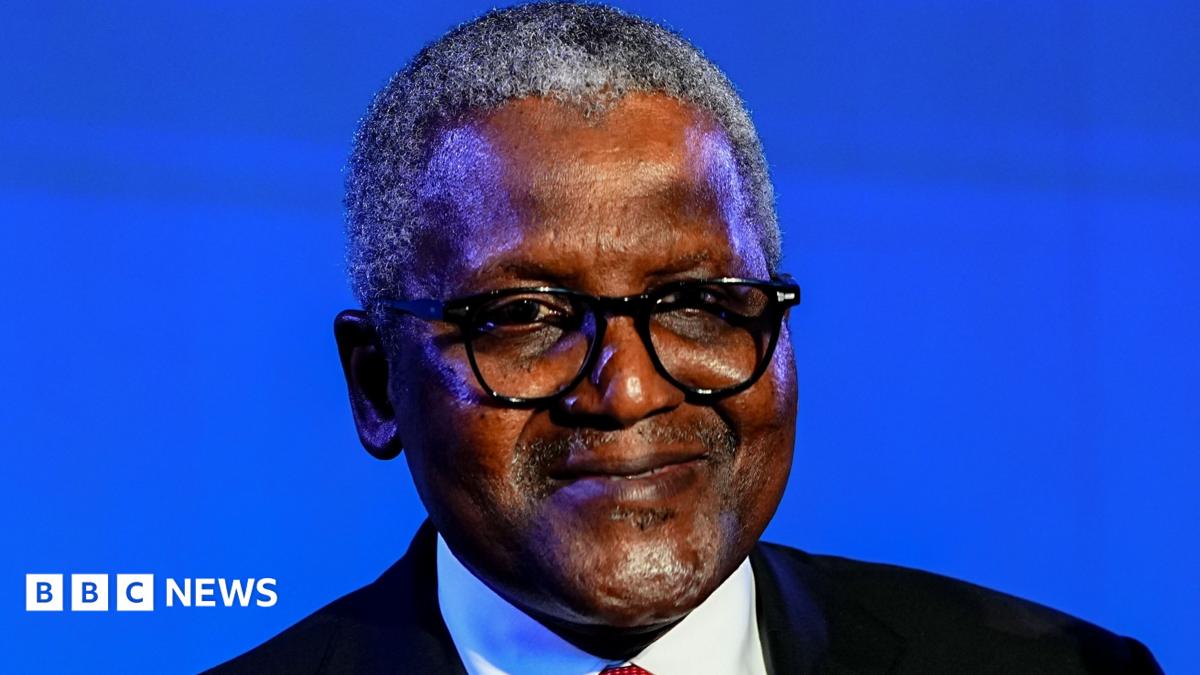
Nigerian industrialist Aliko Dangote and Kenyan President William Ruto are preparing to formally launch construction of a $16bn (£12bn) oil refinery in Lamu, a historic coastal town on Kenya's northern shoreline. The project, which is being described as the largest industrial undertaking in East Africa by processing capacity, is scheduled to begin construction on 1 November.
Once operational, the facility is expected to refine 700,000 barrels of crude oil per day. That capacity would make it the biggest refinery in the region, and it would also mark a significant milestone for East Africa, which currently has no functioning oil refineries at all. The scale of the investment dwarfs Kenya's previous flagship infrastructure project, the $5.1bn (£3.9bn) Standard Gauge Railway, which had held the record as the country's largest undertaking since independence.
The announcement has not been universally welcomed. Ahead of the groundbreaking ceremony, some residents in Lamu took to the streets to demand greater compensation for the land earmarked for the refinery. The demonstrations highlight longstanding tensions over land rights and displacement in a region where fishing and small-scale trade are key livelihoods for many families.
Dangote, however, has dismissed the protests as the work of local marketers and international competitors with an interest in derailing the project. In an interview with the BBC's Focus on Africa programme, he rejected claims that his company had appropriated land unfairly, explaining that it had taken only the portion it required from land the Kenyan government had made available for the development.
"To come and say some people are demonstrating, demonstrating about what? Have you ever seen people demonstrating against themselves in terms of development?" he asked, suggesting he remained unconcerned by the unrest. His remarks reflect a combative stance toward critics who question both the project's location and its local benefits.
Supporters of the refinery point to its potential economic impact. At the peak of construction, Dangote said the project would generate 60,000 jobs, with economic benefits rippling well beyond those directly employed on site. "Are we going to bring robots? Of course, the people will benefit," he said, arguing that local labour and ancillary businesses would inevitably gain from the massive build.
Sceptics have raised questions about why the refinery is being built in Kenya, a country that does not produce crude oil. Neighbouring Tanzania and Uganda are both moving toward oil exports through the East African Crude Oil Pipeline, leading some analysts to argue that those nations might have been more logical hosts for such a facility.
Kenya's Energy and Petroleum Minister, Opiyo Wandayi, pushed back against that criticism. He told the BBC that the refinery's location did not tie it to regional crude supplies, noting that refineries source their raw material from the global market. "Refineries get crude oil from the market. And the market is open," he said, suggesting Kenya could import feedstock from a range of international suppliers.
Dangote echoed that argument, pointing to Singapore as a model. The Southeast Asian city-state has no domestic oil production, yet it has developed into one of the world's leading refining and petrochemical hubs. "Singapore doesn't produce a single drop of oil, yet they have a lot of refineries," he said, implying that proximity to crude production is not a prerequisite for a successful refining industry.
Beyond fuel processing, the Lamu development will include a 1,000-megawatt power plant. Dangote views reliable electricity as one of the most serious obstacles to industrialisation across Africa, particularly in mineral-rich nations that continue to export raw materials instead of processing them domestically and capturing more value locally.
He has roughly $50bn (£38bn) worth of projects in the pipeline, including a plan to develop 10,000 megawatts of power generation capacity across Africa by 2030, with the possibility of doubling that figure if demand warrants it. In Lamu, the new power plant is intended to serve Dangote's refinery operations as well as other industries expected to spring up around the site. "The power is there and what you do is what we call plug and play," he said, describing the infrastructure as ready-made for investors.
The refinery carries significant implications for Kenyan consumers, who currently face relatively high fuel prices. Greater domestic refining capacity could eventually ease pressure on pump prices, though crude oil prices are set on international markets and remain the dominant factor in what motorists pay. Any consumer benefit would therefore depend on global market conditions as much as on local processing capacity.
The Lamu project represents Dangote's largest proposed investment outside his native Nigeria. His existing refinery in Nigeria also has a nameplate capacity of 700,000 barrels per day, and he intends to double that capacity after floating 4.1 million ordinary shares earlier this month to raise as much as $2.1bn. The share sale underscores the scale of his ambitions and his reliance on capital markets to fund an expanding continental footprint.
For Kenya, the refinery could reshape the country's industrial landscape, create thousands of construction and operational jobs, and reduce dependence on imported refined fuels. For Dangote, it is another step in a strategy that spans cement, fertiliser, petrochemicals and power, positioning him as a dominant force in African infrastructure. Whether the project delivers on its promises may depend on resolving land disputes, navigating global oil markets, and executing a complex build on schedule.
What's Your Reaction?
 Like
0
 Dislike
0
 Love
0
 Funny
0
 Wow
0
 Sad
0
 Angry
0

Editor Politik. Mantan jurnalis cetak dengan spesialisasi politik elektoral. Menulis analisis kebijakan dan reportase parlemen.





Comments (0)