

Germany's Former Spy Chief August Hanning Arrested on Espionage and Treason Charges
German authorities have arrested August Hanning, the former president of the country's Federal Intelligence Service (BND), on suspicion of espionage, treason, and obtaining classif
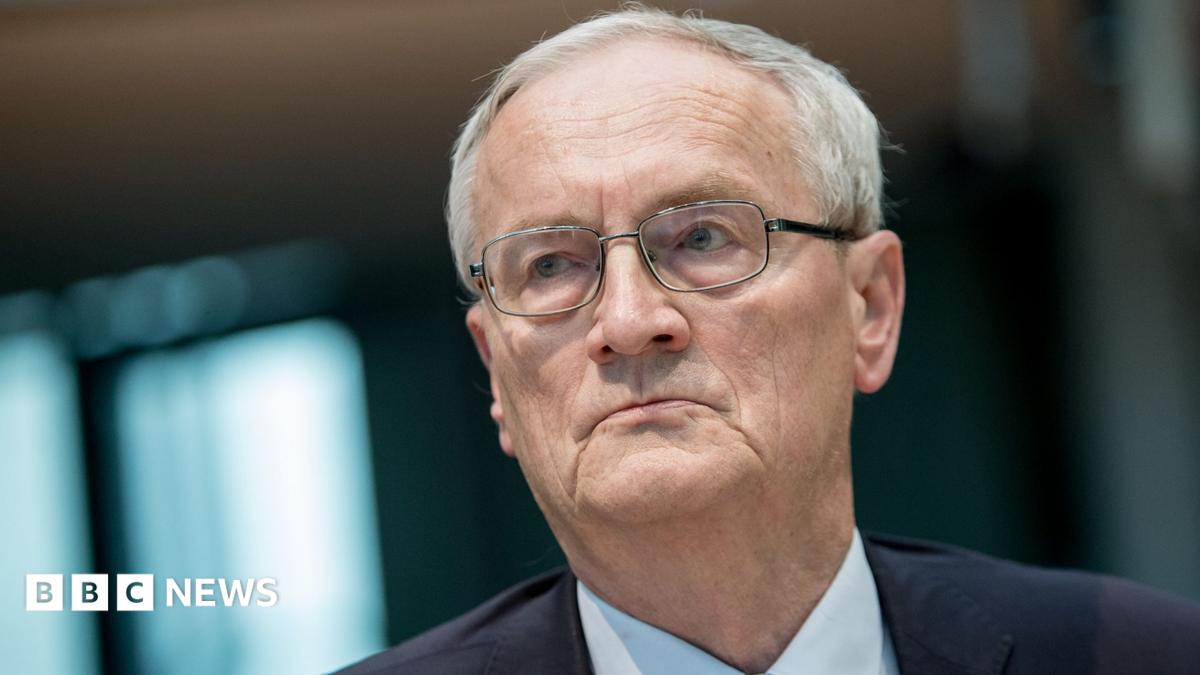
German authorities have arrested August Hanning, the former president of the country's Federal Intelligence Service (BND), on suspicion of espionage, treason, and obtaining classified information on behalf of a foreign power, the German Federal Prosecutor's Office announced. The arrest marks one of the most significant security scandals to hit Germany's intelligence community in recent years, given Hanning's former position at the helm of the nation's foreign intelligence apparatus.
Hanning led the BND from 1998 to 2005, a period that spanned some of the most consequential years in post-Cold War European security, including the aftermath of the September 11 attacks and the lead-up to the 2003 Iraq invasion. Since leaving the agency, he has worked as a private consultant, a role that prosecutors now allege he used as cover for passing sensitive material to foreign intelligence services.
According to federal prosecutors, Hanning used classified intelligence to "draft an analysis" for an officer of one foreign intelligence service, and separately maintained close contact with a representative of another foreign spying agency over several years. Investigators have not identified which foreign powers were involved, leaving open questions about the scope and direction of the alleged espionage.
Agents detained Hanning at his home in Nordwalde, near the western city of Münster, on Tuesday. A second suspect, identified under German privacy conventions as Manfred D, was arrested in Bavaria on the same day. He is expected to appear in court on Tuesday, while Hanning is scheduled to appear on Wednesday. The timing of the court appearances suggests prosecutors are moving swiftly to formalise the charges.
Manfred D is a former BND employee who, according to prosecutors, served as Hanning's bureau chief and remained inside the agency until this year. He is accused of passing Hanning roughly 2,000 classified documents in exchange for money. The volume of material alleged to have changed hands underscores the seriousness with which German authorities are treating the case.
Prosecutors further allege that Manfred D acted as chief of staff for Hanning's successors between 2012 and 2026, using that position to access highly confidential information that he then handed to Hanning "in exchange for remuneration." That detail suggests the alleged flow of secrets spanned more than a decade and involved multiple leadership eras at the BND, raising uncomfortable questions about internal oversight at Germany's premier foreign intelligence agency.
In a statement, the Federal Prosecutor's Office said the current findings indicate that, over the years, Manfred D supplied Hanning with approximately 2,000 documents, many of which contained classified information intended exclusively for the BND's internal use. Prosecutors described the material as sensitive internal intelligence rather than routine administrative records.
The statement also alleges that Hanning was in close contact with a representative of a second foreign intelligence service, to whom he passed political information for several years, some of it based on material provided by Manfred D. Prosecutors noted it remains unclear whether the analysis Hanning drafted for the first foreign service ever reached its intended recipient, a detail that could prove central to the case as it proceeds.
Manfred D faces charges of aiding and abetting attempted treason and treasonous espionage. Hanning faces the more serious allegations of espionage, treason, and obtaining classified information for a foreign power. Under German law, treason and espionage charges carry substantial prison sentences, and the involvement of a former agency chief is likely to intensify scrutiny of the case from both the public and the Bundestag's parliamentary oversight bodies.
The investigation reportedly came to light through an unrelated case involving Christina Block, a German steakhouse heiress. Hamburg prosecutors accused Block of orchestrating the kidnapping of her two youngest children in 2023 amid a custody dispute. Investigators allege that Hanning was involved in an earlier attempted kidnapping of the children, an accusation he denies.
During the course of that separate inquiry, state criminal police officers reportedly discovered an electronic data storage device containing sensitive information, including recent BND documents. That discovery appears to have prompted the espionage investigation that culminated in this week's arrests, illustrating how an unrelated criminal matter can expose alleged breaches of national security.
The case is not the first time the BND has been engulfed in treason-related controversy. In 2023, a high-ranking German intelligence officer was charged with treason for allegedly passing state secrets to Russia. Prosecutors claimed that Carsten L shared intelligence about the war in Ukraine and the Wagner mercenary group, and received roughly €400,000, equivalent to about $450,000 or £340,000. His trial remains ongoing.
That earlier case, combined with the current allegations against Hanning, is likely to fuel debate in Germany about vetting, internal monitoring, and the handling of classified material within the intelligence services. Security analysts often note that insider threats are among the hardest to detect, particularly when they involve senior figures who understand the system's vulnerabilities and possess the clearances needed to access protected information.
For the BND, the arrest of a former president is a reputational blow that could complicate its relationships with allied intelligence agencies, many of which share sensitive material on the assumption that German counterparts maintain rigorous internal security. Foreign partners may seek assurances that the alleged leak has been contained and that no additional material remains at risk.
Hanning has not publicly responded to the charges in detail, and the presumption of innocence applies to both suspects as the legal process unfolds. The coming court appearances are expected to clarify the specific charges each man faces and whether prosecutors will seek pretrial detention.
German media have covered the story intensively, focusing on the unusual spectacle of a former spy chief facing accusations of betraying the very service he once led. The case touches on broader questions about the revolving door between intelligence agencies and private consulting, a career path Hanning followed for nearly two decades after leaving the BND.
As the investigation continues, prosecutors have declined to name the foreign powers allegedly involved, citing the sensitivity of ongoing inquiries. That silence is likely to persist until the case reaches a more advanced stage, leaving the public and policymakers to grapple with the implications of one of the most prominent espionage prosecutions in modern German history.
What's Your Reaction?
 Like
0
 Dislike
0
 Love
0
 Funny
0
 Wow
0
 Sad
0
 Angry
0

Reporter Senior. Meliput dinamika politik nasional, kebijakan publik, dan isu parlemen selama 8 tahun. Alumni FISIP UI.






Comments (0)