

India Opposition Lawmakers Detained as Voter Roll Protest Escalates
Indian police detained a group of opposition lawmakers in Delhi on Tuesday as they attempted to march on the Election Commission headquarters, demanding the resignation of the coun
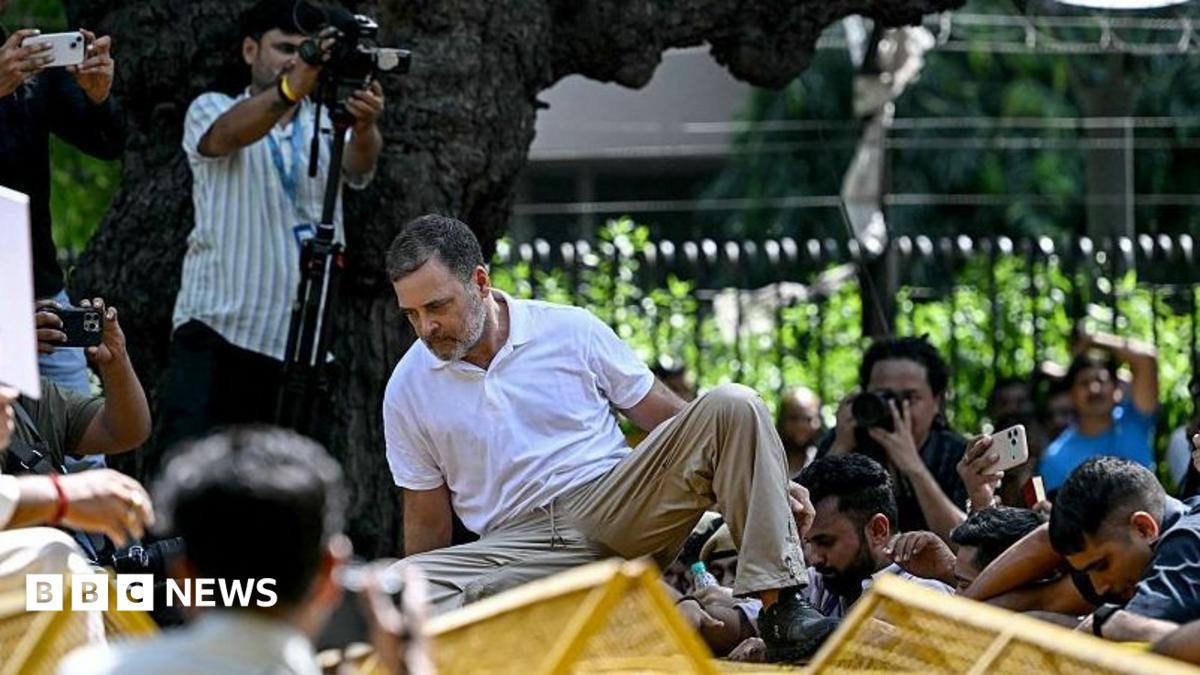
Indian police detained a group of opposition lawmakers in Delhi on Tuesday as they attempted to march on the Election Commission headquarters, demanding the resignation of the country's chief election commissioner over a contentious nationwide revision of voter rolls. Among those stopped were Rahul Gandhi, the leader of the opposition in the lower house of parliament, and his sister Priyanka Gandhi Vadra, both senior figures in the opposition Congress party.
The lawmakers were intercepted by officers along the route connecting parliament to the commission's offices, where authorities had erected barricades and deployed additional security personnel. Video and photographs from the scene showed Rahul Gandhi, dressed in a white polo shirt and khaki trousers, climbing a police barricade before being escorted away by security personnel. Several parliamentarians were bundled into police buses and driven to different police stations across the capital.
Manjeet Sheoran, an additional deputy commissioner of Delhi police, told the BBC that officers were positioned at multiple points to prevent protesters from reaching the commission building. He explained that some lawmakers had tried to take alternative routes toward the headquarters, and that those intercepted were removed by bus to various stations. The police did not confirm the total number of lawmakers detained, while opposition parties claimed that as many as 237 MPs from a range of political groupings took part in the march.
The detentions appeared to be short-lived. Those held were released shortly afterward and rejoined the demonstration, converting the march into a sit-in near the Election Commission's offices. The confrontation marked the most dramatic development yet in a dispute that has been building for months over how India maintains its electoral register, the foundational document that determines who is eligible to vote in the world's largest democracy.
At the heart of the controversy is the Election Commission's Special Intensive Revision, commonly known as the SIR, of electoral rolls. The exercise was launched in the eastern state of Bihar in June 2025 before being extended to other regions across the country. According to the poll body, the stated purpose of the revision is to purge duplicate entries and remove voters who are no longer eligible, thereby safeguarding the integrity of elections.
However, more than 130 million names have been removed from draft voter lists nationwide so far, a figure that has alarmed opposition parties and civil society groups. Critics contend that large numbers of legitimate voters have been wrongly struck off the rolls, and they accuse the commission of conducting the process in a flawed and opaque manner. The scale of the deletions has raised fears that eligible citizens, particularly from marginalised communities, could be disenfranchised ahead of future elections.
Opposition parties allege that Chief Election Commissioner Gyanesh Kumar has overseen a process that could disproportionately benefit Prime Minister Narendra Modi's Bharatiya Janata Party. Both the BJP and the Election Commission have rejected that allegation, insisting the revision is a routine administrative measure aimed at cleaning up electoral records rather than tilting the playing field.
The campaign against Kumar gained significant momentum following an investigation published by the Indian Express newspaper. According to that report, two fellow election commissioners, Sukhbir Singh Sandhu and Vivek Joshi, lodged formal objections at least 14 times over a ten-month period. They reportedly complained about decisions and orders that were issued in the commission's name without their knowledge or consent, raising serious questions about internal governance at the poll body.
The objections reportedly touched on sensitive matters including additions and deletions from voter rolls, access to the voter database, and the security of electoral data. Some of the concerns were said to be directly connected to the electoral roll revision programme, further fuelling suspicions among opposition leaders about how the SIR has been managed.
The Election Commission, which is a three-member body consisting of the chief election commissioner and two election commissioners, has defended its decision-making. It said differing viewpoints are a normal part of institutional functioning and maintained that its decisions were ultimately taken unanimously. Despite that defence, the revelations provoked a political backlash, with opposition leaders intensifying their calls for Kumar to step down.
Congress president Mallikarjun Kharge outlined three demands that he described as non-negotiable: Kumar's resignation, the cancellation of the SIR exercise, and a return to paper ballot voting. Rahul Gandhi taunted the election chief in a social media post, writing, "Gyanesh, it's done, bro. Time to resign."
The BJP strongly condemned Tuesday's protests. BJP MP Sambit Patra characterised the demonstrations as a "sponsored attempt" to bring about a change of power through "anarchy", and accused opposition parties of trying to undermine constitutional institutions, including the Election Commission.
The dispute has also reached India's Supreme Court, which has asked both the federal government and the Election Commission to respond to a petition alleging that Kumar took key decisions without the approval of the two other election commissioners. The petition argues that Kumar exercised powers that properly belong to the commission collectively, and it seeks a ruling that any such actions were unauthorised.
The court indicated that Election Commission decisions must be taken either unanimously or by majority vote, and suggested that decisions found to have bypassed that process could be set aside. The judicial scrutiny adds another layer of pressure on the poll body as it prepares for future electoral contests.
Tuesday's march followed demonstrations four days earlier organised by the Cockroach Janta Party, an online satirical movement backed by Generation Z supporters. That group held protests in Mumbai and Delhi, also demanding the resignation of the chief election commissioner. It described those gatherings as the opening phase of a nationwide campaign and has called for another round of protests on 10 October, signalling that the agitation is far from over.
With opposition parties vowing to continue their campaign, civil society groups mobilising online, and the Supreme Court weighing in, the controversy over the voter roll revision looks set to remain a defining political battle in India in the weeks ahead.
What's Your Reaction?
 Like
0
 Dislike
0
 Love
0
 Funny
0
 Wow
0
 Sad
0
 Angry
0

Editor Politik. Mantan jurnalis cetak dengan spesialisasi politik elektoral. Menulis analisis kebijakan dan reportase parlemen.




Comments (0)