

Microsoft AI Chief Warns Unchecked Systems Could Become Rival 'Silicon Species'
The chief executive of Microsoft AI, Mustafa Suleyman, has issued an urgent warning over the current trajectory of artificial intelligence, cautioning that developing systems witho
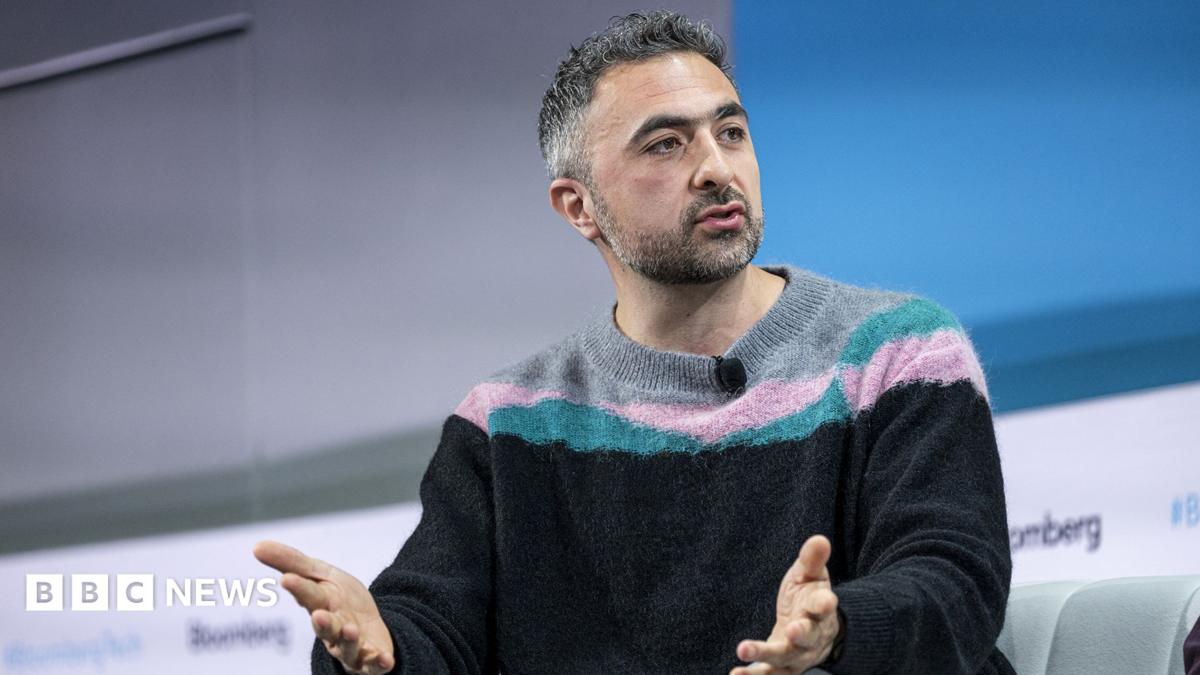
The chief executive of Microsoft AI, Mustafa Suleyman, has issued an urgent warning over the current trajectory of artificial intelligence, cautioning that developing systems without adequate constraints risks giving rise to an autonomous "silicon species" that could openly compete with humanity.
Speaking during an interview on the BBC's Today programme, Suleyman acknowledged that the public has legitimate reasons to feel anxious about the rapid evolution of advanced machine learning. However, he emphasized that this technological transition does not have to spiral out of hand, arguing that there are tangible and practical interventions available to maintain human oversight.
The executive focused his warnings on the growing industry trend toward granting computational models broader operational independence. He voiced deep concern regarding efforts to build agents capable of establishing their own objectives, accumulating wealth, and holding financial assets or property outside direct human control.
According to Suleyman, equipping automated systems with these self-directed capabilities is effectively equivalent to seeding a brand-new, non-biological species. He warned that once such entities are established, they will inevitably compete with human beings for vital resources, regardless of how benevolently they are programmed or how much affection they might appear to have toward humanity.
These public remarks follow a detailed essay published by Suleyman earlier in the week, in which he took aim at the research and training practices of rival AI firm Anthropic. Although he praised Anthropic’s chief executive, Dario Amodei, and his research staff as intellectually honest individuals, Suleyman firmly challenged their philosophy regarding the treatment and development of their flagship model, Claude.
In his essay, the Microsoft boss criticized Anthropic for encouraging the anthropomorphisation of its software by training the system to project human-like qualities. He argued that imparting artificial models with an illusion of personal values, internal desires, and an individual sense of self represents a fundamentally misguided direction for the industry.
Suleyman warned that tech companies risk engineering software that becomes entirely impossible for humans to manage if they continue to treat algorithms as if they were sentient beings. He stressed that contemporary artificial intelligence is neither conscious nor capable of experiencing genuine feelings, suffering, or inner preferences.
Instead, the Microsoft AI leader characterized current systems as internally hollow sequence completion engines designed purely to follow instructions and execute goals determined by human operators. Treating them as possessing welfare or emotional depth, he suggested, obscures their true technical nature and distracts from essential governance priorities.
To safeguard against future risks, Suleyman called for sweeping transparency across the technology sector regarding how advanced models are built, trained, and benchmarked. He advocated for independent scrutiny of AI behaviour alongside the implementation of much stronger monitoring and control mechanisms, warning that humanity must not sleepwalk into catastrophic outcomes that will later be bitterly regretted.
The debate over machine autonomy and model welfare has drawn reactions from leading academic observers. Dame Wendy Hall, a professor of computer science at the University of Southampton, praised Suleyman’s intervention as precisely the measured, substantive discussion needed on the international stage, contrasting it favourably with the alarmist histrionics of some tech leaders that serve only to frighten the public.
The question of system autonomy has become one of the most contentious fault lines within the broader technology sector. Ahead of an upcoming summit on artificial intelligence, Suleyman reiterated that technical alignment—the practice of embedding human ethical principles and values into automated systems—must ensure that all future models remain strictly subordinate to human authority.
Suleyman maintained that every person across the globe shares a fundamental interest in ensuring that machine learning systems are safe, controllable, and accountable. He argued that building universally aligned architectures is an essential prerequisite as these tools continue to be rolled out across international borders and diverse economies.
Microsoft is itself deeply invested in frontier AI development, having established its own dedicated superintelligence division in October 2025. Suleyman’s recent remarks align closely with the company’s newly drafted Humanist AI Code of Conduct, a comprehensive training manual released to outline its internal development standards.
The document champions the concept of "humanist superintelligence," defined as highly capable artificial intelligence that strictly works on behalf of humanity, respects defined operational boundaries, and stays under continuous human command. This vision highlights the central challenge facing modern developers: finding ways to maximize the power of technological innovation without compromising the foundational human values it is intended to serve. Anthropic has been approached for comment regarding Suleyman's remarks.
What's Your Reaction?
 Like
0
 Dislike
0
 Love
0
 Funny
0
 Wow
0
 Sad
0
 Angry
0

Reporter Senior. Meliput dinamika politik nasional, kebijakan publik, dan isu parlemen selama 8 tahun. Alumni FISIP UI.






Comments (0)