

Regional Tensions Escalate as Saudi Coalition Intercepts Houthi Drone Near Mecca
Saudi Arabian air defenses successfully intercepted and brought down an armed drone launched by Yemen’s Houthi movement south of the holy city of Mecca on Tuesday evening, accordin
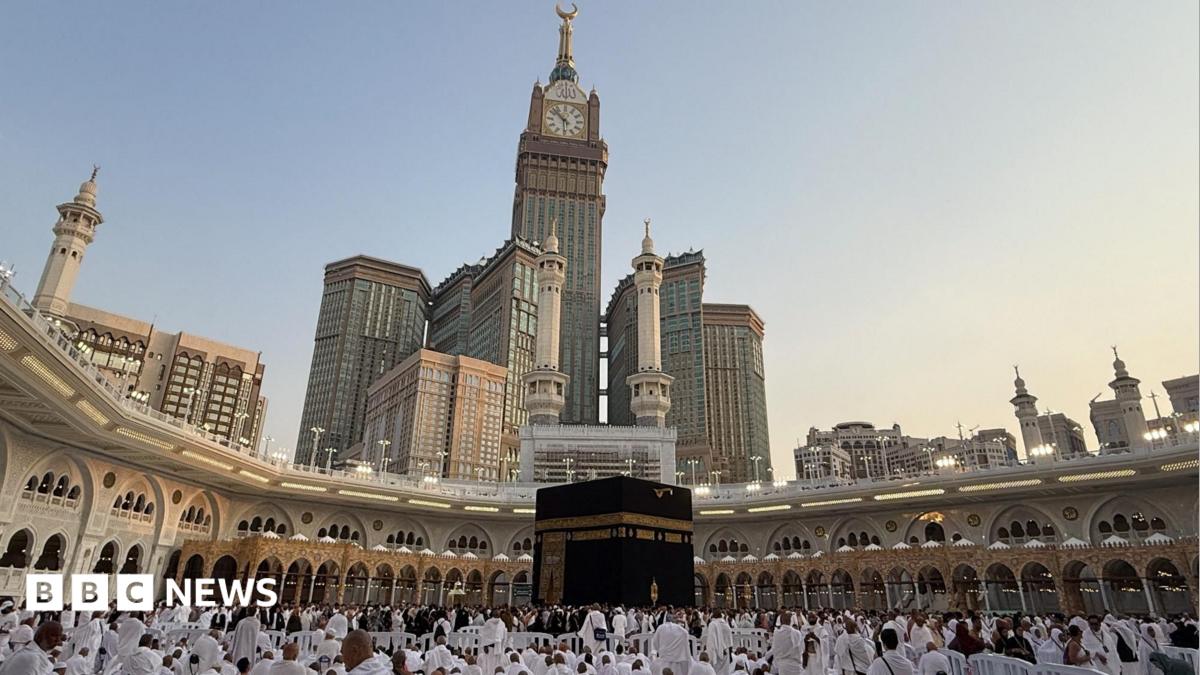
Saudi Arabian air defenses successfully intercepted and brought down an armed drone launched by Yemen’s Houthi movement south of the holy city of Mecca on Tuesday evening, according to statements released by the Saudi-led military coalition.
Coalition spokesperson Major General Turki al-Maliki strongly condemned the incident, describing the apparent targeting of Mecca—the holiest location in Islam and the spiritual center of the annual Hajj pilgrimage—as a disgraceful and unacceptable act.
The incident drew swift diplomatic backlash from the broader Muslim world, with the 57-member Organisation of Islamic Cooperation issuing a statement that condemned attacks near Mecca and the surrounding Medina province. The organization stated that endangering Islam’s most revered sites represents an intolerable transgression against the global Islamic community.
The Houthis, an Iran-aligned armed movement controlling significant territory across western Yemen, firmly rejected the coalition's claims. Military spokesman Yahya Sarea dismissed the accusations as complete fabrications, maintaining that the group holds no intentions of threatening sacred Islamic sanctuaries.
According to Sarea, the group’s military campaigns are strictly focused on Saudi oil installations and military sites located well away from holy grounds. He stated that the recent barrage of drones and missiles was carried out in direct response to more than 450 Saudi airstrikes launched against Houthi-held areas during the preceding week.
Sarea further asserted that Houthi forces had successfully downed a Saudi coalition fighter jet operating over the skies of Yemen’s Marib province. While the coalition did not immediately confirm the loss of an aircraft, Maj Gen Maliki warned that allied forces would enforce all required deterrent actions against what he characterized as hostile and terrorist militia activities.
The interception followed a tense evening across western Saudi Arabia, where local authorities sounded emergency projectile alarms in several populated districts, including both Mecca and the major commercial hub of Jeddah.
The heightened aerial threat prompted the United States Embassy in Saudi Arabia to update its regional guidance, advising citizens to reconsider travel to the country. The embassy warned that persistent attacks from Yemen have endangered urban centers, critical infrastructure, air transport hubs, military bases, diplomatic posts, and key energy installations.
The aerial exchange comes amid major shifts on the ground in Yemen, where Houthi fighters have expanded their grip along the Red Sea coastline at the expense of Saudi-backed pro-government forces. The group recently seized control of the strategic port city of Mokha as well as Perim Island, situated in the critical Bab al-Mandab Strait.
Control over this narrow maritime gateway has heightened global concerns, as the Bab al-Mandab Strait serves as a vital artery linking Asian and European trade via the Suez Canal. Although the Houthis claim they will not disrupt broader international commercial navigation, they have maintained that Saudi-flagged ships remain legitimate targets.
This maritime pressure comes at a precarious time for Riyadh, which has grown increasingly dependent on Red Sea shipping routes to export crude oil following the effective closure of the Persian Gulf's Strait of Hormuz amidst hostilities involving the United States, Israel, and Iran.
Saudi energy logistics have faced additional strain after the vital East-West Pipeline—used to channel crude to the western port of Yanbu—was forced offline due to heavy damage from a strike that Riyadh attributed to Iraqi militias backed by Iran. While independent specialists estimated that pipeline repairs could require more than a month, US Energy Secretary Chris Wright offered an optimistic forecast on Tuesday, stating that crude flows should resume within days.
Against this backdrop, diplomatic discussions between Riyadh and Washington have intensified. Saudi Crown Prince Mohammed bin Salman has directly urged US President Donald Trump to launch military strikes against the Houthis, according to sources familiar with the discussions.
President Trump has thus far refrained from committing the American military to direct combat operations in Yemen, choosing instead to provide intelligence sharing and targeting assistance to Saudi forces. A senior administration official confirmed that Washington remains in ongoing dialogue with both Saudi Arabia and Yemen’s internationally recognized government to support stability.
At the United Nations Security Council, representatives from Yemen and Saudi Arabia called for urgent international action during an emergency session on Tuesday, accusing the Houthis of using maritime blockades around the Bab al-Mandab Strait for economic coercion. In response, council members reiterated that preserving freedom of navigation in the Red Sea is essential to protect global commerce.
The renewed fighting has severely compounded Yemen’s humanitarian catastrophe. The International Organization for Migration reported that over 90,000 civilians have been displaced by recent clashes, with Director General Amy Pope warning that many families are fleeing for the second or third time with virtually no belongings remaining.
The World Health Organization confirmed that more than 500 casualties have been recorded since early August, including nearly 300 individuals killed in the span of a single week.
The ongoing war, which initially erupted in 2014 when the Houthis captured the capital Sanaa and expanded into an internationalized conflict with Saudi intervention in 2015, has claimed over 150,000 lives and left more than 22 million people reliant on humanitarian assistance. An informal truce that endured for four years collapsed entirely this past July, following the Houthis' announcement of a maritime embargo against Saudi Arabia in retaliation for continued air raids and transport blockades.
What's Your Reaction?
 Like
0
 Dislike
0
 Love
0
 Funny
0
 Wow
0
 Sad
0
 Angry
0

Reporter Senior. Meliput dinamika politik nasional, kebijakan publik, dan isu parlemen selama 8 tahun. Alumni FISIP UI.






Comments (0)