

South Korea Demands North Korean Apology Over DMZ Landmine Blasts That Wounded Three Soldiers
South Korea's military has formally demanded that North Korea issue an apology for landmine explosions along the heavily fortified inter-Korean border that left three South Korean
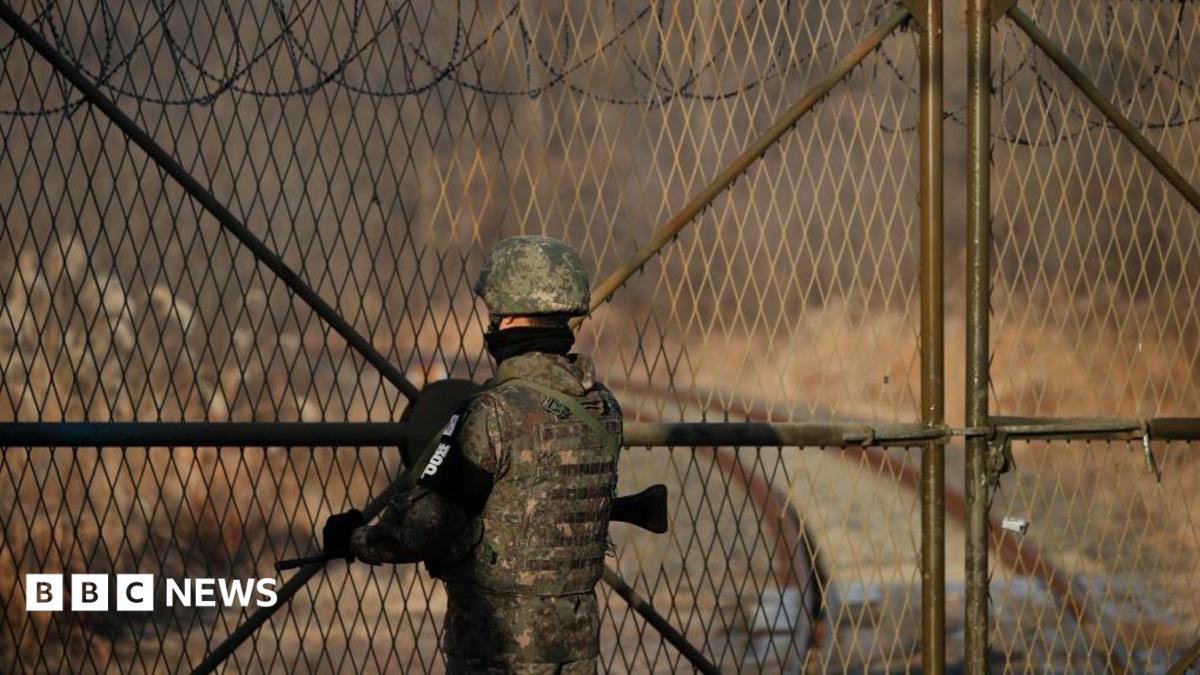
South Korea's military has formally demanded that North Korea issue an apology for landmine explosions along the heavily fortified inter-Korean border that left three South Korean personnel wounded earlier this month, sharply escalating tensions between the two adversaries.
The explosions occurred on 21 September inside the Demilitarised Zone (DMZ), the narrow buffer strip that has separated the two Koreas since the end of active fighting in the Korean War. According to Seoul's account, the blasts took place on the southern side of the zone, well within territory controlled by South Korean forces.
South Korean officials said on Tuesday that the explosions were "highly likely" to have been caused by mines laid by North Korean forces, a conclusion that Pyongyang has rejected outright. Seoul vowed to take "corresponding measures" against what it characterised as a violation of a decades-old armistice agreement that halted open combat on the peninsula in 1953.
The armistice established the 4km-wide DMZ, a buffer zone bisected by the Military Demarcation Line, which serves as the de facto land border between North and South Korea. Despite the absence of active war, the area has repeatedly been the scene of sporadic clashes and mine incidents over the decades.
South Korea's Defence Minister, Kang Shin-chul, said on Tuesday that the blasts represented a "clear" breach of the 1953 truce. In a further statement issued on Wednesday, Seoul called on Pyongyang to apologise for the incident and to immediately halt any fortification activities along the border.
North Korea has denied any responsibility, dismissing Seoul's allegations as "groundless" and describing them as a "farce" designed to inflame tensions on the peninsula. The denial was delivered through state media, which has become Pyongyang's primary channel for responding to accusations from the South.
Kim Yo Jong, the influential sister of North Korean leader Kim Jong Un, accused South Korea of "cooking up" the claims as a pretext for "political and military provocation." She rejected suggestions that North Korean troops had crossed into southern territory to plant the mines, calling the allegation "a deliberate and planned strained assertion to shift the responsibility for escalating tension" onto Pyongyang.
Her statement, published on Wednesday, also carried a warning that the South should be "prepared for paying price for the farce of their own making." The language underscored the increasingly hostile tone between the two governments, which have seen diplomatic engagement collapse in recent years.
Seoul maintains that the mines were likely planted by Pyongyang as part of an effort to reinforce its side of the border. Northern authorities have not acknowledged any such activity, and the two sides remain locked in competing narratives about what happened on 21 September.
The incident has drawn in the United Nations Command (UNC), the multinational force that oversees the armistice and has historically played a role in investigating violations. The UNC said it carried out on-site investigations into the blasts alongside the South Korean military.
In its response, the UNC said it would address the alleged armistice violation "through established Armistice mechanisms," signalling that it intends to pursue formal channels rather than a unilateral response. It added that it "remains committed to maintaining and enforcing the Armistice Agreement and fulfilling its responsibilities to preserve stability and prevent escalation on the Korean Peninsula."
The reference to the 2015 landmine incident is significant, as it mirrors the current dispute almost exactly. In that episode, two South Korean soldiers were maimed by mines while patrolling the DMZ. Seoul concluded at the time that the devices had been secretly planted by North Korean soldiers near a South Korean guard post. Pyongyang denied the claim then as well, and the episode contributed to a period of heightened military tension.
Kim Yo Jong invoked the 2015 case in her statement on Wednesday, arguing that South Korea had used it as a "pretext" to escalate tensions and was now repeating the same playbook. The parallel suggests that both sides view the current confrontation through the lens of past disputes, with little sign of a shared factual account emerging.
For South Korea, the demand for an apology carries domestic political weight. Any confirmed attack on South Korean personnel on the southern side of the DMZ is a sensitive matter, and the government faces pressure to respond firmly without triggering a wider military confrontation. The pledge to take "corresponding measures" leaves open a range of possible responses, from diplomatic protests to military countermeasures.
For North Korea, rejecting the allegation allows it to portray South Korea and its allies as the aggressors. Pyongyang has long accused Seoul and Washington of fabricating incidents to justify military pressure, and it uses such claims to rally domestic support and justify its own military posture.
The broader strategic environment complicates any resolution. The Korean Peninsula remains technically at war, since the 1953 armistice was never replaced by a peace treaty. The DMZ, often described as the world's most heavily fortified border, is monitored by both militaries and by the UNC, making any incident there inherently volatile.
Analysts note that accidental or ambiguous incidents in the DMZ can quickly spiral if either side misreads the other's intentions. The competing claims about who planted the mines, and why, mean the facts themselves have become part of the confrontation rather than a path toward de-escalation.
With the UNC now involved, the dispute may move into formal armistice mechanisms, where investigations and consultations could unfold over weeks. Whether that process produces clarity, or simply becomes another arena for accusation, remains uncertain.
For now, South Korea's demand for an apology stands unmet, and North Korea's warning of consequences signals that Pyongyang has no intention of backing down. The landmine blasts of 21 September have thus become the latest flashpoint in a long-running standoff, with the two Koreas once again trading blame across the world's most fortified frontier.
What's Your Reaction?
 Like
0
 Dislike
0
 Love
0
 Funny
0
 Wow
0
 Sad
0
 Angry
0

Reporter Senior. Meliput dinamika politik nasional, kebijakan publik, dan isu parlemen selama 8 tahun. Alumni FISIP UI.





Comments (0)