

Swedish Prime Minister Kristersson Resigns Following Tight Election Defeat to Centre-Left Opposition
Ulf Kristersson has officially announced his resignation as Prime Minister of Sweden following a narrow defeat for his ruling right-wing alliance in the country's general election.
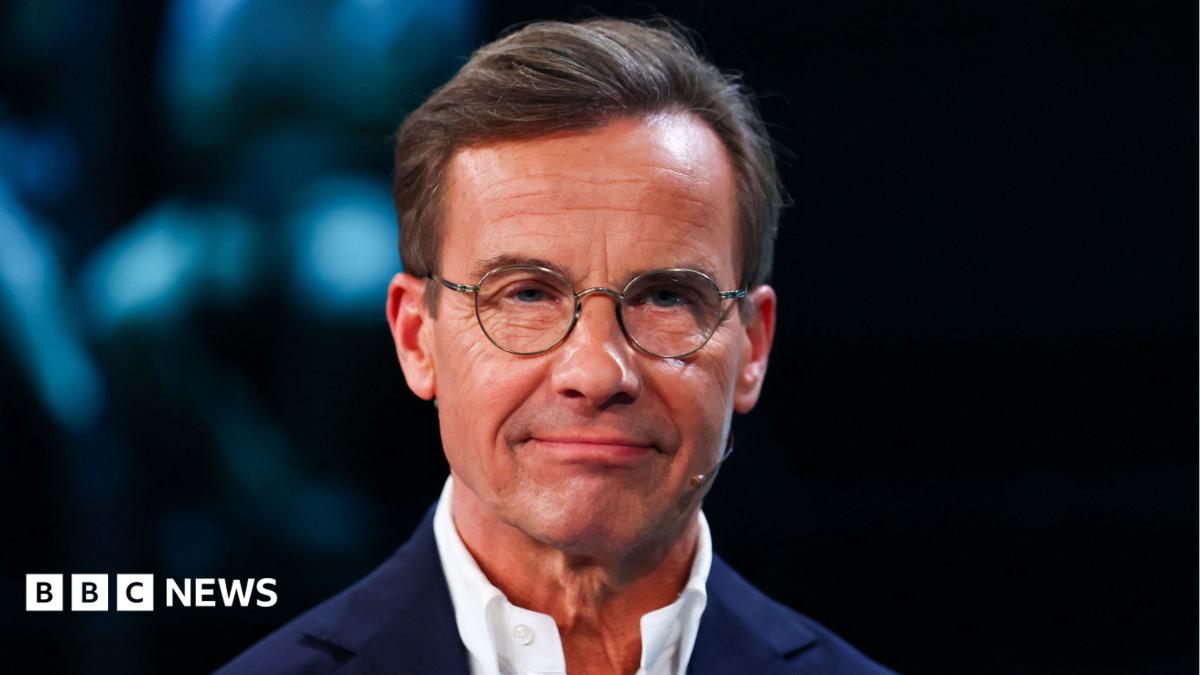
Ulf Kristersson has officially announced his resignation as Prime Minister of Sweden following a narrow defeat for his ruling right-wing alliance in the country's general election. The conservative leader’s decision brings to an end his term at the head of government after preliminary voting tabulations confirmed that the centre-left opposition had secured a razor-thin majority in the national legislature.
Kristersson confirmed his departure in a public statement published on the social media platform X on Thursday afternoon. His announcement arrived after days of painstaking vote counting following Sunday’s general election, which ultimately revealed that only a small fraction of the electorate separated the two major competing political coalitions across the Scandinavian nation of roughly 10 million citizens.
Data provided by the Swedish Election Authority indicates that the centre-left opposition bloc, spearheaded by Social Democratic leader Magdalena Andersson, is poised to secure 176 seats in the Riksdag. This total grants her alliance the slimmest possible functional majority in Sweden’s 349-seat parliament, clearing a path for the left to reclaim executive power.
By contrast, the incumbent right-wing alliance headed by Kristersson is projected to take 173 seats in the Riksdag. Across the entire country, the overall gap between the two broad political factions amounted to approximately 50,000 votes, illustrating the intensely divided nature of the Swedish electorate during this closely watched electoral contest.
The preliminary outcomes remain subject to official verification and certification over the coming days, with the final certified election results expected to be formally finalized by the weekend. Election committees had been working continuously to tally remaining ballots, including early voting slips submitted late and postal votes cast by Swedish citizens residing abroad, which were opened and processed starting on Wednesday.
The vote-counting process had been underway since the immediate close of voting on Sunday evening, stretching across several days as election workers methodically tallied millions of ballots. The protracted process held the country in suspense as slight shifts in numbers carried massive implications for which political bloc would command a parliamentary majority.
In the wake of Kristersson's concession, Magdalena Andersson has immediately stepped forward to assemble a new administration. The Social Democratic leader has initiated formal discussions with prospective governing partners across the left-leaning spectrum, including the Left Party, the Centre Party, and the Green Party, in an effort to construct a viable governing coalition.
Nevertheless, the path toward establishing a stable government remains fraught with considerable political and policy hurdles. The four parties within the centre-left opposition carry divergent ideological platforms and have clashed on key policy areas in the past, with major disputes over tax policy and economic governance expected to complicate and drag out negotiations.
Such delays in coalition building are a familiar feature of Swedish political life. Following the 2022 general election, it took political leaders 37 days of intensive negotiations before a government could be finalized. An even more extreme standoff occurred in 2018, when talks dragged on for 134 days before a workable governing arrangement was reached.
Sweden’s political landscape is traditionally divided into two distinct four-party blocs representing the right and the left. Because no single political party routinely secures an outright majority on its own, Swedish voters and politicians are deeply accustomed to the complexities of minority administrations and intricate multi-party coalition pacts.
Kristersson’s outgoing right-wing bloc comprised his own Moderate Party alongside the Christian Democrats and the Liberals. While those three parties constituted the formal governing coalition, they relied heavily upon the parliamentary backing of the anti-immigration, hard-right Sweden Democrats to sustain their majority in the Riksdag.
Under that cooperative arrangement, the Sweden Democrats had provided vital outside support to Kristersson’s centre-right government, exerting significant influence as the administration implemented a dramatic tightening of Sweden's national migration policies over the course of its tenure.
In an effort to keep his coalition in power ahead of this election, Kristersson had made the unprecedented pledge to bring the hard-right Sweden Democrats directly into the cabinet, promising them official ministerial posts if the right-wing bloc succeeded at the ballot box.
However, the election delivered a historic and unexpected setback for the Sweden Democrats instead. For the very first time since the anti-immigration party gained representation in the Swedish parliament in 2010, it suffered a decline in popular support, dropping three percentage points compared to its performance in the 2022 general election.
That unexpected erosion in support for the Sweden Democrats proved fatal to Kristersson’s hopes of retaining the premiership, tilting the parliamentary arithmetic just far enough to allow the opposition to prevail. With the results set to be formalized by the weekend, Sweden now enters what could be a lengthy period of high-stakes negotiations as Andersson attempts to translate her bloc's narrow victory into a functioning government.
What's Your Reaction?
 Like
0
 Dislike
0
 Love
0
 Funny
0
 Wow
0
 Sad
0
 Angry
0

Reporter Senior. Meliput dinamika politik nasional, kebijakan publik, dan isu parlemen selama 8 tahun. Alumni FISIP UI.





Comments (0)