

Trump's Remark About Iran Striking California Cities Draws Sharp Rebuke From State Leaders and White House Defense
A campaign trail remark by President Donald Trump suggesting Iran could strike two of California's largest cities has ignited a political firestorm, drawing condemnation from the s
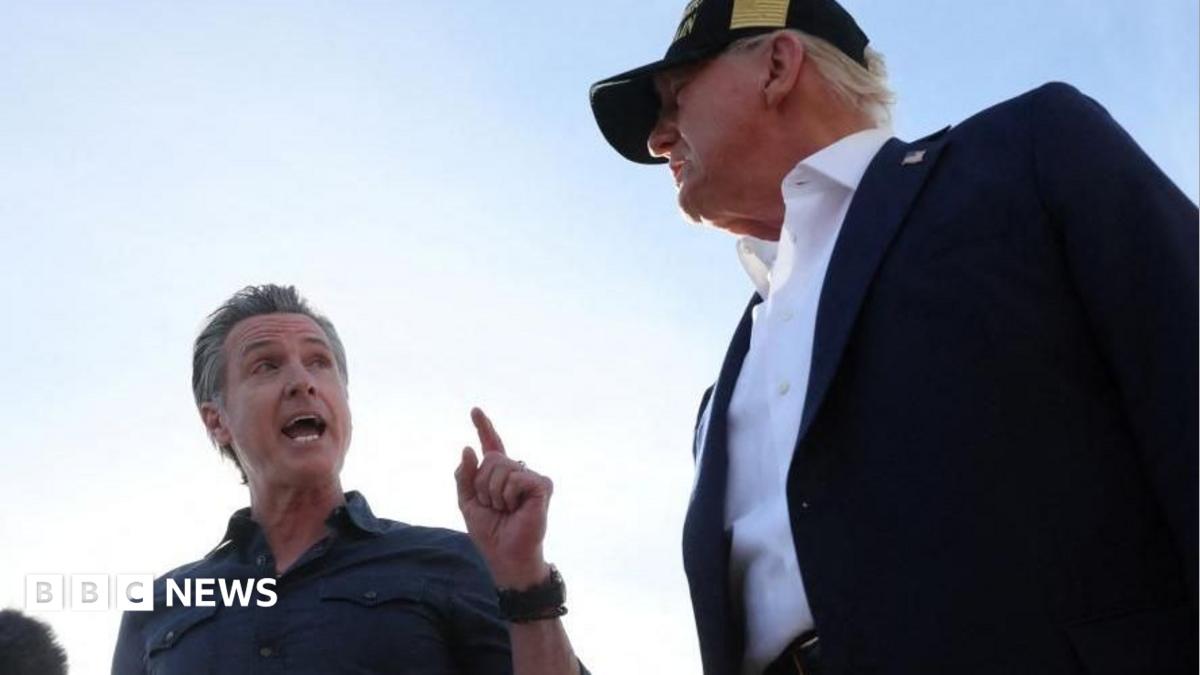
A campaign trail remark by President Donald Trump suggesting Iran could strike two of California's largest cities has ignited a political firestorm, drawing condemnation from the state's top officials and forcing the White House into a defensive posture over the president's meaning.
Speaking at an election rally in Nebraska, Trump addressed the conflict with Iran and framed the costs of military action as a necessary trade-off for national security. In his remarks, he referenced the possibility of an adversary targeting American population centers, naming Los Angeles and San Diego specifically, according to accounts of the event. Portions of the audience responded with cheers as the two California cities were mentioned.
The comments quickly traveled from the rally stage to national headlines, prompting a wave of criticism from California's political leadership. Governor Gavin Newsom characterized the remark as "deranged and dangerous," while Los Angeles Mayor Karen Bass described it as a threat that amounted to encouraging attacks on American lives.
San Diego Mayor Todd Gloria also weighed in, using a social media post to reject any suggestion that his city could be treated as expendable in a broader geopolitical calculation. He called on the president to keep San Diego out of what he described as reckless war rhetoric. Newsom reinforced his criticism in a separate post on his official governor account, sharing coverage of the remarks and labeling them "disgusting and disqualifying."
The White House pushed back firmly against the interpretation advanced by California officials and some media outlets. Communications Director Stephen Cheung argued that the reaction amounted to a "media freakout" disconnected from what the president actually meant. According to Cheung, Trump was making the case that American cities would have faced a genuine threat had a nuclear-armed Iran not been confronted.
In Cheung's framing, the president's position is that the United States is safer because of his actions, and he listed a series of claims about Iran's degraded capabilities, asserting the country now lacks a nuclear program, a navy, an air force and financial resources. That argument echoes a broader message the administration has advanced repeatedly: that disrupting Iran's nuclear ambitions was essential to US national security and that any fallout from the conflict was a price worth paying.
The White House's rapid response operation amplified that defense, dismissing journalists at the Los Angeles Times who reported on the comments as "buffoons" and reiterating that the president was describing a threat the US is fighting to prevent rather than inviting an attack. The administration's position is that Iran would target major American cities with a nuclear weapon if it ever acquired one.
The controversy carries particular weight because of the military significance of the two cities named. San Diego, situated roughly 17 miles from the Mexican border, is the eighth-largest city in the United States. It hosts Naval Base San Diego, the home port of the US Navy's Pacific Fleet, as well as Naval Amphibious Base Coronado, the principal West Coast training center for Navy SEALs. Marine Corps Base Camp Pendleton, which supports about 70,000 service members and civilians, is also located in the area.
Los Angeles, roughly 120 miles north of San Diego, is the second most populous city in the country. It is home to the headquarters of the US Space Force's space systems command and to Los Angeles Air Force Base. The concentration of defense infrastructure along the Southern California coast makes the region a cornerstone of American military power projection in the Pacific.
The exchange is the latest chapter in a long-running and personal feud between Trump and Newsom, who is widely seen as a possible contender for the presidency in 2028. The two have clashed repeatedly in public, and the relationship has grown more acrimonious over the past two years.
Trump previously described Newsom as incompetent, arguing that the governor failed to respond adequately when anti-immigration enforcement protests in Los Angeles turned violent. Newsom, in turn, accused the president of a "brazen abuse of power" after military personnel were deployed to protect federal buildings during those demonstrations.
The president also drew criticism from dyslexia advocacy organizations earlier this year after mocking Newsom's dyslexia and suggesting that people with learning disabilities should not serve as president. That episode, like the current one, illustrated how quickly disputes between the two men escalate into national political battles.
As of the reporting of the original article, Trump had not responded directly to the statements issued by California's governor and mayors. The White House's responses came through official social media accounts and statements rather than from the president himself.
The episode underscores the political sensitivity surrounding the Iran conflict as the midterm elections approach. The president's supporters view his Iran policy as a decisive national security achievement, while critics argue that his rhetoric and the war itself have introduced new dangers and instability. For Californians, the remark touched a raw nerve by placing two major population centers at the center of a hypothetical attack scenario.
With no direct response yet from Trump, the dispute remains unresolved, and it is likely to persist as both sides continue to litigate what the president meant and whether his words crossed a line that even allies find difficult to defend.
What's Your Reaction?
 Like
0
 Dislike
0
 Love
0
 Funny
0
 Wow
0
 Sad
0
 Angry
0

Reporter Senior. Meliput dinamika politik nasional, kebijakan publik, dan isu parlemen selama 8 tahun. Alumni FISIP UI.






Comments (0)