

UK and US Complete Iraq Withdrawal, Ending Decade-Long Anti-IS Mission
The final contingent of British and American military personnel has departed Iraq, closing a chapter that began more than ten years ago with the international campaign to dismantle
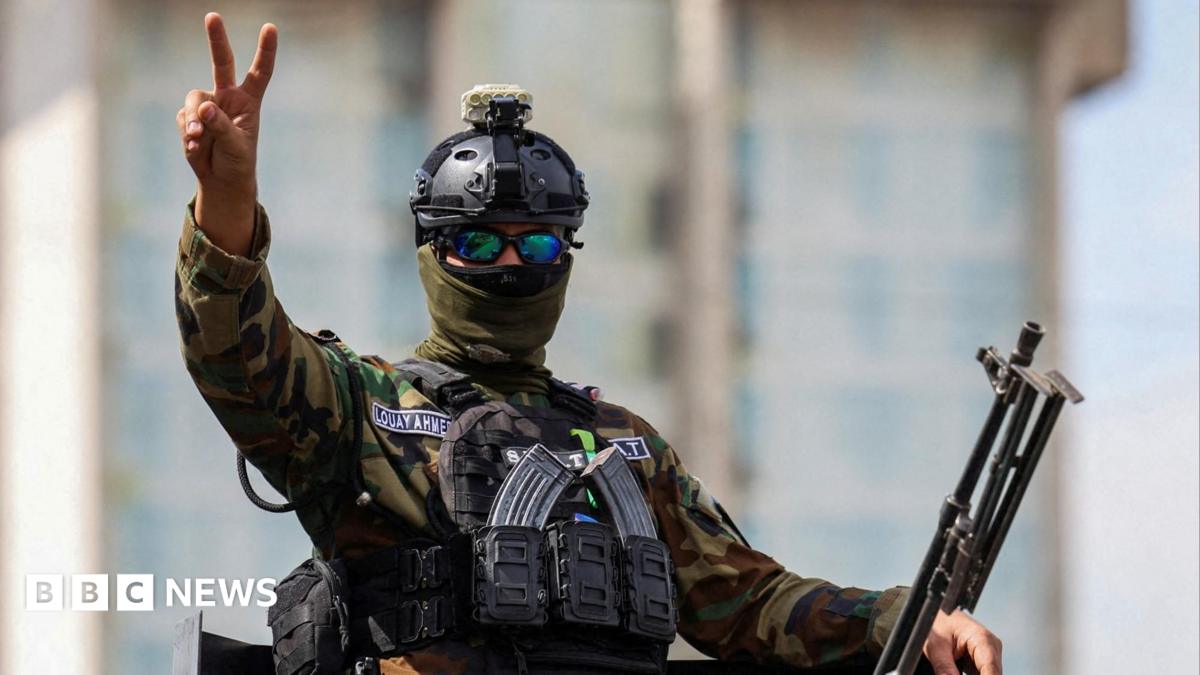
The final contingent of British and American military personnel has departed Iraq, closing a chapter that began more than ten years ago with the international campaign to dismantle the Islamic State group. The last roughly 100 UK troops left their base in Irbil, located in the northern Kurdistan region, in an operation coordinated over recent weeks with US forces, who also completed their withdrawal on Wednesday.
The pullout fulfills a bilateral agreement signed two years ago between Washington and Baghdad, which set a deadline of the end of this month for foreign troops to leave. The departure effectively concludes Operation Inherent Resolve, the coalition mission that was launched in 2014 after IS seized swathes of Iraqi and Syrian territory and declared a so-called caliphate.
Iraqi Prime Minister Ali al-Zaidi described the moment as a turning point for the nation. He said the end of the coalition's mission represented "Iraq's transition to a phase in which it assumes full responsibility for its security and stability." To commemorate the handover, his government intends to hold four "Sovereignty Days" as a national holiday marking the withdrawal.
Both London and Washington framed the exit as a success rather than a retreat. The UK Ministry of Defence said that after more than a decade of operations, training, and capacity building, the Iraqi Security Forces and the Kurdish Peshmerga had secured "the enduring territorial defeat of Daesh in Iraq" and were now well positioned to take primary responsibility for the country's security. The statement added that with these objectives achieved, Iraq and its international partners could begin a new chapter of security cooperation under Iraqi leadership.
From the Pentagon, spokesman Sean Parnell said the coalition's departure from Irbil marked the successful conclusion of the military mission that defeated IS in Iraq. He cautioned, however, that the primary responsibility for addressing the country's remaining security challenges now rests with the government in Baghdad. Those challenges include IS remnants as well as Iran-aligned militias that, in his words, undermine Iraqi sovereignty and regional stability.
The Iraqi government declared the military defeat of IS in 2017, but coalition forces stayed on to prevent a resurgence. A recent United Nations report estimated that sustained counter-terrorism pressure by Iraqi forces had reduced IS to several hundred fighters who are capable only of "unsophisticated operations." That assessment suggests the territorial threat has been largely contained, though not entirely eliminated.
A more immediate concern for Baghdad is the array of Iranian-backed militias operating inside Iraq. Zaidi, who took office in May, has pledged to disarm these groups and bring all weapons under state control following the coalition's exit. Several powerful factions have resisted his plans, and analysts note that without a US military presence, their influence could grow further.
The final months of the deployment were far from quiet. Since the outbreak of the US and Israeli war with Iran earlier this year, militias had been targeting the remaining American and British personnel stationed at Irbil air base. Hundreds of NATO troops based in Baghdad left the country in March as tensions escalated. A BBC team visiting the coalition base in April, during a fragile ceasefire between Washington and Tehran, was forced to circle the airfield in an RAF transport aircraft while drones were being launched nearby.
At the peak of the US bombing campaign against Iran, the base was targeted by as many as 28 drones and missiles in a single day. RAF Regiment Gunners, among the last British personnel on the ground, shot down more than 100 drones during the first six weeks of the conflict. Many of the attacking drones were launched by Iranian-backed militias operating within Iraq, underscoring the perilous environment in which the withdrawal took place.
In its parting statement on Wednesday, the Ministry of Defence paid tribute to UK personnel who served in the counter-IS mission. It said British forces had provided "valuable support, training and assistance" to more than 111,000 members of the Iraqi Security Forces, including over 21,000 Peshmerga fighters in the semi-autonomous Kurdistan Region. The RAF, meanwhile, conducted thousands of sorties and struck more than 2,300 IS targets over the course of the campaign.
The Pentagon indicated that the United States would maintain "targeted training and intelligence support" for its Iraqi partners even after the withdrawal. US Central Command confirmed that the coalition's joint taskforce remains operational and is now based in Jordan. American forces will also continue their mission against IS in neighboring Syria, where the UN estimates the group still has up to 3,000 fighters. The RAF is expected to keep flying missions over Syria as well, aiming to prevent IS remnants from regaining a foothold.
This marks the third time that US and UK forces have pulled out of Iraq. Tens of thousands of troops were deployed to the country in 1991 after Saddam Hussein's invasion of Kuwait. They returned in 2003, when US President George W. Bush ordered Operation Iraqi Freedom to remove Saddam from power and eliminate weapons of mass destruction that ultimately proved not to exist. The fierce sectarian insurgency that followed the invasion cost tens of thousands of lives and shaped Iraq's politics for a generation.
The legacy of that earlier intervention loomed over the latest departure. Unlike the chaotic 2011 withdrawal, which preceded IS's rapid advance, this exit comes with Iraqi forces having demonstrated their capability in sustained combat. Yet questions remain about whether Baghdad can hold the line against both militant remnants and powerful militias without Western airpower and intelligence support on hand.
For the roughly 100 British troops who left Irbil this week, the mission's end brings a quiet conclusion to a deployment that had grown increasingly dangerous. Their departure, coordinated with American counterparts, signals that the era of large-scale Western military operations in Iraq has drawn to a close. What follows will depend largely on whether Iraq's own security apparatus can manage the pressures that remain.
What's Your Reaction?
 Like
0
 Dislike
0
 Love
0
 Funny
0
 Wow
0
 Sad
0
 Angry
0

Editor Politik. Mantan jurnalis cetak dengan spesialisasi politik elektoral. Menulis analisis kebijakan dan reportase parlemen.





Comments (0)