

UN Experts Find Reasonable Grounds of US War Crimes in Deadly Iran Missile Strikes
United Nations human rights investigators have concluded that there are reasonable grounds to believe the United States military committed war crimes during two separate missile st
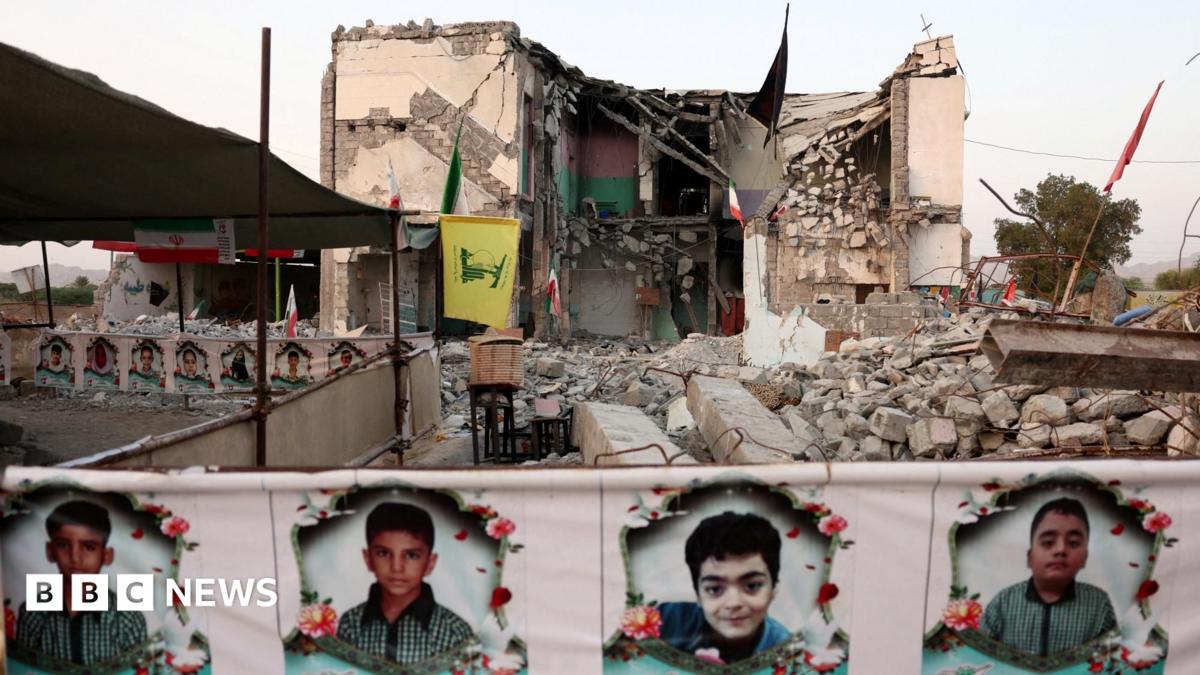
United Nations human rights investigators have concluded that there are reasonable grounds to believe the United States military committed war crimes during two separate missile strikes in Iran that resulted in the deaths of at least 177 civilians.
The findings were published in a comprehensive report by the Independent International Fact-Finding Mission on Iran and submitted to the UN Human Rights Council. The document evaluated civilian casualties and structural devastation resulting from foreign military operations as well as internal state repression across the country.
According to the mission’s three independent experts, the two lethal bombardments—which struck an elementary school in the southern town of Minab and a municipal sports facility in Lamerd—amounted to unlawful, indiscriminate attacks against civilian populations and non-military infrastructure.
The investigators highlighted the severe double threat currently facing the Iranian public, warning that ordinary civilians have been trapped between the gross human rights abuses and crimes against humanity carried out by their own ruling government and the deadly international conflict involving the United States and Israel.
Both scrutinized military strikes occurred on February 28, the date marking the outbreak of the war launched by the US and Israel against Iran. The deadliest of the incidents occurred in Minab, where high-yield missiles hit the Shajareh Tayyebeh Primary School.
Local authorities reported that the Minab school strike killed at least 156 people, including 120 children, making it one of the single most devastating civilian casualty incidents recorded throughout the entire conflict.
In their assessment, the UN panel noted that while the school facility was situated adjacent to an Islamic Revolutionary Guard Corps naval base that was also targeted during the operation, the educational building was clearly identifiable as civilian property. The investigators found no evidence to suggest that the school was being utilized for any military objective.
Furthermore, the experts established that Tomahawk cruise missiles were deployed in the Minab attack, noting that the United States is the only combatant in the theater possessing that specific munition. They also cited media accounts pointing to an initial US military review that recognized American responsibility for the strike.
Based on eyewitness accounts from survivors who confirmed the school was struck twice, the UN mission concluded that the educational complex was the specific intended point of impact, ruling out the likelihood of an errant missile trajectory or incidental collateral damage from the neighboring naval installation.
The United States military has not publicly released the formal conclusions of its internal inquiry into the Minab incident. However, US Defence Secretary Pete Hegseth previously insisted that American forces would never intentionally engage civilian targets.
The second incident examined in the UN report took place on the same day in the town of Lamerd, where Precision Strike Missiles released clouds of high-density tungsten pellets over a public sports hall and an adjacent residential quarter.
That strike claimed the lives of at least 21 civilians, including seven children, and left numerous residents wounded, according to local administrative figures. As with the school in Minab, the UN investigators determined that the Lamerd sports complex was plainly identifiable and completely devoid of any military activity.
The panel concluded that reasonable grounds exist to attribute the Lamerd strike to US forces, emphasizing that the US is the only belligerent operating Precision Strike Missiles in the conflict. In contrast, the US military had previously asserted that it carried out no combat strikes in Lamerd on that date and rejected assessments that a PrSM munition was used.
For both the Minab and Lamerd attacks, the UN experts formally determined that there were reasonable grounds to conclude the US committed war crimes by executing indiscriminate assaults that caused disproportionate loss of civilian life, severe physical injury, and extensive destruction to civilian objects.
Alongside its assessment of foreign military operations, the report documented that Iranian authorities carried out crimes against humanity while crushing mass anti-government demonstrations that erupted across the country between December 2025 and January 2026.
The UN mission characterized the state's crackdown as an unprecedented escalation compared to earlier unrest, identifying widespread lethal violence, mass fatalities, severe injuries, and sweeping detentions that spanned all 31 Iranian provinces.
Drawing on testimony from eyewitnesses, medical personnel, and victims' families, the report detailed how Iranian security forces took up positions on rooftops and elevated structures, discharging military assault rifles directly into crowds of demonstrators and inflicting catastrophic injuries.
Neither the United States nor the Iranian government immediately issued formal responses to the UN report. Iranian officials have historically denied allegations of systematic domestic rights violations, while the US has consistently maintained that its operations strictly avoid civilian infrastructure.
What's Your Reaction?
 Like
0
 Dislike
0
 Love
0
 Funny
0
 Wow
0
 Sad
0
 Angry
0

Reporter Senior. Meliput dinamika politik nasional, kebijakan publik, dan isu parlemen selama 8 tahun. Alumni FISIP UI.






Comments (0)