

What Is Pneumonic Plague? Symptoms, Spread and Treatment Explained as Russia Investigates Lab Worker Death
The World Health Organization has formally requested additional details from Russia following the death of an employee at a Siberian laboratory dedicated to plague research. The ci
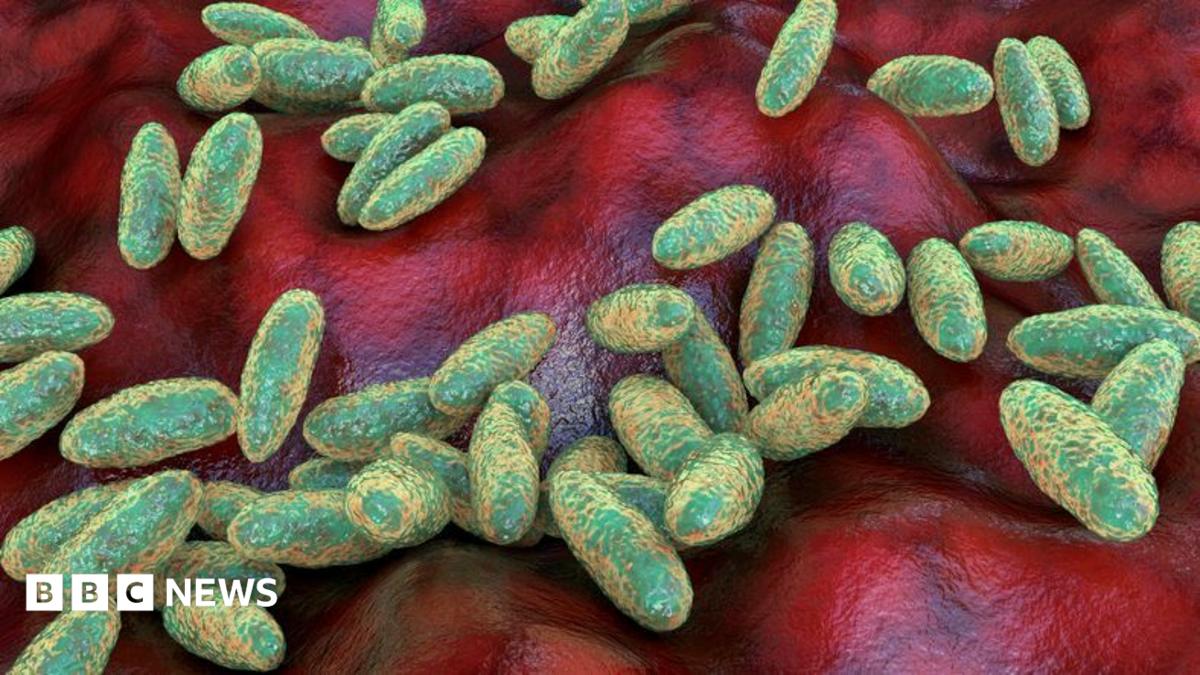
The World Health Organization has formally requested additional details from Russia following the death of an employee at a Siberian laboratory dedicated to plague research. The circumstances surrounding how the worker became ill remain unclear, and media coverage has generated widespread speculation about what exactly occurred at the facility.
Russian authorities are continuing their investigation into the cause of death, but they have stated that individuals who had contact with the deceased researcher all tested negative for pneumonic plague. This development has done little to quiet public curiosity about the disease itself and the risks associated with studying it in laboratory settings.
Pneumonic plague represents a severe infection of the lungs and is frequently characterized as the most virulent form of plague disease. Unlike its more commonly known counterpart, bubonic plague, which primarily affects the lymph nodes, pneumonic plague attacks the respiratory system directly. A third variant, septicaemic plague, targets the bloodstream.
The pneumonic form can emerge in patients who initially develop one of the other two types of plague. When bubonic or septicaemic plague spreads to the lungs, it can transform into pneumonic plague, creating a far more dangerous clinical picture.
Patients suffering from pneumonic plague typically experience significant breathing difficulties, sharp chest pain, and frequently cough up blood. These symptoms develop rapidly and can escalate within a very short timeframe, making early recognition critical for survival.
While pneumonic plague is considered more severe than bubonic plague, it is also less common. Global infection numbers for all three plague types fluctuate annually, but estimates suggest somewhere between 1,000 and 3,000 cases occur worldwide each year. The majority of these are bubonic cases, with many concentrated in central Africa, though infections also appear in Russia, India, China, and the United States.
Professor Piero Olliaro, a specialist in Poverty-Related Infectious Diseases at the University of Oxford, emphasized that plague has not been eradicated. He explained that Yersinia pestis, the bacterium responsible for the disease, continues to survive in animal populations across numerous regions of the world. Approximately 200 rodent species can carry the bacterium, with natural reservoirs existing throughout the Americas, Eurasia, and Africa.
According to Professor Olliaro, isolated human cases continue to emerge periodically. However, he noted that established monitoring systems, infection-control protocols, and effective antibiotic treatments serve as essential tools for minimizing the impact of these outbreaks.
The transmission of plague occurs through several pathways. The disease is caused by bacteria typically found in small mammals and the fleas that live on them. Humans can become infected through flea bites or by handling animals carrying the infection.
Person-to-person transmission of pneumonic plague is also possible when an infected individual coughs droplets containing bacteria into the air, which are subsequently inhaled by others nearby. This method of spread generally requires close contact between individuals. Additionally, someone who has developed septicaemic plague can progress to pneumonic plague if the infection migrates into their lungs.
Medical historians believe pneumonic plague was the primary form responsible for the Black Death, the catastrophic pandemic that claimed millions of lives throughout Europe during the 14th century. This historical context continues to shape public perceptions of the disease and its potential for widespread devastation.
Dr Zania Stamataki, Associate Professor of Viral Immunology at the University of Birmingham, addressed concerns about studying such dangerous pathogens in laboratory environments. She acknowledged that the concept of plague research understandably raises alarm but stressed the importance of explaining why this work is necessary.
Dr Stamataki pointed out that plague is not merely a disease of the past. It remains endemic among rodent populations across Africa, Asia, and the Americas, with human cases occurring every year, including outbreaks of the pneumonic variety. She explained that developing diagnostic tools, creating vaccines, and monitoring for antibiotic resistance all depend on laboratories that can safely handle and examine the live bacterium. Such research, she argued, is essential for preparing against future outbreaks.
Treatment options for pneumonic plague exist, but timing is crucial. According to the World Health Organization, the incubation period for pneumonic plague can be extraordinarily short, sometimes lasting only 24 hours. Experts caution that without rapid diagnosis and prompt treatment, the disease is almost always fatal.
Fortunately, plague responds well to antibiotics when treatment begins early. Dr Malick Gibani, Clinical Associate Professor in Bacterial Vaccinology at Imperial College London, described pneumonic plague as a particularly severe manifestation of plague disease that poses a recognized threat to public health worldwide.
Dr Gibani noted that some medical textbooks cite a 100% mortality rate for untreated cases, though obtaining accurate contemporary figures presents challenges. He emphasized that antibiotics can effectively treat the infection, especially when administered promptly. For this reason, individuals with potential high-risk exposure may receive preventive antibiotics and be placed in quarantine as a precautionary measure.
In the Russian case, uncertainty persists regarding whether the deceased worker was actually infected with pneumonic plague. Russian officials released a statement indicating that tests revealed no microorganisms connected to the patient's professional work, leaving the exact cause of death unresolved at this stage.
International reactions have begun to emerge. US President Donald Trump stated that Washington was examining the situation closely. The Centers for Disease Control and Prevention indicated there was no evidence suggesting a broader threat to the United States. Meanwhile, the UK's Health and Safety Authority confirmed it was pursuing additional information but characterized the risk to the British public as very low.
What's Your Reaction?
 Like
0
 Dislike
0
 Love
0
 Funny
0
 Wow
0
 Sad
0
 Angry
0

Reporter Senior. Meliput dinamika politik nasional, kebijakan publik, dan isu parlemen selama 8 tahun. Alumni FISIP UI.





Comments (0)