

Eiffel Tower CEO to Step Down Following Controversy Over Exclusion of Female Staff During Hindu Delegation Visit
The chief executive of the company that operates the Eiffel Tower will leave his position at the end of the year, following widespread condemnation over the removal of female emplo
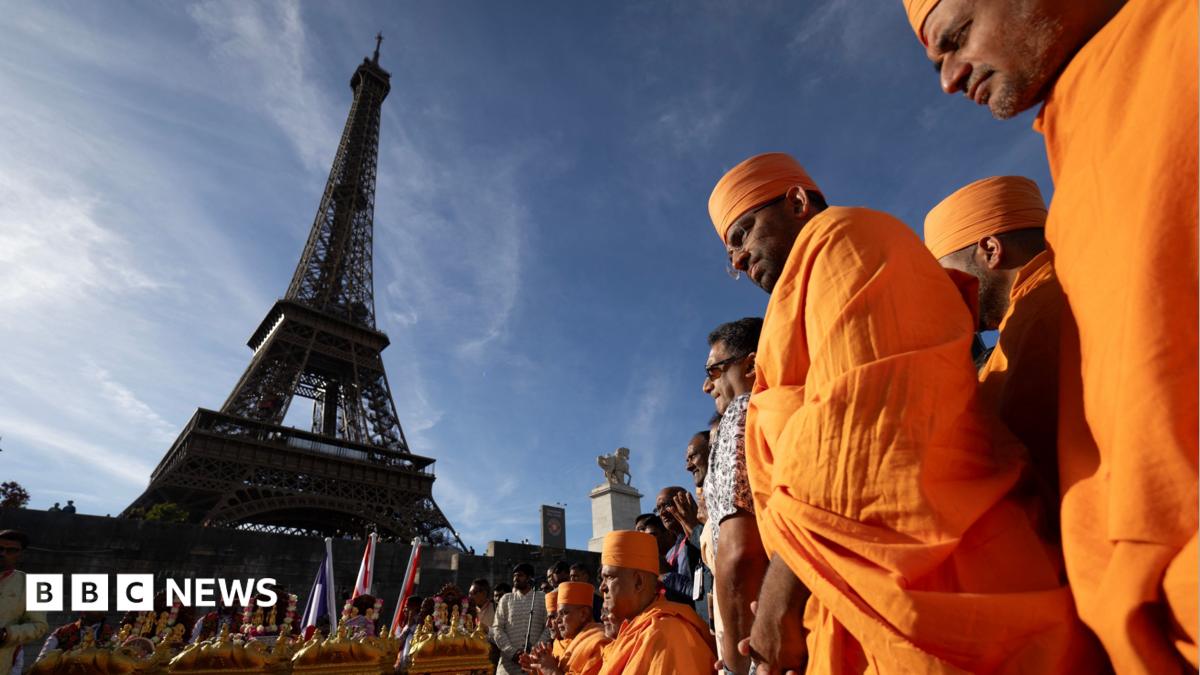
The chief executive of the company that operates the Eiffel Tower will leave his position at the end of the year, following widespread condemnation over the removal of female employees during a visit by a Hindu religious group earlier this month. Patrick Branco Ruivo, who has served as director general of the iconic Paris landmark since 2018, will depart from his role, the operating company SETE confirmed in an official statement.
The controversy erupted when female staff members were replaced by male colleagues as a delegation of approximately 100 people associated with the Bochasanwasi Akshar Purushottam Swaminarayan Sanstha (BAPS) group toured the Eiffel Tower. The organisation, whose beliefs trace back to the 18th Century, maintains a strict separation between men and women, including in temple activities and at building entrances.
According to SETE, an internal investigation determined that "operational flaws and shortcomings" in the planning of the visit resulted in the "unacceptable" removal of female personnel from their posts. The company had previously stated that the Hindu delegation had requested the visit be arranged in a manner that would limit "interactions with women," acknowledging that "these conditions should not have been accepted."
A representative from a staff union described how "women were asked to leave their places of work" and reported that those affected felt "humiliated" by the experience. Employees at the monument further disclosed that female workers were "instructed not to go through or cross certain areas while the delegation was present," effectively segregating them from the visiting group within their own workplace.
The incident provoked significant unrest among the tower's workforce, culminating in a strike that forced the landmark to close its doors to visitors. The walkout served as a visible demonstration of employee outrage, drawing attention to the treatment of female staff members and prompting widespread public debate about the incident.
Political figures across the spectrum swiftly denounced the situation. Yaël Braun-Pivet, president of France's National Assembly, expressed her firm opposition, stating: "I refuse to allow women to be compelled to step aside in order to meet the demands of foreign visitors." Her remarks underscored the broader principles of gender equality that many felt had been compromised by the arrangement.
Emmanuel Gregoire, the Socialist mayor of Paris, characterised the decision as "absurd, unjust and unacceptable" and responded by ordering two separate investigations into the circumstances surrounding the visit. The swift political response reflected the sensitivity of the issue in France, where laïcité — the strict separation of religion and public life — is a foundational principle.
SETE chair Ariel Weil announced on Tuesday that he had requested the implementation of measures and training programmes designed to promote gender equality within the organisation. "The coming months will allow us to prepare for the leadership transition under the best possible conditions," Weil said, signalling a commitment to addressing the systemic issues the incident exposed.
BAPS issued an apology "for any pain or inconvenience caused" earlier this month, adding that "we believe in the universal values of mutual respect and service." On its website, the group describes itself as a "spiritual, volunteer-driven fellowship dedicated to improving society" through Hindu values. The organisation maintains temples in major cities worldwide, including London, Los Angeles and Sydney.
The group draws its beliefs from the teachings of Lord Swaminarayan, a late 18th-Century celibate ascetic regarded by his followers as an incarnation of Vishnu, the revered Hindu god of preservation. BAPS maintains that the segregation of men and women was introduced for the benefit of women, arguing that it provides a protected environment for female worshippers.
However, critics contend that 18th-Century beliefs have no place in contemporary society and argue that keeping women out in the name of religious practices amounts to discrimination. The incident has reignited broader conversations about how secular institutions should navigate requests rooted in religious traditions that conflict with principles of gender equality.
The Eiffel Tower, one of the world's most recognisable structures and a symbol of Paris itself, welcomes millions of visitors annually. The decision to accommodate the delegation's request placed the monument's management in the uncomfortable position of appearing to endorse gender-based exclusion at a site that represents French republican values.
For SETE, the fallout represents a significant reputational challenge. The company has faced criticism not only for acceding to the delegation's requests but also for the manner in which the arrangements were implemented, which internal investigators described as suffering from operational shortcomings rather than being a deliberate policy decision.
The departure of Branco Ruivo at year's end marks a leadership transition that SETE hopes will allow the organisation to move forward. The company has indicated that preparations for the transition will proceed over the coming months, alongside efforts to ensure that gender equality measures are embedded in future operations.
The episode has also raised questions about how cultural and religious sensitivities should be balanced against workplace protections and anti-discrimination obligations. While institutions often seek to accommodate diverse religious practices, the Eiffel Tower case illustrates the potential consequences when such accommodations result in the unequal treatment of employees.
For the female staff members affected, the incident left a lasting impression of humiliation and exclusion from their own workplace. Their decision to strike demonstrated a collective refusal to accept such conditions, and their actions ultimately contributed to both the political response and the leadership change now underway.
As the Eiffel Tower prepares for new leadership, the incident serves as a reminder of the tensions that can arise when religious traditions intersect with secular workplace norms. The coming months will test SETE's ability to implement meaningful reforms and restore confidence among its workforce and the public it serves.
What's Your Reaction?
 Like
0
 Dislike
0
 Love
0
 Funny
0
 Wow
0
 Sad
0
 Angry
0

Reporter Senior. Meliput dinamika politik nasional, kebijakan publik, dan isu parlemen selama 8 tahun. Alumni FISIP UI.






Comments (0)