

Federal Reserve Raises US Interest Rates for First Time in Three Years to Combat Stubborn Inflation
The United States Federal Reserve has approved its first interest rate hike in more than three years, lifting borrowing costs in a determined effort to rein in persistent inflation
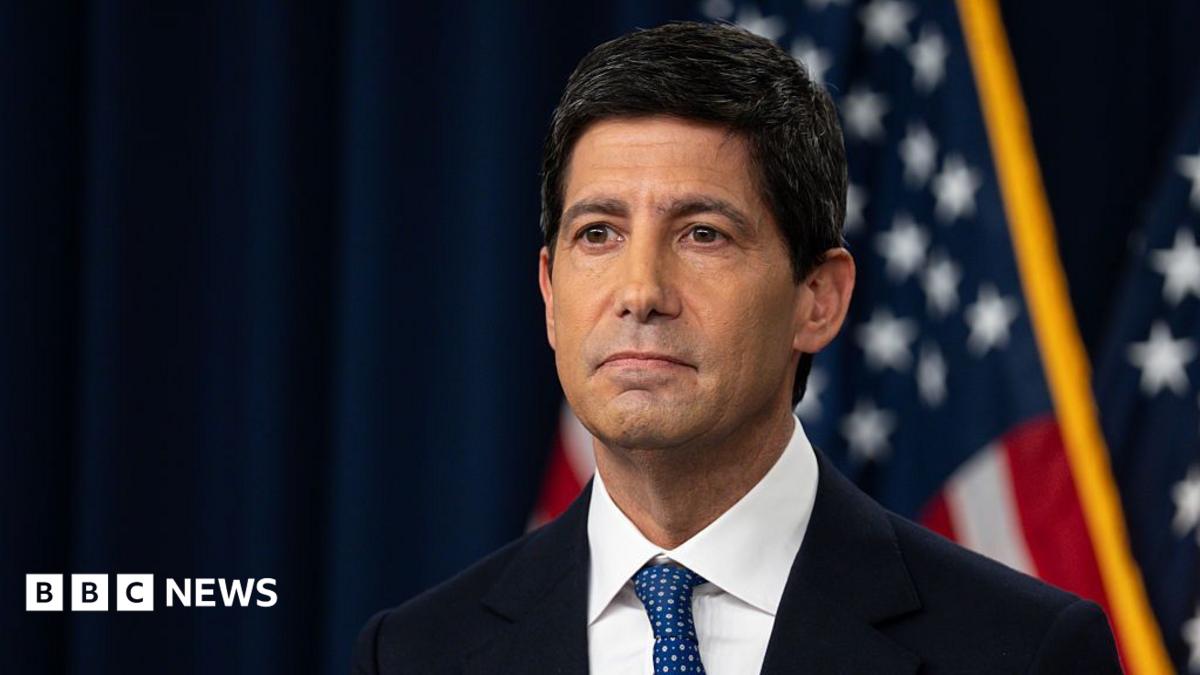
The United States Federal Reserve has approved its first interest rate hike in more than three years, lifting borrowing costs in a determined effort to rein in persistent inflationary pressures. Following a unanimous vote by central bank policymakers on Wednesday, the benchmark lending rate was increased by a quarter of a percentage point, shifting the target range up to 3.75% to 4% from its previous level of 3.5% to 3.75%.
Federal Reserve Chair Kevin Warsh defended the policy shift during a press briefing, characterizing the decision as both sober and responsible. Addressing the underlying economic factors that prompted the move, Warsh emphasized that inflation has been running above the central bank's desired target for more than five years, asserting that price growth has remained excessively elevated for far too long.
The decision came despite intense pushback from President Donald Trump, who publicly advocated for monetary easing rather than tightening. Trump argued that domestic interest rates ought to be slashed to 1% or lower, asserting that the nation possesses the world's finest credit standing. Following the announcement, the president took to social media to reiterate his demands, calling on the central bank to rapidly lower interest rates.
When questioned about the message this policy move sent to the White House, Warsh deflected direct confrontation, chuckling and declining to elaborate on conversations with the president. He maintained that the central bank remains committed to executing its core duties independently, noting that part of maintaining independence involves staying in their designated lane. Earlier in the day, White House press secretary Kush Desai stated on Fox News that the administration had repeatedly reaffirmed its commitment to the central bank's autonomy, while maintaining that this does not preclude the president from expressing his perspective.
The latest adjustment marks the Federal Reserve's first rate shift in either direction since benchmark borrowing costs were cut in December 2025. It also represents the first time the Fed has increased rates since July 2023. The leadership change at the central bank has also shaped this period, with Warsh having taken the helm after his predecessor, Jerome Powell, concluded his term and stepped down earlier this year following repeated criticism from Trump regarding monetary policy.
The central bank's policy tightening unfolds against a challenging global macroeconomic backdrop. Escalating geopolitical turmoil stemming from the US-Israel conflict with Iran has triggered a significant surge in global oil markets. These rising crude costs have spilled over into everyday consumer expenses, propelling domestic diesel prices to historic all-time highs and pushing the average price of automotive gasoline beyond $4 per gallon.
Warsh acknowledged that monetary policy tools are inherently limited in addressing specific commodity spikes, explaining that the Federal Reserve cannot control individual price points for crude oil or grocery store staples. However, he stressed that central bankers possess the tools necessary to prevent such supply-side shocks from broadening into widespread, systemic price increases across the wider economy.
Central bank officials underscored that a robust labor market and broad-based domestic economic strength provided the necessary foundation to focus primarily on stabilizing prices. Warsh highlighted the social dimension of price stability, pointing out that the least affluent households—who spend a greater proportion of their earnings on essentials—have the most to gain when inflation is brought under control.
The financial sector moved quickly to reflect the Fed's quarter-point adjustment. Major commercial lenders, including JP Morgan, KeyCorp, and BNY, immediately announced increases to their prime lending rates, elevating them to 7% from the previous 6.75%. This benchmark shift directly impacts consumer finance by raising the borrowing costs attached to credit card balances, personal credit lines, and variable-rate business loans.
In the residential housing market, borrowing costs have climbed over the past year, although they remain below the peak levels recorded in 2023. According to recent data from Freddie Mac, the average rate for a standard 30-year fixed-rate mortgage stands at 6.76%, while 15-year fixed home loans are averaging 6.09%. Because a vast majority of existing American homeowners hold fixed-rate agreements, their regular monthly payments will remain unchanged, though prospective homebuyers and borrowers seeking refinancing will face steeper financing expenses.
The economic strain from living costs carries heightened significance ahead of the upcoming mid-term elections in November. Affordability and household budgets have emerged as foremost concerns for voters grappling with higher fuel expenses and everyday retail prices, making the Fed's dual mandate of economic growth and price stability politically sensitive.
Looking ahead, Federal Reserve policymakers signaled that additional policy tightening could be on the horizon. Although Warsh declined to share a personal projection for the future trajectory of borrowing costs, the majority of his colleagues indicated that they anticipate another rate increase before the conclusion of this year, which would lift the benchmark rate into a range of 4% to 4.25%.
Furthermore, a narrow majority of policymakers foresee the possibility of borrowing costs climbing further next year, potentially reaching a peak between 4.25% and 4.5%. According to their baseline projections, monetary easing is not expected to commence until 2028 and 2029, by which time inflation is forecast to gradually decline back to the central bank's long-term 2% target.
The United States is not isolated in navigating inflationary pressures tied to Middle Eastern geopolitical unrest. Other major monetary authorities are executing similar strategies, with the European Central Bank implementing its own rate increase last week, while the Bank of England is scheduled to deliver its benchmark rate determination on Thursday.
What's Your Reaction?
 Like
0
 Dislike
0
 Love
0
 Funny
0
 Wow
0
 Sad
0
 Angry
0

Reporter Senior. Meliput dinamika politik nasional, kebijakan publik, dan isu parlemen selama 8 tahun. Alumni FISIP UI.






Comments (0)