

Flydubai Flight to Tel Aviv Diverted to Saudi Arabia After Pilots Reportedly Brawl in Cockpit
A Flydubai passenger jet travelling from Dubai to Tel Aviv was forced to divert to Saudi Arabia on Wednesday morning after what Israeli officials have described as a physical alter
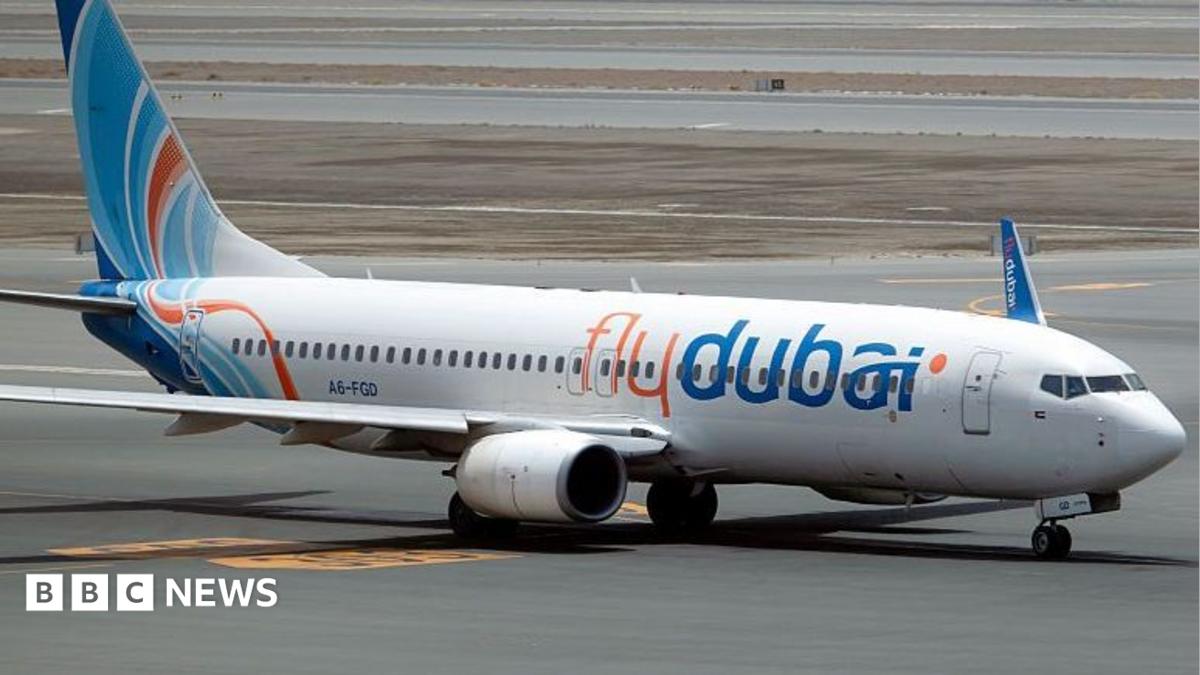
A Flydubai passenger jet travelling from Dubai to Tel Aviv was forced to divert to Saudi Arabia on Wednesday morning after what Israeli officials have described as a physical altercation between the flight's pilot and co-pilot. The aircraft, which had departed Dubai International Airport in the United Arab Emirates, was carrying roughly 150 passengers, the majority of them Israeli citizens, when the disturbance occurred mid-flight.
According to flight tracking data from Flightradar24, the plane first transmitted an emergency squawk code approximately two hours into its journey. Within minutes, the transponder signal switched to the code reserved for reporting a hijacking, a development that would ordinarily trigger the most serious possible response from both aviation authorities and military commands across the region. The tracking website reported that the signal was subsequently returned to the standard general emergency code.
The Israeli prime minister's office moved quickly to dampen fears of a security incident, stating that the episode was not believed to have been a hijacking. Instead, local media outlets, citing Israeli defence officials, reported that the emergency signal was likely triggered as a consequence of the confrontation between the two pilots at the controls of the aircraft.
Rather than continuing to its intended destination of Ben-Gurion Airport near Tel Aviv, the flight was redirected and ultimately landed at Tabuk Airport, located in northeastern Saudi Arabia. The diversion marked an unusual and diplomatically sensitive turn for a commercial route that has become increasingly busy in recent years.
The incident prompted a significant response from Israeli authorities. The Israeli air force scrambled fighter jets in reaction to the unfolding situation, a standard defensive measure when an aircraft in the region transmits a hijacking code. Prime Minister Benjamin Netanyahu also held urgent consultations regarding the incident, underscoring the level of concern the emergency signals generated before the true nature of the disruption became clear.
The sequence of transponder codes transmitted by the aircraft illustrates how rapidly the situation escalated from the perspective of air traffic controllers and monitoring agencies. The initial general emergency code would have alerted controllers to an unspecified problem aboard the flight. The subsequent switch to the hijacking code, even if brief, would have been interpreted as a potential unlawful seizure of the aircraft, triggering the most severe protocols available.
Aviation experts note that squawk codes are a critical communication tool between aircraft and ground control. The general emergency code, 7700, signals an unspecified emergency. The hijacking code, 7500, is treated with the utmost seriousness and typically activates military interception procedures, particularly in regions with heightened security sensitivities such as the Middle East.
The fact that the code was reportedly reset to the general emergency signal would have provided some reassurance to monitoring authorities, though the precise timeline of these transmissions remains a matter of official investigation. Flightradar24's data offers a partial public record, but a full account will depend on the outcome of formal inquiries by aviation regulators and the airline itself.
Flydubai, a state-owned carrier based in Dubai, operates an extensive network across the Middle East, Africa, Europe and Asia. The Dubai-to-Tel Aviv route has formed part of the growing commercial ties between the UAE and Israel since the two countries normalised relations under the Abraham Accords in 2020. That diplomatic opening transformed a previously unavailable air link into a routine and economically significant connection.
The diversion to Tabuk raises practical and diplomatic questions. Saudi Arabia does not maintain formal diplomatic relations with Israel, although ties have quietly expanded in recent years. The landing of an Israel-bound flight carrying predominantly Israeli passengers on Saudi soil represents an uncommon, though not unprecedented, occurrence, and Israeli officials will likely be involved in coordinating the onward movement of the passengers and crew.
The passengers aboard the flight, most of whom were Israeli, would have experienced considerable alarm as the aircraft changed course and descended toward an unplanned destination in a country with which their home nation has no official diplomatic ties. Emergency services at Tabuk Airport would have been placed on standby as a matter of routine for any diverted flight.
The physical altercation between pilots, if confirmed, would represent a serious breach of aviation safety protocols. Commercial flight decks are governed by strict crew resource management standards designed to prevent and defuse conflicts between flight crew members. Physical confrontation between the two pilots responsible for the aircraft is exceptionally rare and would almost certainly become the subject of a formal safety investigation.
Such an investigation would examine a range of factors, including crew scheduling, fatigue management, the pairing of individual pilots, and any prior interpersonal difficulties. Airlines are required to report serious flight deck disruptions to their national civil aviation authorities, and findings could lead to disciplinary action, regulatory sanctions, or changes to crew operating procedures.
The involvement of the Israeli air force highlights the heightened security environment surrounding aviation in the region. Military interception of civilian aircraft is a serious step taken only when there is credible concern about an aircraft's status. The rapid dispatch of fighter jets reflects the caution with which the hijacking code is treated, particularly for a flight originating in the Gulf and bound for Israel.
For Flydubai, the incident presents a reputational and operational challenge. The airline will be expected to cooperate fully with authorities in the UAE, Israel and Saudi Arabia as the circumstances are established. Communication with passengers and their families, as well as with the travelling public more broadly, will be a priority in the coming days.
The incident also serves as a reminder of the layered safety and security systems that underpin modern commercial aviation. Transponder codes, military monitoring, air traffic control coordination across borders, and rapid diplomatic engagement all came into play within a matter of minutes. The fact that the flight landed safely, with all aboard reported to be unharmed, reflects the effectiveness of those systems even when triggered by an unexpected and highly unusual event.
Further details are expected as Israeli, Emirati and Saudi authorities complete their initial assessments. The passengers and crew who landed in Tabuk will require arrangements for onward travel, and the outcome of the safety investigation will determine what, if any, consequences follow for the individuals involved and the airline's operating procedures.
What's Your Reaction?
 Like
0
 Dislike
0
 Love
0
 Funny
0
 Wow
0
 Sad
0
 Angry
0

Reporter Senior. Meliput dinamika politik nasional, kebijakan publik, dan isu parlemen selama 8 tahun. Alumni FISIP UI.






Comments (0)