

India Confronts Steep US Tariff Threats Over Continued Purchases of Russian Crude
The United States House of Representatives has approved sweeping legislation that grants President Donald Trump broad authority to enforce penalties on Russia and levy tariffs as h
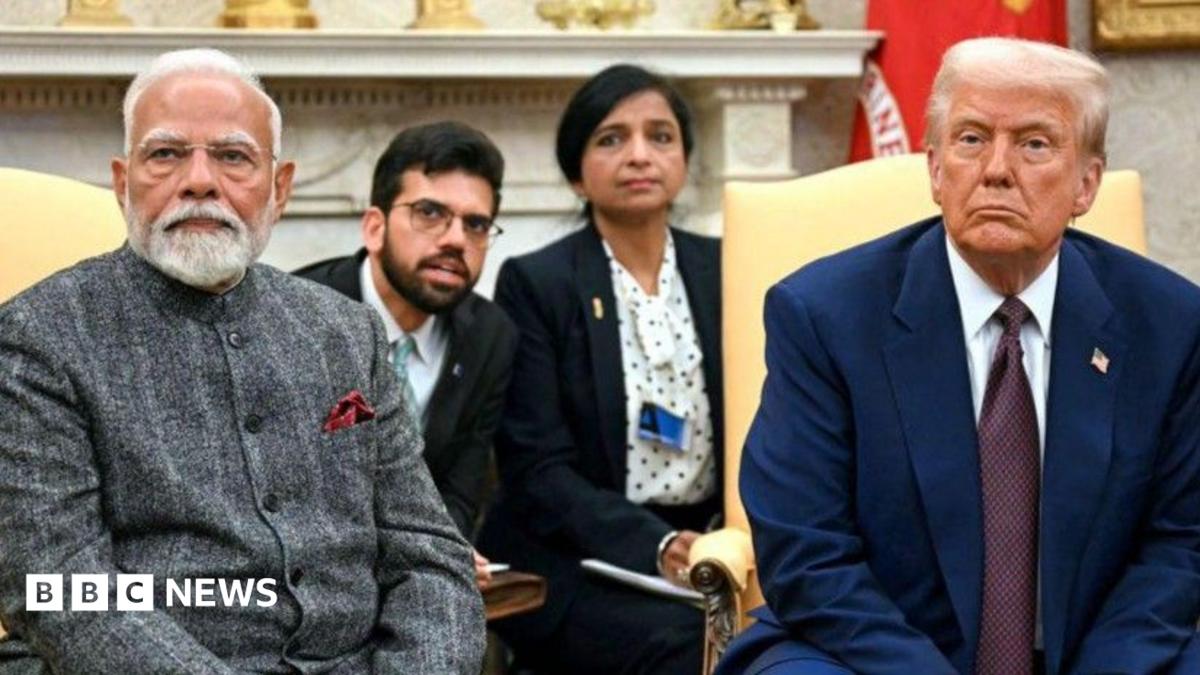
The United States House of Representatives has approved sweeping legislation that grants President Donald Trump broad authority to enforce penalties on Russia and levy tariffs as high as 100% on foreign nations purchasing Russian oil and natural gas. The legislative move places major energy importers, particularly India, directly under the threat of punitive economic measures.
Following its passage in the House on Wednesday, the sanctions bill now heads to the desk of President Trump to be signed into law. Under standard provisions outlined in the measure, foreign governments would typically receive a 180-day window to either scale back their Russian energy intake or negotiate terms with Washington, though the US president retains the power to accelerate that timeframe.
For roughly four years, India has capitalized on the international energy market disruptions triggered by Moscow’s invasion of Ukraine. With Western buyers turning away from Russian fossil fuels, New Delhi redirected massive volumes of discounted crude toward its domestic refineries, significantly lowering the overall expenditure for one of its most vital resource imports.
However, that long-standing commercial strategy has increasingly transformed into a significant diplomatic and economic vulnerability. India and China represent the two nations most exposed to the incoming US restrictions, given their status as the primary destinations for displaced Russian energy supplies since the conflict began.
According to data compiled by the Centre for Research on Energy and Clean Air, China received half of all Russian crude exports between December 2022 and August 2026. India ranked second by absorbing 37% of those shipments, while other regional consumers, including Turkey and the European Union, accounted for roughly 5% each over the same timeframe.
India's reliance on Moscow's energy sector expanded dramatically during this period. Figures from the New Delhi-based Global Trade Research Initiative show that Russia contributed 30.3% of India's total crude imports in fiscal year 2026, representing $40.8 billion out of an aggregate crude import expenditure of $134.7 billion.
During the month of July alone, Russian supplies surged to represent more than half of India's total oil imports. This single source vastly exceeded shipments from other traditional suppliers combined, surpassing the United Arab Emirates at 10.8%, Saudi Arabia at 9.6%, Venezuela at 6.3%, Brazil at 5.5%, Oman at 5.3%, and the United States at 2.9%.
American lawmakers have made their intentions clear following the vote. Democratic Senator Richard Blumenthal delivered a direct warning to the world's leading emerging economies, stating publicly that both China and India must begin sourcing their oil and natural gas from other international providers.
In response to the legislative development, Indian officials stated that the government is closely observing further actions on the matter. New Delhi reaffirmed its steadfast dedication to safeguarding domestic energy security for its population of 1.4 billion people, noting that senior officials have repeatedly raised the issue with American counterparts to highlight the broader consequences for bilateral relations and global energy stability.
Trade analysts in New Delhi have strongly criticized the punitive legislation. Ajay Srivastava, a former Indian trade official who leads the Global Trade Research Initiative, described the bill as a heavy-handed and perilous maneuver intended to pressure India into accepting unfavorable terms in bilateral trade negotiations. He emphasized that Indian purchases were driven by domestic necessity rather than supporting conflict, while simultaneously helping to stabilize global energy pricing.
The legislative threat arrives at a moment when the financial advantages of buying Russian crude have already diminished. The steep price reductions that initially incentivized Indian refiners during the early stages of the war have largely eroded due to heightened competition for available barrels, accompanied by escalating risks surrounding maritime insurance, shipping logistics, and compliance enforcement.
Transitioning entirely away from Russian energy would present steep operational challenges for Indian refiners. Analysis from S&P Global indicates that procuring alternative barrels would inevitably inflate crude acquisition, maritime freight, and insurance expenses, while also forcing tankers onto significantly longer transportation routes.
Maritime energy experts also question the capacity of global producers to absorb such a sudden shift in trade flows. Sumit Ritolia, an analyst at maritime intelligence firm Kpler, noted that the core dilemma extends beyond redirecting Russian barrels, centering instead on whether international markets possess enough spare crude to replace those volumes without causing severe market constriction.
Furthermore, the economic fallout of the proposed US legislation would extend well beyond energy markets. Because the potential tariffs would be levied directly on Indian products entering the American market rather than on crude arriving in India, the penalties could severely damage Indian exporters, weaken the domestic currency, compress refining profit margins, and widen the country's trade deficit.
Diplomatic observers warn that the timing of the measure could not be worse for relations between Washington and New Delhi. Michael Kugelman, a senior fellow at the Atlantic Council, observed that the bill emerges during critical final-stage trade discussions and already delicate bilateral ties.
Kugelman added that while India has attempted to build economic buffers by advancing trade pacts with key partners such as the European Union and deepening trade ties with China, facing potential 100% tariffs in a crucial export market like the US would inflict undeniable damage regardless of any diversification strategies.
What's Your Reaction?
 Like
0
 Dislike
0
 Love
0
 Funny
0
 Wow
0
 Sad
0
 Angry
0

Reporter Senior. Meliput dinamika politik nasional, kebijakan publik, dan isu parlemen selama 8 tahun. Alumni FISIP UI.






Comments (0)