

Historic Aztec Codex Returns to Mexico for Exhibition After Nearly Two Centuries in France
A monumental piece of Mesoamerican history has returned to Mexican soil as the Codex Azcatitlán, an illustrious centuries-old pictographic manuscript chronicling the Aztec civiliza
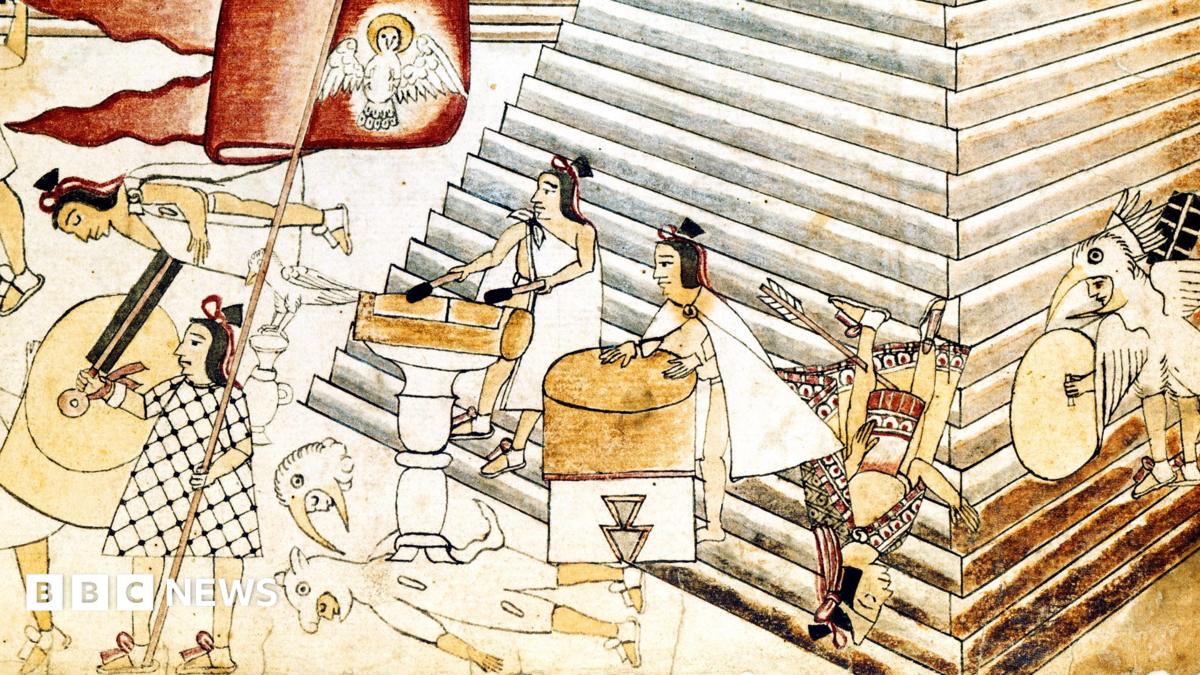
A monumental piece of Mesoamerican history has returned to Mexican soil as the Codex Azcatitlán, an illustrious centuries-old pictographic manuscript chronicling the Aztec civilization and its eventual downfall, goes on public display in Mexico for the first time in 186 years. The rare document offers a profound indigenous perspective on one of the most transformative eras in world history.
Created in the 16th century, only a few years after Spanish conquistadors arrived in what is present-day Mexico, the manuscript is widely regarded by scholars and historians as one of the most invaluable and comprehensive visual accounts of Aztec society. Its intricate illustrations provide an irreplaceable window into the lived experience, military struggles, and political transitions of the Mexica people.
The temporary return of the fragile masterpiece was made possible through a bilateral cultural exchange between France and Mexico, organized specifically to commemorate 200 years of official Franco-Mexican diplomatic relations. Under the terms of the agreement, the French government granted permission for the codex to travel across the Atlantic for this landmark exhibition.
In an equitable cultural arrangement, Mexico has reciprocated by agreeing to lend another priceless pre-Hispanic treasure, the Codex Boturini, to France. This paired exchange allows citizens and researchers in both countries unprecedented access to pivotal documents that narrate the foundational histories of the Americas.
The framework for this high-profile exchange of cultural patrimony was negotiated directly at the highest level of government. Mexican President Claudia Sheinbaum finalized the agreement alongside French President Emmanuel Macron during the latter’s official state visit to Mexico last year.
The Codex Azcatitlán itself is celebrated for its vivid, dynamic pictograms, which weave together complex historical narratives without relying primarily on alphabetic text. Among its most renowned depictions is the dramatic arrival of Spanish conquistador Hernán Cortés in the region, illustrating the initial encounters that would permanently alter the course of the continent.
Within those folios, Cortés is portrayed marching alongside Spanish soldiers clad in full metal armor, bearing shields and contemporary European weapons. The illustrations also capture indigenous men carrying heavy supply loads on their backs behind the marching troops, while the conquistadors hoist a standard emblazoned with the figure of an angel.
Other folios within the manuscript dramatically convey the desperate military conflict that engulfed the Aztec capital, capturing the battle to defend the great pyramid of Tenochtitlán from the Spanish forces. In these intense battle scenes, an Aztec warrior is depicted disguised in bird regalia while wielding a shield against the invaders.
The visual record spares little detail regarding the brutality of the conflict, showing another defender tumbling down the steep stone steps of the pyramid after being struck in the leg by an arrow. Alongside the fighting, two figures are shown playing ceremonial drums, illustrating the integration of ritual and warfare during the final defense of the city.
The historical trajectory of the codex outside Mexico has been lengthy and complex. The artifact had already spent multiple decades abroad before being acquired and preserved by France’s Bibliothèque Nationale in Paris, where it has been safely housed since 1898. Its presentation today marks the culmination of nearly two centuries of absence from its country of origin.
Meanwhile, the complementary artifact being lent to France, the Codex Boturini, holds equal historical resonance. Its finely drawn pictograms illustrate the legendary migration of the Mexica people from their ancestral homeland toward the fertile shores of Lake Texcoco, where they would ultimately establish the imperial city of Tenochtitlán.
Starting this Thursday, the public will be able to view the Codex Azcatitlán in person at the prestigious National Museum of Anthropology in Mexico City. The exhibition is expected to draw substantial attention from domestic and international visitors eager to examine the rare surviving pre-colonial and early-colonial pictorial record.
The temporary loan takes place against the backdrop of a sustained diplomatic and cultural campaign by the Mexican government, which has long advocated for the recovery and repatriation of archaeological treasures and historical patrimony scattered across foreign collections over previous centuries.
These repatriation efforts have yielded notable momentum in recent years. According to official figures released by Mexico’s Ministry of Foreign Relations, more than 2,000 historical artifacts and cultural objects were successfully brought back to the country through international cooperation and legal recovery channels last year alone.
For cultural authorities and the general public alike, the display of the Codex Azcatitlán represents not only a celebration of two centuries of diplomatic ties with France, but also a meaningful moment of reconnection with an essential chapter of Mexico's indigenous heritage.
What's Your Reaction?
 Like
0
 Dislike
0
 Love
0
 Funny
0
 Wow
0
 Sad
0
 Angry
0

Reporter Senior. Meliput dinamika politik nasional, kebijakan publik, dan isu parlemen selama 8 tahun. Alumni FISIP UI.






Comments (0)