

Riyadh's King Khalid Airport Struck Again as Houthi Missile and Drone Campaign Intensifies
For the second consecutive day, Yemen's Houthi movement has struck King Khalid International Airport in Riyadh, Saudi Arabia's capital, according to Saudi officials. A military spo

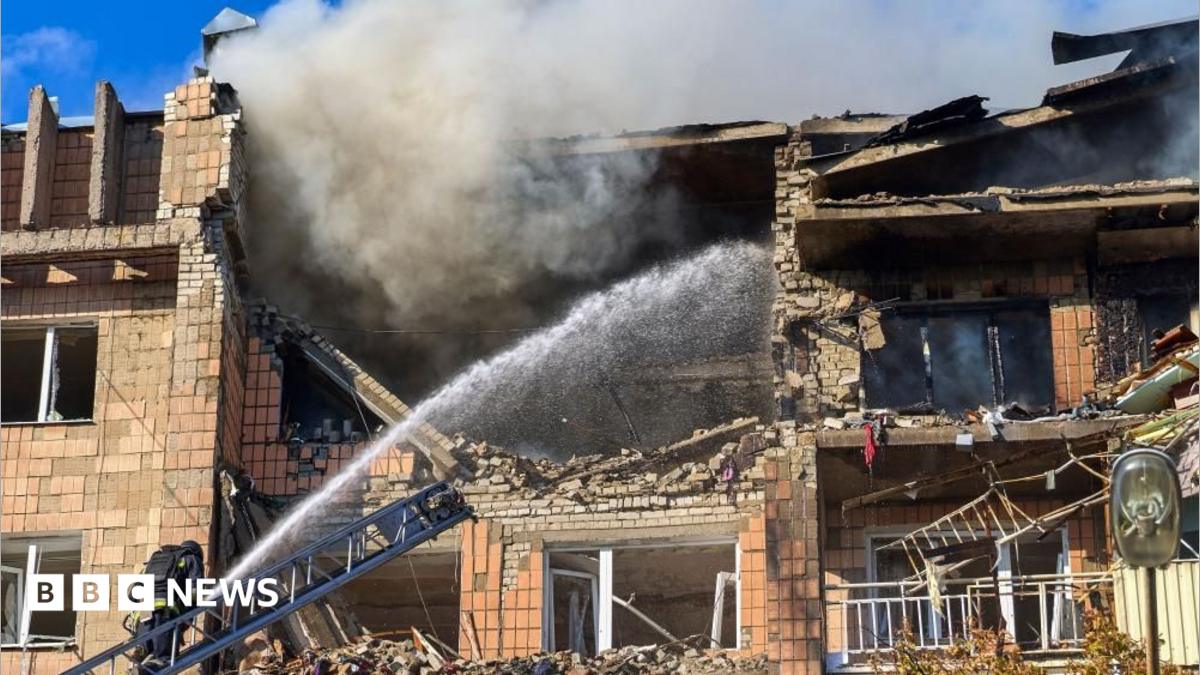
For the second consecutive day, Yemen's Houthi movement has struck King Khalid International Airport in Riyadh, Saudi Arabia's capital, according to Saudi officials. A military spokesman for the kingdom confirmed on Sunday that a projectile landed at the airport, igniting a fire inside one of its passenger halls. The Saudi civil aviation authority reported that the incident caused injuries, though it did not immediately provide a specific casualty figure. The attack marks a sharp escalation in a conflict that has already claimed dozens of lives over the past week.
The scale of the violence became clearer after Saturday's assault on the same airport, which left 13 people dead and 308 others wounded. According to the Saudi civil aviation authority, those killed included four Saudi nationals as well as citizens of Bangladesh, the United States, Jordan, Palestine, Syria, Sudan, and Egypt—one from each of those countries. On Sunday, the Indian embassy in Saudi Arabia announced that an Indian man had also died from wounds sustained in the attack, raising the total death toll further.
The Houthis, who control large swaths of Yemen despite a decade-long Saudi-led intervention against them, have claimed responsibility for both strikes. Their military spokesman, Brig Gen Yahya Saree, said the group had targeted the airport using a combination of ballistic missiles, cruise missiles, and drones over the past 24 hours. He also stated that the group had attacked oil facilities and Dammam airport in eastern Saudi Arabia. The Houthis have framed their campaign as retaliation for Saudi Arabia's support of government forces in Yemen's civil war, as well as for an air strike on Sanaa's airport.
In a televised statement, Brig Gen Saree vowed to continue what he described as "escalating operations deep inside Saudi Arabia." He issued a stark warning to airlines and passengers, advising them against using Saudi Arabian airports and airspace. He further declared that all Saudi airports were potential targets, with the exception of those located in the holy cities of Mecca and Medina—a caveat apparently intended to avoid provoking widespread religious condemnation.
Saudi officials offered a more measured account of Sunday's strike. Maj Gen Turki al-Maliki, spokesman for the Saudi-led military coalition, said air defences had intercepted a missile near Riyadh's airport while emergency crews were already battling a fire caused by an "unknown projectile" that hit Passenger Hall No 4. The discrepancy between the Saudi account and the Houthi claims underscores the difficulty of independently verifying battlefield reports in a conflict where access for international journalists is severely restricted.
Saturday's strike stands as the deadliest single attack on a Gulf Arab country since the war between Israel, the United States, and Iran began in February. The Saudi-led coalition condemned the assault as a "war crime" and pledged to respond. The attack has drawn strong international reactions. US Secretary of State Marco Rubio condemned the strikes and confirmed that an American citizen was among those killed. UK Foreign Secretary Ed Miliband said he was "appalled" by the violence. Meanwhile, US President Donald Trump indicated that Washington would "make a decision" and "move very quickly" on whether to strike the Houthis directly, while UK Defence Secretary Wes Streeting suggested Britain could "potentially" provide additional support to Saudi Arabia.
The broader diplomatic fallout has also begun to accelerate. The UK Foreign Office is now advising against all travel to parts of Saudi Arabia, particularly areas within 10km (6.2 miles) of the border with Yemen. Other Western embassies have issued similar warnings to their nationals about travel in the region, signalling growing concern about the security situation across the Gulf. The repeated strikes on civilian aviation infrastructure represent a significant escalation, as they threaten not only military targets but also the safety of international travellers and the stability of a key regional hub.
The Houthi-run Al Masirah television station also reported that "the Saudi enemy" had launched an air strike on Sanaa International Airport in Yemen's capital. Saudi Arabia has not confirmed this claim, and the BBC has been unable to independently verify it. Abdullah Al-Alimi Bawazir, vice-president of Yemen's internationally recognised government, responded by calling for "decisive actions" from regional and international partners, reflecting the mounting pressure on Yemen's fragile political leadership to address the crisis.
This latest wave of violence follows a series of strikes on Saudi airports in rapid succession. On Thursday, Riyadh's airport was hit in an attack that killed three Saudi nationals; the Houthis claimed responsibility and said they had used cruise missiles. In the two days before that, there were two other deadly attacks on Saudi airports—one in Abha and another in Riyadh. The cumulative effect has been a sharp deterioration in security across the kingdom's aviation network, which had previously been considered largely insulated from the conflict.
The recent escalation comes after a temporary ceasefire between the Houthis and Saudi-led forces, brokered in 2022, collapsed in July. The conflict worsened further after the Houthis seized strategically important stretches of the Red Sea coast in a rapid offensive, prompting Saudi retaliatory strikes. Yemeni pro-government forces subsequently claimed to have secured those regions, though the situation on the ground remains fluid and contested.
Today, the Houthis control roughly a quarter of Yemen's territory and as much as 80% of the country's population. The Iran-backed armed group has long expressed its ambition to seize complete control of Yemen. Saudi Arabia views this prospect with deep alarm, fearing it would lead to the establishment of an Iranian satellite state on its southern border—a strategic nightmare that has driven Riyadh's costly and controversial military campaign since 2015.
The repeated attacks on civilian airports also raise troubling questions about the effectiveness of Saudi air defences and the sustainability of the kingdom's wartime posture. While Riyadh has invested heavily in advanced missile interception systems, the Houthis' use of mixed arsenals—ballistic and cruise missiles alongside drones—appears designed to overwhelm or circumvent those defences. The targeting of passenger halls, in particular, signals a willingness to inflict mass civilian casualties, a tactic that has drawn widespread condemnation but has not yet prompted a decisive international response.
For the tens of thousands of travellers who pass through King Khalid International Airport each day, the strikes have introduced a new and frightening dimension to regional travel. Airlines may now face difficult decisions about whether to continue operating routes into Saudi Arabia, while insurance premiums for carriers and passengers alike are likely to rise. The Houthis' explicit warning against using Saudi airports and airspace has effectively turned civilian aviation into a front line in a war that shows no sign of abating.
With diplomatic efforts stalled and both sides vowing to escalate, the coming days will be critical. The United States and its allies face mounting pressure to respond more forcefully, while Saudi Arabia must decide whether to retaliate with greater intensity or seek a renewed negotiated path. For now, the fires at King Khalid International Airport serve as a stark reminder that the Yemen conflict—often overshadowed by other crises in the region—remains capable of producing deadly and destabilising attacks far beyond its borders.
What's Your Reaction?
 Like
0
 Dislike
0
 Love
0
 Funny
0
 Wow
0
 Sad
0
 Angry
0

Reporter Senior. Meliput dinamika politik nasional, kebijakan publik, dan isu parlemen selama 8 tahun. Alumni FISIP UI.




Comments (0)