

Investigation Uncovers Month-Long Assad Regime Plot Behind Abduction of US Journalist Austin Tice
The disappearance of American journalist Austin Tice in Syria more than a decade ago was the result of a deliberate, highly organized capture operation planned over several weeks,
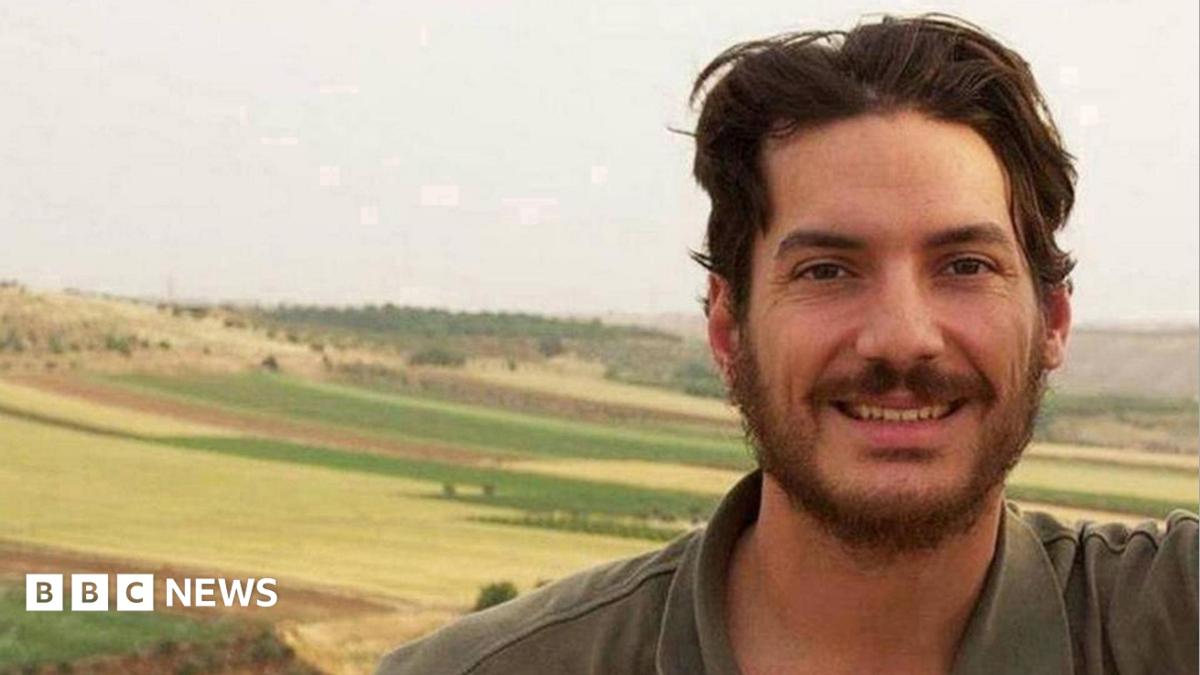
The disappearance of American journalist Austin Tice in Syria more than a decade ago was the result of a deliberate, highly organized capture operation planned over several weeks, rather than a random encounter at a government checkpoint, according to findings from a comprehensive investigation. New testimony from within the Syrian security apparatus indicates that the abduction was directly authorized by the country's former president, Bashar al-Assad.
For years following his disappearance in August 2012, observers and media analysts largely presumed that Tice had inadvertently run into a regime checkpoint while attempting to leave the country. However, newly uncovered evidence reveals that pro-regime operatives orchestrated an elaborate scheme, heavily relying on an internal informant who had gained the reporter's complete confidence.
The revelations are the culmination of a multi-year journalistic inquiry led by Josh Baker and Sara Obeidat for the BBC podcast series *Where is Austin Tice?*. Their investigation examined secret internal documents and secured eyewitness accounts from former regime fighters directly connected to the apparatus responsible for Tice’s detention.
Before his capture, Tice was a Georgetown University law student and a veteran captain in the US Marines who had traveled to Syria to cover the escalating civil war. Pushing into perilous opposition-controlled territories that many foreign correspondents avoided, he provided prominent coverage of the conflict, authoring front-page dispatches for *The Washington Post* during a period when the Syrian government was aggressively suppressing reports of its human rights violations.
According to Abu Ali, a former member of the pro-Assad National Defence Forces (NDF) militia, the plot took shape after Tice’s driver began feeding sensitive intelligence to the regime. The driver, who had established a trusted relationship with the journalist, alerted a senior NDF contact named Sakr Rustom about Tice's movements and his reporting activities inside rebel-held enclaves.
Rustom served as a key conduit to the highest echelons of the Syrian government, being the nephew of Bassam al-Hassan, the commander of the NDF and one of Assad's most trusted security advisers. When Hassan was informed about the American reporter operating in rebel territory, he escalated the matter directly to the presidential palace.
Abu Ali recounted being summoned to Hassan’s office after the security chief placed a direct telephone call to Assad regarding Tice. During this exchange, the Syrian president reportedly issued an explicit directive regarding the journalist, instructing his security officials to "bring him to us."
Rather than seizing Tice immediately, regime operatives decided to maintain surveillance to extract further intelligence. Abu Ali stated that the driver actively encouraged this delay, assuring his handlers that Tice trusted him implicitly and that prolonged monitoring would yield valuable insight into the journalist's network and activities.
During this period of surveillance, the driver informed his regime handlers that Tice was exhibiting behavior they deemed suspicious. Drawing on his prior military background as a Marine, Tice occasionally shared tactical insights with rebel fighters and corrected their handling of weaponry. To the militia members watching him, these actions fueled suspicions that he might be affiliated with the CIA—a claim strongly denied by a former senior US official handling Tice's case and unsupported by any investigative evidence.
The covert operation escalated significantly just days prior to Tice’s final capture. In a brazen act of espionage while Tice was preoccupied interviewing opposition fighters, the driver secretly took Tice's backpack—which held his MacBook, satellite transmission equipment, and personal belongings—and handed it over to regime operatives so its contents could be examined.
On August 11, 2012, Tice marked his 31st birthday at an opposition safehouse situated west of Damascus, only a short distance from Assad's presidential compound. In what became his final public post on social media, Tice described the gathering featuring a swimming pool, Free Syrian Army members, music by Taylor Swift, and whiskey, declaring it the "best birthday ever" before preparing to conclude his reporting assignment and depart the country.
Shortly after leaving, Tice was taken into custody by regime-aligned forces. He was last seen alive in a distressing video recording released more than a month later, which depicted him blindfolded and surrounded by unidentified armed captors. In the years that followed, his mother, Debra Tice, relentlessly petitioned multiple US presidential administrations to press for his release, while the case remained a subject of high-level diplomatic concern.
When the Assad regime collapsed 12 years later and thousands of detainees were liberated from state-run detention facilities, Tice was not among the freed prisoners. Intelligence coordinates indicating several sites where US authorities suspected he might have been held were investigated for more than a month, but searches yielded no trace of his whereabouts.
Although a former Syrian commander later claimed that Tice had been executed, no physical remains have been discovered, and other witnesses have disputed that account. Nevertheless, the recent discovery of hundreds of pages of confidential Syrian intelligence records provided the first definitive documentary confirmation that Tice had indeed been held in the custody of the Assad regime, formally dismantling years of official denials regarding the journalist's fate.
What's Your Reaction?
 Like
0
 Dislike
0
 Love
0
 Funny
0
 Wow
0
 Sad
0
 Angry
0

Reporter Senior. Meliput dinamika politik nasional, kebijakan publik, dan isu parlemen selama 8 tahun. Alumni FISIP UI.



Comments (0)