

Ireland's squad votes to play Israel in Hungary after goalkeeper Gavin Bazunu quits camp in protest
Republic of Ireland players will wear black armbands during Sunday's Nations League fixture against Israel in Debrecen, Hungary, in memory of those killed in the Gaza conflict, aft
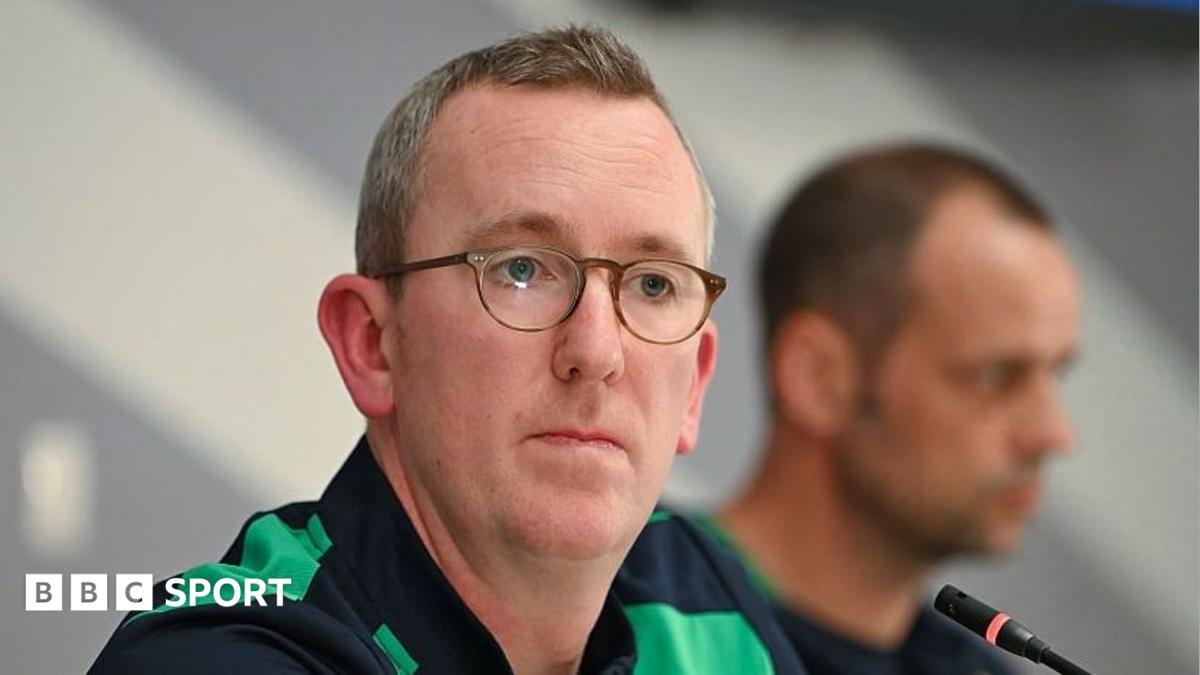
Republic of Ireland players will wear black armbands during Sunday's Nations League fixture against Israel in Debrecen, Hungary, in memory of those killed in the Gaza conflict, after the squad voted to go ahead with a match that had appeared on the verge of collapse.
Football Association of Ireland chief executive David Courell confirmed the armband plan on Saturday, revealing that a squad vote had been passed by what he described as a "significant majority" to play. He also confirmed that one player had withdrawn from the squad in protest — a move that forced almost five hours of deliberation before the team's position was settled.
The two fixtures have been at the centre of a heated controversy ever since Ireland and Israel were drawn together in Group B3 of the Nations League. The arrangement meant the sides would meet in neutral territory, with no 'away' fans travelling, a decision heavily criticised when it was announced, and campaigners argued it created a deeply unequal spectacle for one of the teams involved.
Those calls to withdraw have been driven by the "Stop The Game" campaign, organised by the pressure group Irish Sport for Palestine, which has been gathering pace in the days leading up to the window. Courell said one of the organisers' requests was for the Ireland players to remove themselves from their remaining media obligations for the rest of the international break.
The mood inside the Ireland camp in Hungary was said to be increasingly strained through Saturday morning. A pre-match news conference featuring manager Heimir Hallgrimsson and a player, scheduled for 09:15 BST, was called off just 15 minutes before it was due to begin, with reporters told it would instead take place after training — a session that was also delayed.
Players were locked in a meeting back at their hotel after it emerged that goalkeeper Gavin Bazunu had withdrawn from the game, with several team-mates also voicing their concerns about whether the fixture should be played at all. Around 13:00, players began to emerge from the meeting room, and it was subsequently confirmed that the news conference would go ahead at the Nagyerdei Stadion at 14:30, with training to follow.
Courell, flanked by Hallgrimsson and FAI director of football John Martin, eventually addressed the media more than five hours after the original press conference was due to start. He said: "This morning, a player expressed their discomfort at the fixture and indicated their intent to withdraw.
"This new variable required time for the rest of the squad to consider and what proceeded was another four hours of conversations, predominantly among the players, but also at times with coaching staff and the [FAI] executive.
"There were a lot of positions presented and the association is fully respectful of everyone's right to their respective opinion."
Bazunu later posted on social media to explain his reasoning, insisting the decision was one he had "not taken lightly". He said: "I am a man of strong faith and try my best to be a person of character and principle, therefore I feel it would be wrong to participate in the upcoming fixtures against Israel.
"My decision is based purely upon my personal belief that the killing of innocent people is wrong.
"It is important to note that my stance is not in opposition of the Israel people or the Jewish community but against the atrocities in the region.
"There are few times when you get a chance in life to stand up for something bigger and this strongly believe that this is one of them."
Beyond the armbands, Courell said there would be elements of the pre-match ceremony in which the Republic of Ireland players would not take part, and that the squad intended to make a significant contribution to charity by surrendering their match fees from the Israel games. The same gesture is planned in relation to the fixture against Austria at the Aviva Stadium in Dublin, which took place on Thursday.
Courell also said the players intend to make further gestures at the return 'home' fixture against Israel, which is due to be played in Serbia next Sunday — a second game that had generated its own objections given that the declared home game is being staged thousands of miles from Dublin, a consequence of the security and political backdrop that prompted neutral venues in the first place.
Hallgrimsson has described the situation as one in which nobody can come out of it well, a summary of the bind facing a manager whose squad is deeply divided while the association attempts to keep the competitive programme intact. The BBC's accompanying analysis also turns to the reaction of figures from the Irish game, including former Republic of Ireland manager Brian Kerr and ex-international James McClean.
For the FAI, the episode raises familiar questions about how much weight the vote of a national squad can carry, and how an association reconciles the right of individual players to hold a moral position with the obligation to honour fixtures. Courell's wording — stressing that the association is "fully respectful of everyone's right to their respective opinion" — suggests an organisation keen to present the split as a matter of conscience rather than internal division.
The result is a team that will take the field in Debrecen united in playing, but visibly divided in symbolism: one goalkeeper absent, the remainder committed, and the clearest possible statement made about where they stand on the war that has made this window of international football so contentious.
What's Your Reaction?
 Like
0
 Dislike
0
 Love
0
 Funny
0
 Wow
0
 Sad
0
 Angry
0

Reporter Senior. Meliput dinamika politik nasional, kebijakan publik, dan isu parlemen selama 8 tahun. Alumni FISIP UI.




Comments (0)