

Somali Pirates Killed Five Tanker Crew Members Before Puntland Forces Retook Vessel, Official Says
Five crew members aboard an oil tanker hijacked off the coast of Somalia were killed by pirates before regional security forces managed to retake the vessel, a senior official from
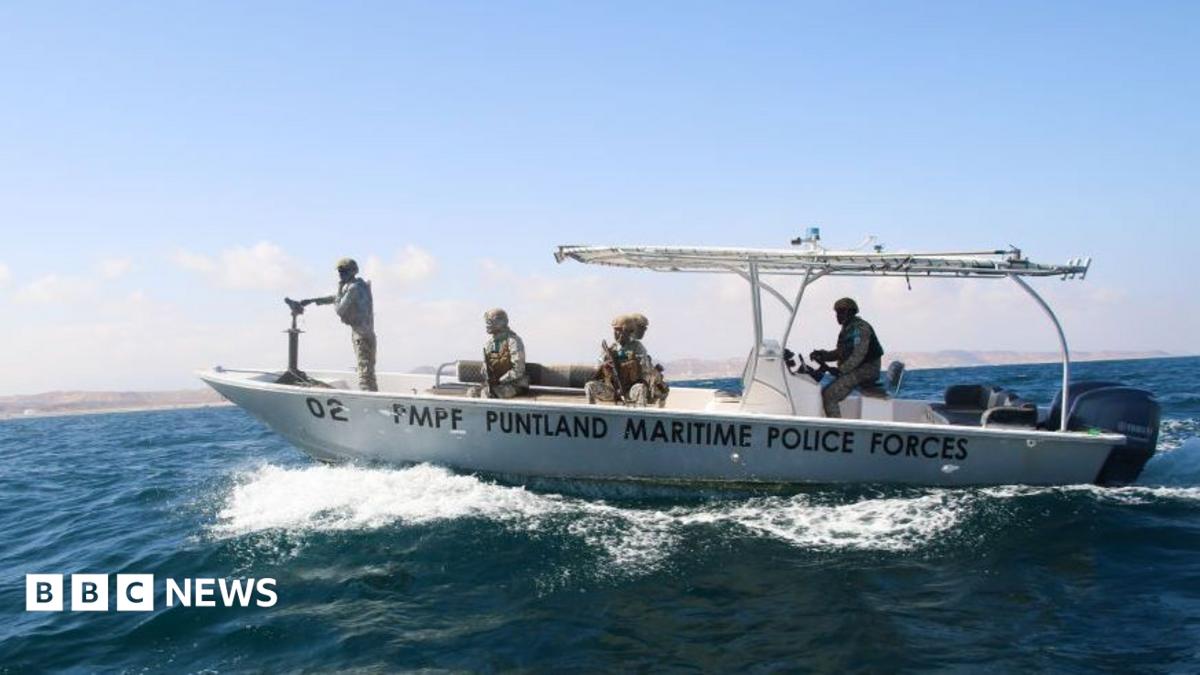
Five crew members aboard an oil tanker hijacked off the coast of Somalia were killed by pirates before regional security forces managed to retake the vessel, a senior official from Somalia's semi-autonomous Puntland region has told the BBC.
Bile Qabowsade, the deputy information minister for Puntland, said the five hostages were murdered before forces from the region boarded the MT Hoarner 25. His account provides the first detailed confirmation of fatalities in the hijacking, which had previously been reported only as a seizure of the vessel and its crew.
According to the official, the dead included three Pakistani nationals, one Indian and one citizen of Myanmar. Four other crew members were wounded during the incident, among them three Pakistanis and one Indian. The injured are reported to have received treatment following the rescue operation.
The tanker was carrying roughly 18,500 barrels of oil at the time of the seizure. The cargo had been destined for Mogadishu, Somalia's capital, according to the account given to the BBC. The hijacking occurred in April, when six armed men boarded and took control of the vessel while it was sailing off the Somali coast.
The ship was subsequently anchored near the Somali shoreline, in waters between the fishing towns of Xaafun and Bander Beyla. That stretch of coastline lies in the Puntland region, whose maritime police and security forces have been conducting patrols amid a broader resurgence in pirate activity in the area.
At the time of the April hijacking, officials said there were 17 people on board the vessel. The crew roster then included 10 Pakistanis, four Indonesians, one Indian, one Sri Lankan and one Myanmar national. The discrepancy between that initial count and the nationalities of the five dead and four injured has not been fully explained by authorities.
Sixteen suspected pirates have been taken into custody in connection with the seizure, while other suspects escaped the scene and are being pursued, officials said. It remains unclear how many individuals in total were involved in the attack or how the pirates initially managed to board and overpower the tanker.
Qabowsade also rejected claims that Puntland forces had allowed some of the pirates to get away during the operation. Such allegations are sensitive in a region where local authorities face pressure to demonstrate that they are clamping down effectively on maritime crime.
The Puntland authorities have not released further specifics about the circumstances in which the five crew members died, nor have they detailed how the pirates managed to seize control of the vessel. The timeline between the April hijacking and the retaking of the ship also remains unclear from the information released so far.
Piracy off the Somali coast dropped dramatically after 2011, when an international naval coalition mounted sustained counter-piracy operations in the Gulf of Aden and the Indian Ocean. At its peak in the late 2000s and early 2010s, Somali piracy disrupted global shipping lanes and cost the international economy billions of dollars in ransoms, insurance premiums and rerouted trade.
However, the past few years have seen a renewed uptick in attacks and hijackings, reversing years of relative calm. The resurgence has raised concerns among shipping companies, insurers and navies operating in the region, with analysts pointing to reduced international patrols and the availability of weapons and experienced fighters along the Somali coast.
The wider security environment has also been cited as a factor. A recent BBC report linked a surge in Somali piracy to the knock-on effects of a conflict involving the United States and Iran, suggesting that regional instability can quickly translate into renewed risks for commercial shipping. Separately, a second tanker was hijacked off Yemen by suspected Somali pirates in July, within three months of another such incident.
The MT Hoarner 25 case highlights the vulnerability of commercial vessels transiting waters near Somalia, particularly those carrying valuable cargoes such as oil. Ships are often advised to adopt defensive measures, travel in convoys and maintain strict watch schedules, but determined attackers using small, fast skiffs can still close in and board before naval support arrives.
For the families of the five crew members who died, the official account confirms the worst fears that surface whenever a vessel is seized. The multinational makeup of the crew — spanning Pakistan, India and Myanmar — also underscores how Somali piracy draws in seafarers from across Asia, many of whom work on long-haul routes through one of the world's most dangerous maritime corridors.
The wounded crew members' conditions have not been disclosed. It is likewise unclear whether the surviving members of the original 17-person crew have been repatriated or remain in Somalia as investigations continue. The fate of the tanker and its cargo of oil has not been publicly detailed.
Puntland's security forces have stepped up patrols in response to the rising number of attacks, according to reporting around the incident. The regional administration positions itself as a frontline defender against piracy, but the escape of some suspects has fueled questions about the effectiveness and conduct of those operations.
The arrests of 16 suspected pirates open the possibility of prosecutions, though Somalia's judicial capacity to try piracy cases remains limited. In past years, many suspected pirates were transferred to foreign jurisdictions or tried under arrangements with international partners, a practice that has fluctuated with political priorities and funding.
International naval missions have historically played a central role in suppressing Somali piracy, escorting vessels and conducting counter-piracy patrols across the region. The renewed attacks suggest that without sustained naval presence and onshore stability, the conditions that allowed piracy to flourish more than a decade ago can return.
For now, the official account from Puntland provides a rare window into the violent end of one hijacking, even as key questions remain unanswered. Authorities have yet to explain exactly how the five crew members were killed, how the pirates held the ship for the period they did, and how many suspects remain at large.
What's Your Reaction?
 Like
0
 Dislike
0
 Love
0
 Funny
0
 Wow
0
 Sad
0
 Angry
0

Reporter Senior. Meliput dinamika politik nasional, kebijakan publik, dan isu parlemen selama 8 tahun. Alumni FISIP UI.




Comments (0)