

South Korea Summons Ukrainian Envoy After Zelensky Reveals Secret Transfer of North Korean POWs
South Korea has formally summoned Ukraine's acting ambassador in Seoul, lodging a sharp diplomatic protest after President Volodymyr Zelensky publicly disclosed that two captured N
South Korea has formally summoned Ukraine's acting ambassador in Seoul, lodging a sharp diplomatic protest after President Volodymyr Zelensky publicly disclosed that two captured North Korean soldiers had been quietly transferred to South Korean custody. The move marks a rare and unusually public rupture between two countries that have broadly aligned against Russia's invasion of Ukraine.
Vice Foreign Minister Park Yoon-joo delivered the complaint directly to Andrii Vieshkin, Ukraine's acting envoy in Seoul. According to South Korea's foreign ministry, Park expressed "strong regret" that Zelensky had revealed the transfer, which Seoul insists was meant to remain confidential under an understanding between the two governments.
The two North Korean prisoners were among the thousands of troops Pyongyang has sent to support Russia's war effort. They had previously told South Korean media that they wished to be relocated to South Korea, a request that gave the behind-the-scenes negotiations between Seoul and Kyiv particular sensitivity.
President Lee Jae Myung weighed in publicly, describing the disclosure as "greatly disappointing" and characterising the transfer as a "highly sensitive issue" with direct implications for national security. His office said the secrecy was intended partly to shield the North Korean soldiers' families from possible retribution by Pyongyang.
The origins of the case stretch back to early 2025, when Ukraine announced its forces had captured two injured North Korean soldiers in Russia's Kursk Oblast. Those prisoners became a bargaining chip and a diplomatic puzzle, sitting at the intersection of the Ukraine war, inter-Korean hostilities, and Seoul's delicate relationships with Moscow and Beijing.
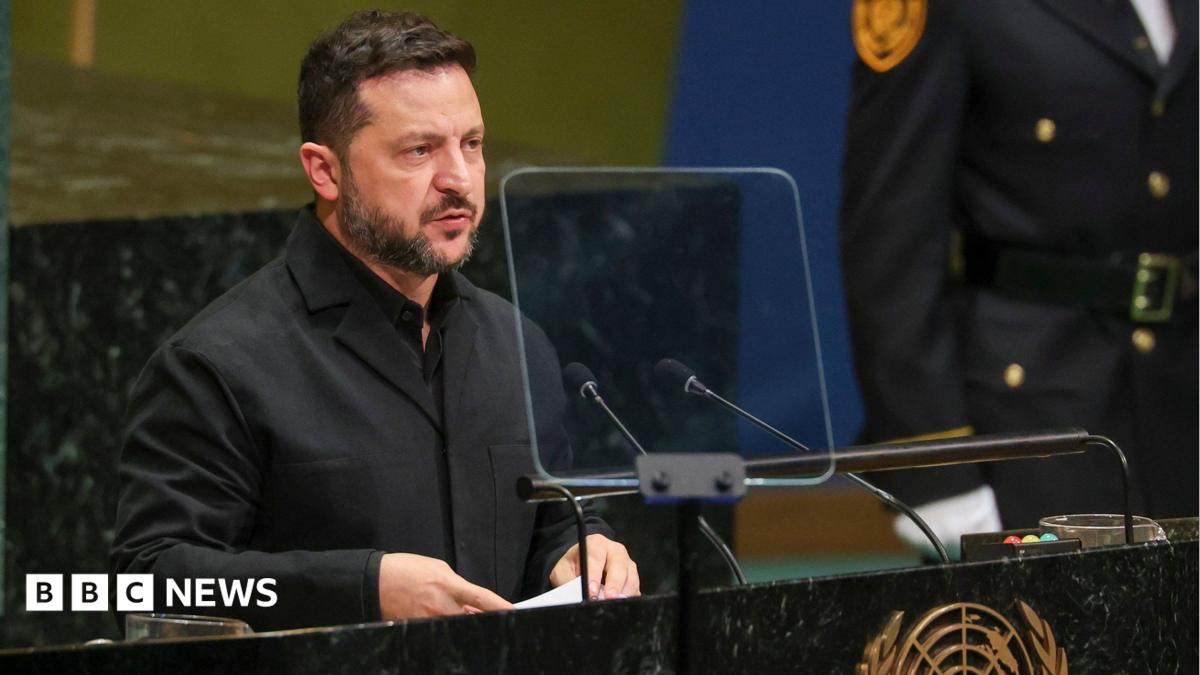
After more than a year of quiet negotiations between Seoul and Kyiv, Zelensky announced during the United Nations General Assembly last Wednesday that the two North Koreans had been transferred to South Korea. He noted that the soldiers had not been "easy to capture alive," a remark that underscored the battlefield circumstances of their detention.
Seoul subsequently confirmed the transfer but sharply criticised Zelensky for allegedly violating an agreement to keep the arrangement secret. President Lee's office said Ukraine had signalled that the soldiers would be referenced in Zelensky's UN address, but not that their actual transfer to South Korea would be disclosed.
The dispute deepened when Zelensky's office pushed back, claiming the two countries had never signed a non-disclosure agreement covering the transfer. Seoul responded by demanding an apology from Ukraine for what it called "announcing a falsehood," warning that the episode had seriously damaged trust between the two nations.
The political fallout has been felt acutely inside South Korea. President Lee faced heavy domestic criticism after Zelensky's disclosure, with opposition figures accusing him of concealing the transfer in order to avoid antagonising Pyongyang. Lee, whose party favours a more conciliatory approach to North Korea, has been attempting with little success to reopen peace talks with the North.
A further complication, according to Lee's office, is that Kyiv itself preferred secrecy for strategic reasons: disclosure could invite criticism that Ukraine had forfeited a chance to exchange the North Korean prisoners for Ukrainian prisoners of war held by Russia. That calculation illustrates how the fate of two individual soldiers is entangled in far larger bargaining dynamics.
South Korea has been sympathetic to Ukraine since Russia's full-scale invasion but has maintained a longstanding policy of refusing to supply lethal weapons to any country engaged in active war. That restraint has frustrated Kyiv, particularly after North Korean troops were deployed to support Russia in 2024.
In response to that deployment, Ukraine intensified pressure on Seoul to provide cutting-edge anti-air missiles to help defend Ukrainian energy infrastructure from Russian drone and missile strikes. Mykhailo Podolyak, a senior adviser to Zelensky, argued that Seoul can no longer treat the conflict as a distant European matter.
"When North Korea actively participates in a war in Europe, South Korea cannot remain a distant observer," Podolyak said. He added that transferring defence technologies and capabilities from Seoul to Kyiv would not merely aid Ukraine but would serve South Korea's own long-term security by containing what he described as an aggressive totalitarian axis.
Seoul has taken some steps short of lethal aid. In July, it announced a $100 million assistance package for Ukraine. Lee's office described the package as an expansion of earlier support, which consisted of non-lethal items such as helmets, personal armour, and medical equipment.
Moscow has warned that it would have "no choice but to retaliate" if South Korea supplied Ukraine with arms, without specifying what measures it might take. Russia borders North Korea, and the Kremlin's ties with Pyongyang have grown markedly closer during the war, adding a direct security dimension to Seoul's calculations.
South Korea's broader diplomatic posture helps explain its caution. It has long pursued cordial ties with neighbours that may be at odds with its ally, the United States. Since the collapse of the Soviet Union, Seoul has worked to deepen trade and diplomatic relations with Russia and views both Moscow and Beijing as key partners in efforts to influence Pyongyang.
The summoning of Ukraine's envoy therefore reflects more than wounded protocol. It exposes the tension between Seoul's desire to support Ukraine, its fear of provoking Russia and North Korea, and its domestic political vulnerabilities. For Kyiv, the episode is a reminder that even sympathetic partners may prioritise discretion over public gestures. For the two North Korean soldiers at the centre of the row, the diplomatic storm may shape not only their own futures but also the wider question of how far South Korea is willing to go in a war that has already drawn in its northern neighbour.
What's Your Reaction?
 Like
0
 Dislike
0
 Love
0
 Funny
0
 Wow
0
 Sad
0
 Angry
0

Reporter Senior. Meliput dinamika politik nasional, kebijakan publik, dan isu parlemen selama 8 tahun. Alumni FISIP UI.





Comments (0)