

Sri Lanka's Former First Lady Shiranthi Rajapaksa Arrested Amid Corruption Probe Into Children's Hospital Donations
Sri Lankan anti-corruption authorities have arrested Shiranthi Rajapaksa, the wife of former President Mahinda Rajapaksa, in connection with allegations that a charity she is assoc
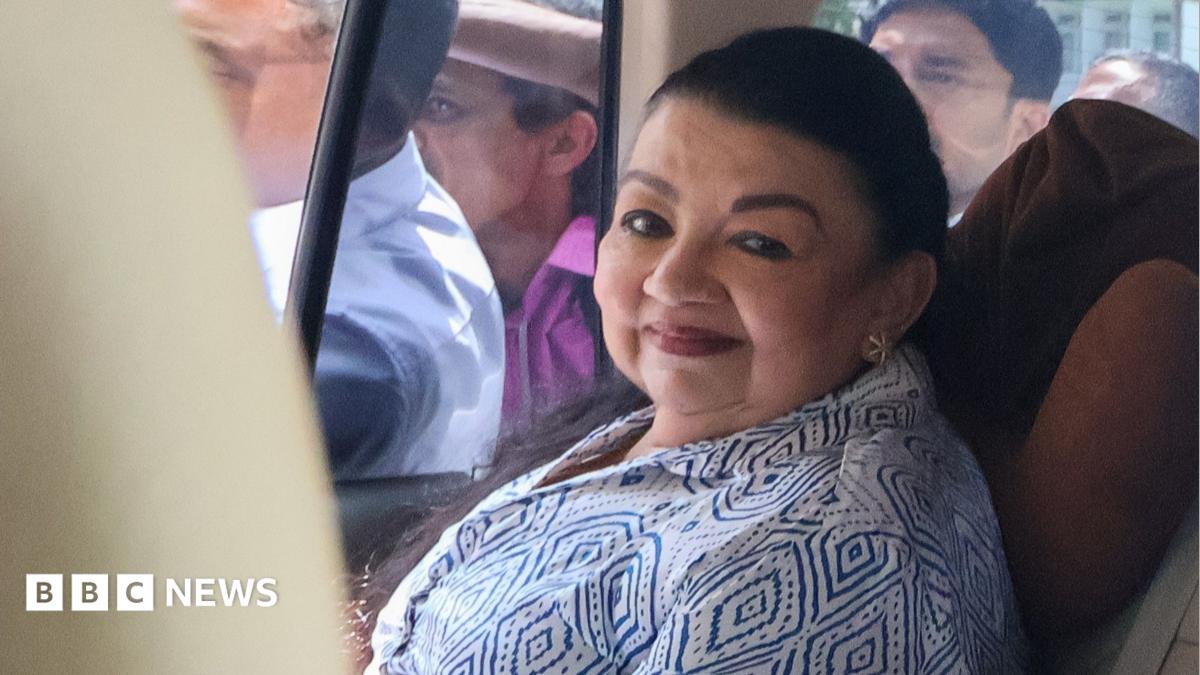
Sri Lankan anti-corruption authorities have arrested Shiranthi Rajapaksa, the wife of former President Mahinda Rajapaksa, in connection with allegations that a charity she is associated with diverted donations intended for a children's hospital. The 73-year-old was taken into custody at the family's residence in Colombo on Wednesday, marking another significant development in the country's ongoing efforts to address corruption linked to the previous administration.
The arrest stems from an investigation into approximately 10 million rupees, equivalent to about $30,300 or £22,800, collected by the Siriliya Saviya charity. These funds were reportedly raised with the specific purpose of purchasing a specialised scanner for Lady Ridgeway Children's Hospital in Colombo, the island nation's premier paediatric medical facility. However, investigators have determined that such a scanner had already been provided to the hospital through a donation from the Chinese government, raising questions about the ultimate destination of the charitable contributions.
Officials from the anti-corruption commission are currently questioning Rajapaksa about her role in the charity and her knowledge of the fund allocation. The investigation seeks to establish whether there was any criminal intent behind the handling of these donations or whether the funds remain intact as claimed by her family's representatives.
Shiranthi Rajapaksa has categorically denied any wrongdoing in connection with the allegations. Through her legal representatives and family spokespersons, she maintains that the money has not been misappropriated and remains secure within the charity's bank accounts.
Manoj Gamage, a spokesperson for former President Mahinda Rajapaksa, reiterated this position, stating that the funds are safely held in Siriliya Saviya's accounts and that no fraudulent activity has taken place. This assertion forms the core of the defence's argument as the legal proceedings move forward.
The timing of the arrest has drawn considerable attention, coming just two days after Rajapaksa returned to Sri Lanka from Singapore, where she had been receiving medical treatment. Her legal team had attempted to prevent the arrest by filing a petition with the courts, but the hearing on that matter was not scheduled until October 12, leaving a window during which authorities proceeded with their action.
This sequence of events has raised questions about whether the legal system provided adequate opportunity for the defence to present its case before arrest, and it may become a point of contention in subsequent court proceedings. Critics of the government could argue that the swift action was designed to preempt legal intervention, while supporters of the investigation would contend that due process was followed.
The broader political context of this arrest is inextricably linked to the Rajapaksa family's long and complicated relationship with Sri Lankan politics. Mahinda Rajapaksa served as the country's president from 2005 to 2015, and during that period, his family exerted considerable influence over the nation's political landscape. He remains a polarising figure in Sri Lankan society.
Many Sri Lankans credit Rajapaksa with ending the country's devastating civil war in 2009, when government forces defeated the Tamil Tiger rebels after nearly three decades of conflict. This achievement earned him significant support, particularly among the Sinhalese majority. However, his tenure was also marked by allegations of authoritarianism, nepotism, and human rights abuses.
The family's political fortunes suffered a dramatic reversal in 2022 when widespread protests erupted across Sri Lanka. An economic crisis of unprecedented severity saw inflation skyrocket, while the country ran out of essential supplies including fuel, food, and medicine. The resulting public anger was directed squarely at the Rajapaksa family.
Gotabaya Rajapaksa, Mahinda's brother, who had been serving as president during the crisis, was ultimately forced from power as protests intensified. His departure marked a significant turning point in Sri Lankan politics and opened the door for the current government's anti-corruption agenda.
Since assuming office, President Anura Kumara Dissanayake's administration has revived numerous corruption investigations that had been stalled or suppressed during the Rajapaksa era. The arrest of Shiranthi Rajapaksa represents the latest in a series of legal actions targeting members of the former first family.
Earlier this year, Namal Rajapaksa, the eldest son of Mahinda and Shiranthi, was arrested in connection with allegations related to an aircraft procurement deal that occurred during his father's presidency. He is currently being held in remand custody as those proceedings continue.
Yoshitha Rajapaksa, another son, was also arrested this year on separate corruption charges, further demonstrating the current government's willingness to pursue cases against high-profile figures associated with the previous regime. The cumulative effect of these arrests suggests a systematic effort to address alleged misconduct during the Rajapaksa years.
The case against Shiranthi Rajapaksa will likely hinge on establishing whether the charity's collection of funds for a specific purpose, when that purpose had already been fulfilled through other means, constitutes criminal conduct. Prosecutors will need to demonstrate not only that the scanner was already donated but also that the charity continued to collect money under false pretenses.
Defence arguments will probably centre on the assertion that charitable funds often have multiple purposes and that the money could legitimately be redirected to other needs of the hospital or the charity's broader mission. The absence of any evidence showing personal enrichment will be crucial to the defence's case.
From a broader perspective, this arrest carries significant implications for Sri Lanka's ongoing struggle to address impunity and establish accountability for past abuses of power. The international community has long called for greater transparency and rule of law in the island nation, and the prosecution of prominent figures from a former ruling family could be viewed as a positive development.
However, critics may also question whether these investigations are being pursued selectively for political purposes, targeting the opposition while ignoring potential misconduct by the current administration. The fairness and thoroughness of the proceedings will be closely watched both domestically and internationally.
For the Rajapaksa family, the arrest of Shiranthi represents yet another blow to their political legacy and influence. A family that once dominated Sri Lankan politics for nearly two decades now finds itself increasingly marginalised, with multiple members facing serious legal challenges.
The coming weeks will be crucial as the courts consider the case against Shiranthi Rajapaksa and determine whether the evidence supports the allegations against her. The outcome will not only affect one individual but could also set important precedents for how Sri Lanka handles corruption cases involving powerful political figures and their families. The attention of a nation weary of corruption scandals now turns to the legal process, hoping that justice will be served impartially and transparently.
What's Your Reaction?
 Like
0
 Dislike
0
 Love
0
 Funny
0
 Wow
0
 Sad
0
 Angry
0

Fact Checker Politik. Memverifikasi klaim publik, pidato pejabat, dan informasi viral. Anggota jaringan cek fakta Indonesia.





Comments (0)