

Zelensky Slams 'Vile' Russian Strikes as Death Toll Reaches 15 Across Ukraine
Ukrainian President Volodymyr Zelensky has strongly condemned a wave of overnight Russian missile and drone attacks that killed at least 15 people across central and eastern Ukrain
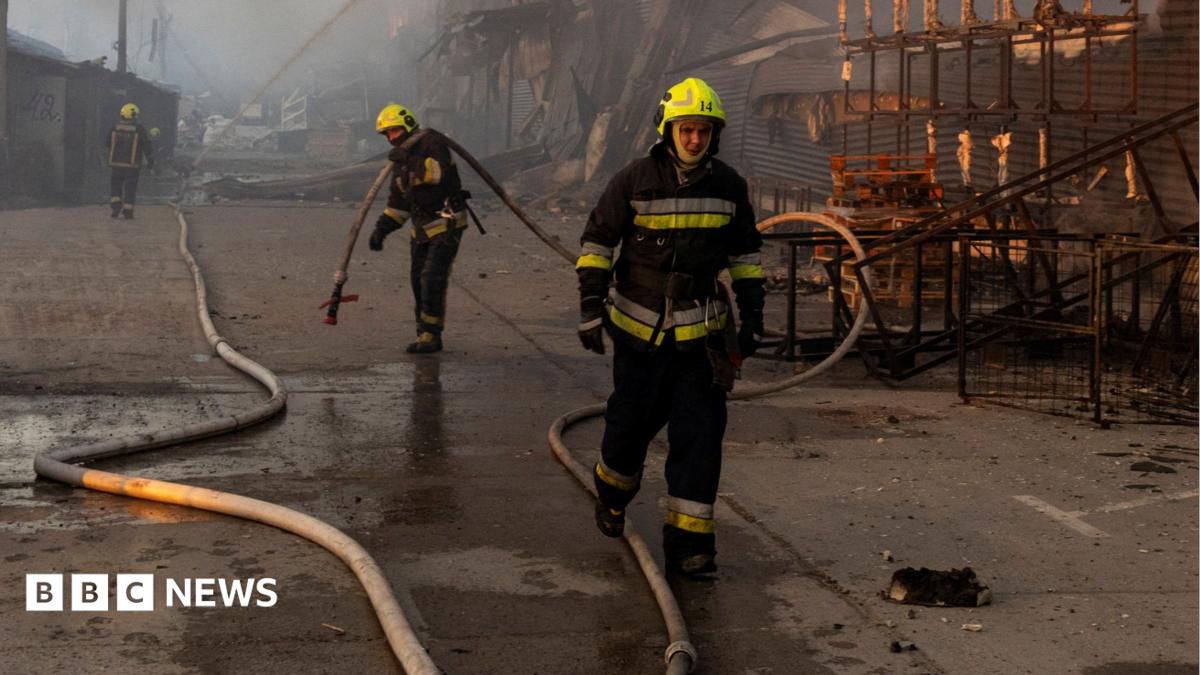
Ukrainian President Volodymyr Zelensky has strongly condemned a wave of overnight Russian missile and drone attacks that killed at least 15 people across central and eastern Ukraine, describing the assault as one of the "most vile" acts of the war so far.
The large-scale bombardment struck multiple cities and towns, including Kyiv, Dnipro, Kremenchuk, Zaporizhzhia, Oleksandriya and the town of Pryluky in the Chernihiv region. According to Zelensky, the attacks were deliberately timed and demonstrative, with the Russian leadership seeking to inflict maximum pain on Ukrainian civilians.
In a social media post on Wednesday morning, Zelensky said five people were killed and 26 others, including five children, were injured when a missile struck a five-storey apartment building in Pryluky. He warned that more people could still be trapped beneath the collapsed structure.
The death toll in Pryluky later rose to nine after emergency workers recovered the bodies of three children from the rubble. Chernihiv Oblast police confirmed the revised figure as rescue operations continued through Wednesday morning, with teams using heavy equipment and manual digging to search for survivors.
Zelensky linked the timing of the attack to Russian President Vladimir Putin's 74th birthday, which falls on Wednesday, calling the destruction of the residential building in Pryluky a brutal "birthday gift" to the Russian leader. The remark underscored the Ukrainian president's broader message that Moscow was seeking to humiliate and terrorise civilians rather than achieve any legitimate military objective.
Beyond Pryluky, the strikes caused further deaths and injuries in several other locations. Two people were killed and eight wounded after Russian missiles damaged five apartment buildings in Dnipro and four high-rise buildings in Kremenchuk, according to Zelensky. Two additional deaths were reported in the capital, Kyiv, and another two in Oleksandriya.
Ukrainian officials reported that approximately 70 missiles were fired in total during the overnight assault. Zelensky said Ukraine's air defence forces managed to intercept only "some" of the incoming projectiles, renewing his urgent appeal for allies to supply additional air defence systems and support packages.
One of the key targets of the Russian attack, according to Zelensky, was Ukraine's energy infrastructure. Moscow had earlier signalled its intention to intensify strikes on Ukrainian energy facilities in retaliation for Ukrainian attacks on Russian energy sites. The targeting of power infrastructure has been a recurring feature of Russia's campaign, aimed at degrading Ukraine's ability to sustain civilian life and military operations through the winter months.
Ukraine's national police released photographs showing what they identified as an unexploded Russian Iskander missile lying in the middle of a Kyiv district. BBC Verify confirmed the images were genuine and that apparent missile fragments landed in an area of open ground surrounded by high-rise apartment buildings. The presence of an unexploded missile in a densely populated area highlighted the ongoing danger to civilians even after the immediate attack had ended.
Additional verified footage showed people digging through the collapsed remains of a residential building in Pryluky. Another video verified by BBC Verify depicted damage to cars, rubble and a fallen tree in an area surrounded by apartment blocks in Kremenchuk. These visual records added to the growing body of evidence documenting the scale of destruction across multiple Ukrainian cities.
In a separate statement on Wednesday, Zelensky said Ukrainian forces had carried out retaliatory strikes on four targets in Russia over the previous 24 hours. These included two oil facilities and a training ground in the Perm, Samara and Astrakhan regions, according to the Ukrainian president. He added that there was "also a response in the Black Sea" without providing further details.
The Black Sea has become an increasingly active theatre in the conflict. On Tuesday evening, footage emerged showing a huge plume of smoke engulfing an oil tanker off the coast of Sochi in southern Russia. Russia's transport ministry later said unmanned boats had attacked the Liberian-flagged Aframax Rio oil tanker, claiming the crew had been rescued.
Separately, Bulgaria halted its search for the missing crew of a ship that sank after being hit by a drone on Tuesday. Vice-Admiral Rumen Nikolov from the Maritime Administration Executive Agency confirmed the suspension, as reported by Bulgarian television network Nora TV. Tracking data showed the vessel was anchored at the southern end of the Bosphorus strait until Monday, when it entered the Black Sea heading north. Its last reported position was at 23:43 GMT on Monday in what is known as the Bulgarian exclusive economic zone.
Bulgarian specialist news outlet Maritime.bg reported that the Alfa Watan was attacked by a drone and sank approximately 70 nautical miles east of Byala. Bulgarian Prime Minister Rumen Radev said a second vessel carrying grain was also hit within Bulgaria's exclusive economic zone, though all 18 crew members on that ship were rescued. Bulgaria has not publicly attributed responsibility for the attacks.
The incidents come as Russia intensifies strikes in the Black Sea, particularly on its eastern side, as part of its ongoing war against Ukraine. In an evening address on Tuesday, Zelensky claimed Russia was responsible for the attacks on the civilian vessels. Moscow has not commented on the latest incidents or on the broader allegations regarding the Black Sea strikes.
The Kremlin has also yet to respond to the latest wave of attacks on Ukrainian territory. The absence of comment is consistent with Moscow's longstanding practice of not immediately addressing allegations of strikes on civilian areas. However, the mounting death toll and the deliberate targeting of residential buildings and energy infrastructure are likely to intensify international scrutiny of Russia's military tactics.
Analysts note that the timing of the strikes, coinciding with Putin's birthday, may be intended to project strength domestically while undermining Ukrainian morale. The use of large numbers of missiles, including advanced systems like the Iskander, suggests that Russia continues to prioritise overwhelming Ukraine's air defences. For Ukraine, the attacks reinforce the urgent need for sustained Western military assistance, particularly air defence systems capable of intercepting ballistic and cruise missiles.
As rescue operations continued in Pryluky and other affected areas, Zelensky reiterated his call for partners to expedite deliveries of air defence equipment. The human cost of the overnight attacks, including the deaths of children, is likely to sharpen the debate among Ukraine's allies about the pace and scale of military support. For now, communities across central and eastern Ukraine are left to bury their dead, treat the wounded and rebuild what has been destroyed.
What's Your Reaction?
 Like
0
 Dislike
0
 Love
0
 Funny
0
 Wow
0
 Sad
0
 Angry
0

Reporter Senior. Meliput dinamika politik nasional, kebijakan publik, dan isu parlemen selama 8 tahun. Alumni FISIP UI.





Comments (0)