

Three Years After October 7: Israelis Demand Answers as Netanyahu Seeks Re-election
Three years have passed since the Hamas-led assault that shattered communities along Israel's southern border, yet the wounds remain raw and the demand for accountability grows lou
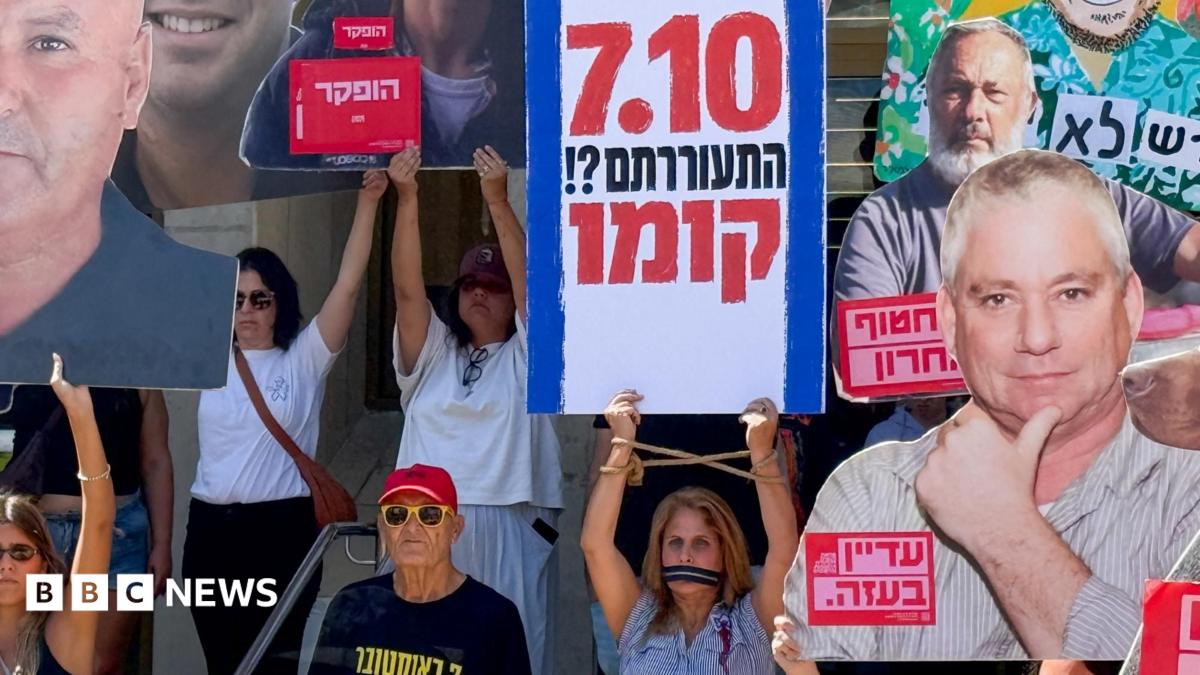
Three years have passed since the Hamas-led assault that shattered communities along Israel's southern border, yet the wounds remain raw and the demand for accountability grows louder. At Kibbutz Kfar Aza, residents gathered before dawn on Wednesday, walking in silence toward the armoury at the heart of their community — the same spot where, shortly after 7am on 7 October 2023, attackers killed half of the kibbutz's 14-member civil defence squad. In total, 64 people from Kfar Aza were killed that day and 19 were dragged into Gaza as hostages.
The attack was the deadliest single day Israel had experienced since the state's founding in 1948. Approximately 1,200 people were killed across southern Israel as gunmen breached the border fence and overran communities, while another 251 people were seized as hostages and taken back into Gaza. For the residents of Kfar Aza and other border towns, the passage of three years has done little to dull the sense of abandonment they feel — not only toward Hamas, but toward their own government.
"I need my country to take responsibility," said Inbar Goldstein, whose brother and niece were killed in the attack and four other relatives were kidnapped from the kibbutz. Her words capture a sentiment shared across much of southern Israel: that the state failed its citizens on that day, and has yet to fully account for how it happened. Goldstein argued that the failures did not begin or end on 7 October. "Nobody investigated the roots of the attack," she said, describing what she called a long process of abandonment.
Three years on, Israel has still not established an independent state inquiry into its most significant security failure. The absence of such a probe has become a central grievance for bereaved families and survivors, who argue that without a thorough examination of the decisions, intelligence warnings and military preparations before the attack, the country remains vulnerable to a repeat.
Questions have mounted about what information reached military and political leaders in the run-up to the assault — and specifically what Prime Minister Benjamin Netanyahu knew. For months beforehand, young female soldiers stationed at observation bases along the Gaza border had repeatedly warned their superiors about suspicious activity that suggested preparations for an attack. Among them was Roni Eshel, who was killed along with 14 other members of her unit when gunmen overran their base at Nahal Oz, adjacent to Kfar Aza.
"There are so many questions," Roni's uncle, Elad Levy, told reporters during the anniversary commemorations. He asked whether Egypt or the United Arab Emirates had warned the prime minister, and whether there were other warnings that Netanyahu ignored. "We need to find out what happened — not just on the day, but the year before, and five years before that," he said, adding that if no inquiry is held, "it will happen again and again."
The demand for transparency has been intensified by recent reporting on the warnings that may have been available before the attack. Last month, Israel's Haaretz newspaper published extracts from a new book alleging that the leader of the United Arab Emirates telephoned Netanyahu ten days before 7 October to warn of Hamas plans for a major operation. Netanyahu's office dismissed the report as "an absolute lie" and said he would sue the newspaper.
The prime minister has consistently rejected any personal responsibility for the security failures. Instead, he has pointed the finger at his own security chiefs, accusing them of deliberately choosing not to wake him in the hours before the attack because they feared he would order a massive deployment of the Israel Defense Forces and escalate the situation. In an interview with Israel's right-wing Channel 14 television network, he suggested that had he been woken, events would have unfolded differently, and that his response would have better protected Israel.
Members of his Likud party have also rallied to his defence. In a social media video last month, Likud's Amir Ohana described as "preposterous and absurd" any suggestion that Netanyahu could have known about the attack beforehand, noting that the former Hamas leader in Gaza, Yahya Sinwar, had told only a handful of people of the operation. Ohana argued that the prime minister had since transformed the Middle East and refused to back down, even when voices inside and outside Israel called on him to stop.
Yet for families in Kfar Aza and other affected communities, the political debate does little to address their central demand: a full, independent accounting of what went wrong. The fact that Netanyahu is once again running for election — with the same promise to be stronger and tougher than anyone else in protecting Israel from its enemies — strikes many as a profound irony. The man in charge during the country's worst security failure is asking voters for another term to guard against future threats, while the question of who should pay the price for that failure remains unanswered.
The commemorations at Kfar Aza reflected this unresolved tension. As candles were lit and mourners comforted one another, the ceremony was less a moment of closure than a renewed appeal for truth. Residents walked the familiar paths of their kibbutz, passing the armoury and the memorial sites, while the families of the dead and kidnapped waited for an investigation that has not come. For them, the third anniversary is not simply a time of grief, but a reminder that accountability — the very thing they believe could prevent another catastrophe — remains out of reach.
What's Your Reaction?
 Like
0
 Dislike
0
 Love
0
 Funny
0
 Wow
0
 Sad
0
 Angry
0

Reporter Senior. Meliput dinamika politik nasional, kebijakan publik, dan isu parlemen selama 8 tahun. Alumni FISIP UI.




Comments (0)