

Canada Halts Expansion of Assisted Dying to People with Mental Illness, Citing Lack of Medical Consensus
Canada has announced it will indefinitely suspend plans to extend its medically assisted dying programme to individuals whose only medical condition is a mental illness. The decisi
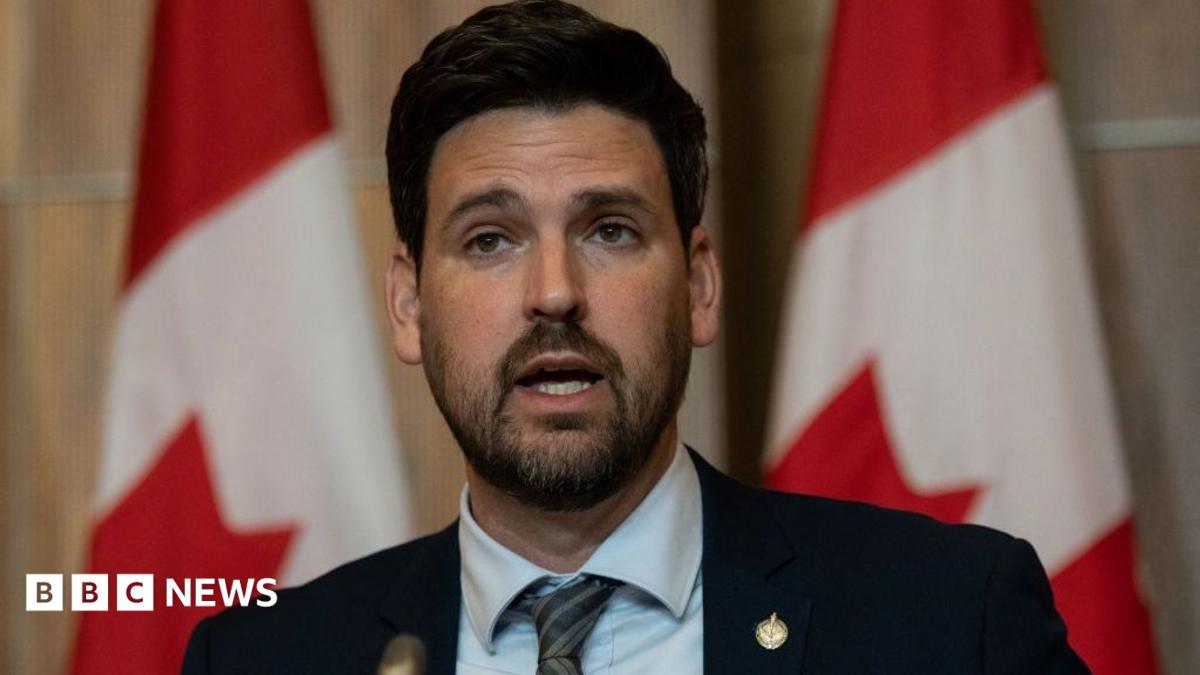
Canada has announced it will indefinitely suspend plans to extend its medically assisted dying programme to individuals whose only medical condition is a mental illness. The decision, revealed on Wednesday by Justice Minister Sean Fraser, marks a significant reversal in a policy debate that has divided the country for years and drawn international attention to one of the world's most permissive assisted dying regimes.
The move means that Canadians suffering solely from mental illness will not be able to seek what is known in Canada as Maid — medical assistance in dying — by March 2027, as had previously been scheduled. Instead, the government intends to bring forward new legislation in the coming weeks that would formally and indefinitely block that expansion.
Fraser described the choice as difficult but necessary. He said that while there is no perfect consensus on the matter, the government believes this is the correct approach at this particular time. The justice minister also noted that the Supreme Court may weigh in on the issue in the future, acknowledging the legal uncertainty that continues to surround the policy.
The announcement follows a recommendation earlier this year from a parliamentary committee that Canada should "indefinitely exclude persons whose sole underlying medical condition is a mental illness" from assisted dying. That panel heard testimony from physicians, advocates and experts, including representatives from countries such as the Netherlands and Belgium, which already permit assisted dying on mental health grounds alone. The committee also stressed what it called a pressing need for increased and more equitable access to adequate mental health services.
Supporters of broadening the law argue that excluding people with mental illness discriminates against them and violates their constitutional rights, including their right to equitable healthcare. Among those challenging the current restrictions is Claire Brosseau, a woman with treatment-resistant bipolar 1 disorder who is part of a federal court case contesting the government's earlier delays. She has told the BBC that euthanasia would offer her what she describes as a safe death.
Fraser addressed those concerns directly, saying that when he hears there is a lack of consensus within the medical community about whether certain mental illnesses can truly be considered irremediable, it gives him real cause for concern. His remarks reflect the caution that has come to define this stage of Canada's assisted dying debate.
Medically assisted dying was first legalised in Canada in 2016, initially applying only to people with terminal illnesses. Those patients still represent the overwhelming majority of cases. The programme was expanded in 2021 following a court ruling in Quebec, allowing people with incurable conditions to seek assistance even when their natural death was not imminent — a mechanism commonly referred to in Canada as "track two" Maid.
Canada had originally planned to extend eligibility to people whose sole condition is mental illness in 2023, but the government postponed that expansion twice to allow more time to study how it might be delivered safely and fairly. Wednesday's announcement effectively puts that plan on hold without a firm new timeline.
The proposed legislation will also address a separate but related issue: allowing patients with a progressing incurable illness to give advance consent to assisted dying before their health deteriorates to the point where they can no longer make such a decision. Such advanced requests are not currently legal in Canada, and the change would represent a notable broadening of the existing framework.
Not everyone on the parliamentary committee agreed with its recommendation. Some members issued a dissenting report arguing that the process had been fundamentally flawed and biased, highlighting how deeply the question has divided lawmakers, clinicians and the public. Polling suggests that while a majority of Canadians support access to medically assisted death in general, that support declines when the question turns specifically to patients whose sole condition is mental illness.
Broader concerns have also been raised about Canada's assisted dying programme as a whole. Some experts warn that it has increasingly become a means of alleviating suffering for people who would be better served by improved access to affordable housing and healthcare, rather than being treated strictly as an option of last resort.
Fraser said the decisions being made are not easy ones, but he expressed confidence that they will prove to be the correct ones. He acknowledged the issue remains legally contested, with a federal case still before the courts challenging the government's earlier decision to delay access to Maid for people with mental illness.
The government's new bill, expected within weeks, will therefore attempt to settle the question legislatively even as the courts continue to examine it. For now, Canadians whose only underlying condition is a mental illness will remain excluded from assisted dying, and that exclusion appears set to last indefinitely rather than merely being postponed once again.
For those affected by the issues raised in this debate, support is available through the BBC's Action Line. In Canada, the Suicide Crisis Helpline can be reached by dialling 988.
What's Your Reaction?
 Like
0
 Dislike
0
 Love
0
 Funny
0
 Wow
0
 Sad
0
 Angry
0

Reporter Senior. Meliput dinamika politik nasional, kebijakan publik, dan isu parlemen selama 8 tahun. Alumni FISIP UI.






Comments (0)