

Three Years After October 7: Nir Oz Survivors Face the Painful Question of How to Rebuild
Three years after the Hamas-led assault that made October 7, 2023 the deadliest single day in Israel's history, the dining hall of Kibbutz Nir Oz stands empty, its ceiling tiles no
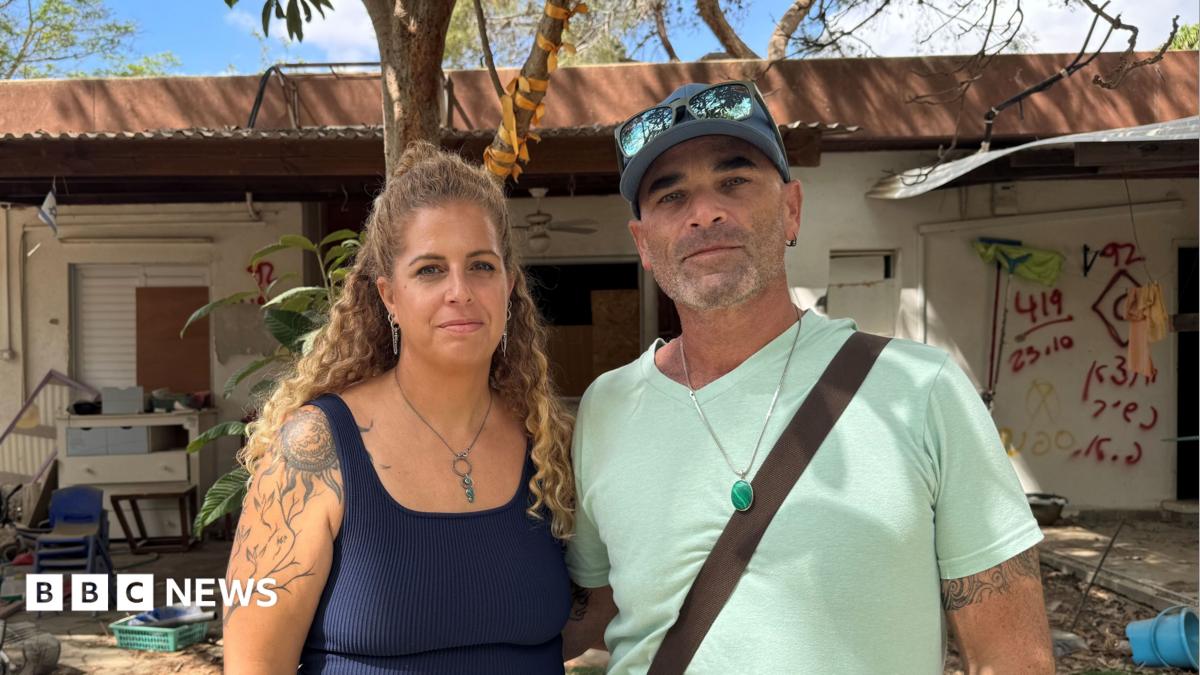
Three years after the Hamas-led assault that made October 7, 2023 the deadliest single day in Israel's history, the dining hall of Kibbutz Nir Oz stands empty, its ceiling tiles now home to roosting birds. The room that once served as the bustling social heart of a tight-knit community of roughly 400 people is silent, a hollowed-out relic of the communal life that defined this farming kibbutz for generations.
Dalit Ram Aharon, who survived the attack with her husband Achi and their three children, walks through the abandoned building recalling the routines that have vanished. Residents gathered here to share meals, mark holidays, and simply check in on one another. Now the space functions as a kind of memorial, its glass entrance doors still pocked with bullet holes from the day gunmen swept through the community.
Perhaps the most chilling feature of the dining hall is a set of household postboxes affixed with stickers applied after the assault. Red stickers mark the homes of those killed; black stickers identify those taken hostage. As Dalit notes with devastating precision, roughly one in four members of the community was either murdered or kidnapped, a toll that includes children and babies.
For the residents who remain, the third anniversary is another occasion for wrenching reflection. Nir Oz sits barely a mile from the Gaza border, and when hundreds of attackers, led by Hamas's elite Nukhba force and joined by civilian looters, stormed the community, it became one of the worst-hit locations in southern Israel. The closeness of the border, once a source of agricultural convenience, became the community's vulnerability.
The human cost was staggering. Forty-one Nir Oz residents and foreign workers were killed in the assault, along with six people who had fled to the kibbutz from a nearby outdoor party. Seventy-six people from the community were abducted into Gaza, a group that included nine bodies. Fourteen hostages were taken alive and later killed in captivity. The last living hostages from Nir Oz returned to Israel on October 13, 2025, and the remains of the final deceased hostage, Amiram Cooper, were recovered two weeks later.
Walking through the greenery of the kibbutz, the quiet is broken only by birdsong and the mewing of stray cats. Dozens of fire-damaged homes, which were simple single-storey buildings before the attack, have been demolished, leaving behind rows of reinforced concrete safe rooms that ultimately failed to protect the people who sheltered inside them. The sight of these exposed shelters, designed to withstand rockets rather than gunfire, has become a grim fixture of the landscape.
The Aharons believe some of the damaged houses should be preserved as evidence. Achi argues that visitors should be able to see the destruction and confront what he describes as the pure hatred that was unleashed here. The couple points out the site where teacher Maya Goren was killed inside the kindergarten, as well as makeshift memorials honoring three of the seven members of the kibbutz security team who died fighting the attackers.
The Israeli Defense Forces investigation into the events at Nir Oz underscored a broader systemic failure. The military, overwhelmed by an unprecedented simultaneous assault on more than 20 communities and multiple military posts, was left in disarray and never came to the rescue of the kibbutz. According to the findings, the first soldiers did not arrive until roughly 40 minutes after the last attackers had already left. Nearly every household experienced killing, violence including sexual assaults and rape, looting, and kidnapping.
The scale of the atrocity is captured in the final messages sent by residents during the attack. Dalit recalls the last social media posts from her friend Tamar Siman Tov, who lived nearby with her husband Yonatan and their three children, five-year-old twin girls Shahar and Arbel, and two-year-old son Omer. Tamar first asked neighbors in a women's group whether everyone was alright, then wrote that they were being shot at, and finally, in a message riddled with errors, that they were severely injured.
The family's burnt-out house still stands, a wind chime dangling by the door and a photograph showing the parents with their children. Investigators believe the parents were shot through the door of their bomb shelter, and that the house was then set alight, with the children dying from suffocation. The entire family was killed. Dalit, who hid in her own shelter for nearly 12 hours that day, describes Tamar as a person who never harmed anyone, a mother who lived a simple life.
For Dalit, the most difficult house to pass is the small home next door to her own, once belonging to her close friend Shiri Bibas. Shiri was the mother of ginger-haired Ariel, four, and nine-month-old Kfir, and the three became international symbols of the Gaza hostage crisis after being snatched from their home. Dalit describes Shiri as being like a sister, recalling that they were pregnant at the same time and that their children became best friends. The two women used to joke that the youngsters would one day marry.
Shiri's husband, Yarden, was released alive by Hamas in a Gaza ceasefire deal in February 2025, but Shiri and the two boys were killed after being taken hostage. Their fate, confirmed in the months that followed, crystallized the anguish of families who spent agonizing weeks waiting for word of loved ones.
The rebuilding question now facing Nir Oz is as much philosophical as it is practical. Some residents want to return as an act of defiance and continuity, insisting that abandoning the kibbutz would hand the attackers a victory. Dalit and Achi say they intend to move back in the memory of the friends they lost, treating their return as a form of tribute rather than a simple resettlement decision.
Others are weighing whether they can bear to live beside the Gaza border again, with the sounds of conflict still audible in the distance and the trauma of October 7 embedded in every familiar path. The community that was known for its farming and its peace activism, and whose founding generation planted the trees that still shade its lawns, must now decide what its next chapter looks like.
The challenge extends beyond individual households. Nir Oz lost not only residents but also a critical mass of its social fabric, including teachers, security volunteers, and the informal networks that made daily life possible in an isolated border community. Rebuilding will require reconstructing those networks from scratch, while also accommodating the memorial functions that survivors believe the site must serve.
For the families of the dead and the kidnapped, the anniversary brings a renewed sense of unfinished business. The postboxes with their red and black stickers remain in place, a permanent record of loss. The abandoned dining hall, the bullet-scarred doors, and the exposed safe rooms all testify to what happened here. Whether Nir Oz becomes a living community again, a place of remembrance, or some combination of both is a question its residents are still struggling to answer.
What's Your Reaction?
 Like
0
 Dislike
0
 Love
0
 Funny
0
 Wow
0
 Sad
0
 Angry
0

Reporter Senior. Meliput dinamika politik nasional, kebijakan publik, dan isu parlemen selama 8 tahun. Alumni FISIP UI.





Comments (0)