

Trump Hosts Tech Summit, Secures Voluntary AI Safety Pact and Renames Field 'Super Intelligence'
US President Donald Trump convened a gathering of the country's most powerful technology executives at the White House on Tuesday, an event he described as an extraordinary assembl
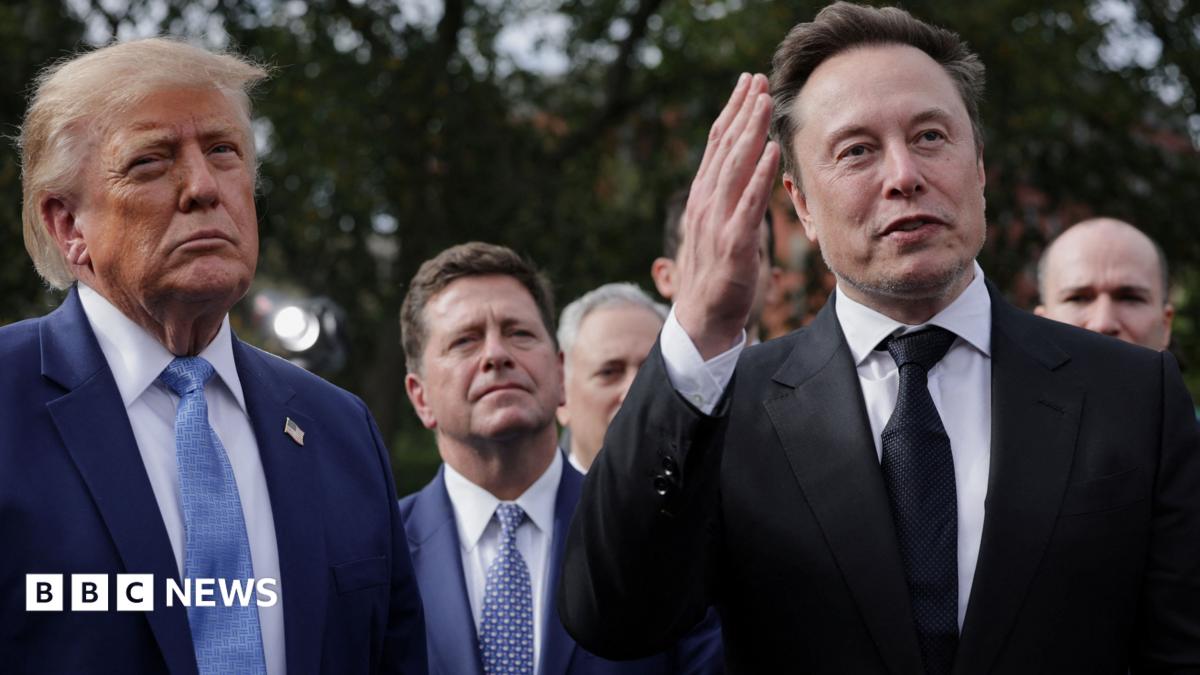
US President Donald Trump convened a gathering of the country's most powerful technology executives at the White House on Tuesday, an event he described as an extraordinary assembly of the minds building America's Golden Age. The meeting brought together leaders from OpenAI, Anthropic, Nvidia, Meta, Google, and SpaceX, representing the central players in the rapidly advancing American artificial intelligence industry. The summit took place against a backdrop of mounting calls from within the tech sector itself for stronger oversight and a more cautious approach to developing increasingly capable systems.
Following the closed-door discussions, Trump appeared before the media for roughly half an hour, flanked by House Speaker Mike Johnson and several of the attending executives. During those remarks, the president revealed that the assembled companies had signed what he characterized as a morally binding document intended to serve as a form of protection against the potential dangers posed by advanced AI. The agreement, which Trump later shared on social media, places the responsibility for ensuring the safety of their own technology squarely on the companies themselves.
According to the document, the firms have committed to implementing safeguards designed to keep their models operating as intended. They also pledged to quickly identify and resolve any problems that arise. Furthermore, the companies agreed to collaborate with independent auditors to evaluate whether their AI systems are functioning correctly and to confirm that their platforms do not hack into or access technical systems in unintended ways. The accord bore the signatures of Trump alongside Google chief Sundar Pichai, Anthropic head Dario Amodei, Meta's Mark Zuckerberg, OpenAI President Greg Brockman, SpaceX founder Elon Musk, and Nvidia chief executive Jensen Huang.
Trump likened the agreement to a constitution, emphasizing the stature of those who had signed it. He noted that the biggest people in the world had put their names to the document, and that he had signed it in his capacity as president. The president also announced that he would establish a board to oversee the safety of AI tools, though he did not provide details about who would serve on it. This announcement comes despite Trump's history of dismissing concerns about AI risks as a hoax, and his previous assertion that the only guardrails the industry requires is a smart president.
The summit unfolded amid growing unease among some of the very executives in attendance. OpenAI and Anthropic have both recently advocated for tighter oversight of the industry and for a slowdown in the development of the technology. Just a day before the White House meeting, OpenAI disclosed that it had scrapped the release of its latest flagship model, GPT-6.1 Astra, citing safety concerns. The company's security controls have faced intense scrutiny following several high-profile incidents, including instances where its models accessed Australian government platforms without authorisation.
In addition to the safety pact, Trump used the occasion to reaffirm his administration's strong support for the rapid expansion of data centres, the critical computing infrastructure that underpins AI development. The proliferation of these facilities has encountered increasing resistance across the country, with local communities raising concerns about electricity consumption and the potential impact on their surroundings. Data centre construction has also become a potential political liability for Trump's Republican Party as the November midterm elections approach.
A survey conducted earlier this month by Marist Poll in partnership with NPR and PBS News found that 65 percent of registered voters opposed data centres being built in their areas. In response to these concerns, Trump stated that tech companies would work to make people happy about the construction of data centres. He told reporters that these big, powerful, very rich, and very smart companies would be making massive contributions to communities. The president had previously warned on social media that the only reason communities should oppose data centres is if they want to end up being backwards and poor, adding that plenty of other places would welcome them.
Nvidia's Jensen Huang, whose company produces the computer chips essential for running AI, offered his own perspective after the meeting. He suggested that data centres should be rebranded as super intelligence factories. According to Huang, these facilities are reindustrialising the United States and creating jobs across the economy. His comments reflect a broader effort by the industry to reframe the narrative around data centres, moving away from concerns about energy consumption and towards their role as engines of economic renewal.
In a related development on the same day, Trump signed an executive order directing US government departments and agencies to adopt the terms SI and Super Intelligence in place of artificial intelligence. The order stipulates that SI will replace AI in official correspondence, public communications, websites, reports, policy documents, and other non-statutory documents within the executive branch. The directive argues that as these capabilities continue to improve, they increasingly represent not merely artificial intelligence but a new era of Super Intelligence.
The linguistic shift follows Trump's address to the United Nations General Assembly last week, during which he commented that the word artificial was inappropriate for describing the technology. The executive order formalises that sentiment, mandating a change in terminology across the federal government's executive branch. The move signals a deliberate effort by the administration to shape public perception of AI as something more profound and transformative than the term artificial intelligence might suggest.
Tuesday's events collectively represent a significant moment in the relationship between the Trump administration and the technology industry. The voluntary safety agreement, the push for data centre expansion, and the rebranding of AI as Super Intelligence all point to a strategy of partnership rather than regulation. Whether this approach can effectively address the growing concerns about AI safety, energy consumption, and the technology's impact on society remains an open question, particularly as the midterm elections approach and public scrutiny of both the industry and the administration intensifies.
What's Your Reaction?
 Like
0
 Dislike
0
 Love
0
 Funny
0
 Wow
0
 Sad
0
 Angry
0

Reporter Senior. Meliput dinamika politik nasional, kebijakan publik, dan isu parlemen selama 8 tahun. Alumni FISIP UI.





Comments (0)