

Turkish Court Convicts Stand-Up Comedian Deniz Göktaş of Insulting Erdoğan, Orders Release on Time Served
An Istanbul court has convicted well-known stand-up comedian Deniz Göktaş of insulting President Recep Tayyip Erdoğan, handing him a prison sentence of nearly 19 months while simul
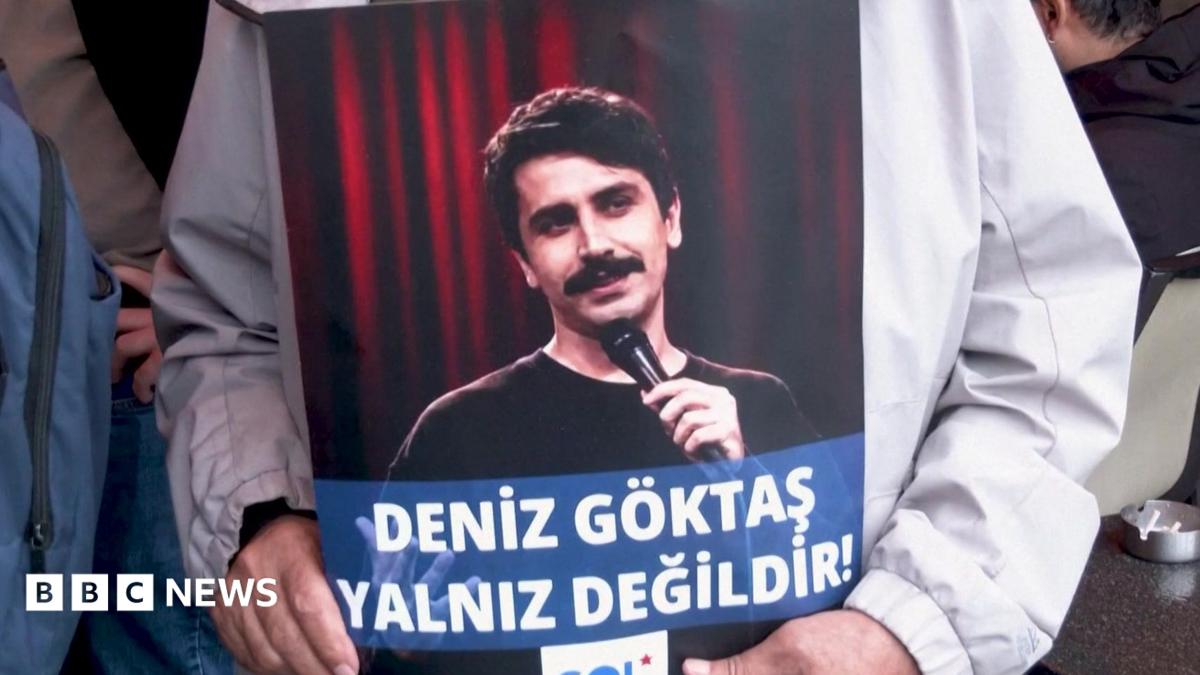
An Istanbul court has convicted well-known stand-up comedian Deniz Göktaş of insulting President Recep Tayyip Erdoğan, handing him a prison sentence of nearly 19 months while simultaneously ordering his release because of the time he has already spent behind bars. The ruling, delivered on Monday, also imposes a travel ban that prevents him from leaving Turkey, and it remains subject to review by a higher court.
The case has drawn widespread attention in Turkey and beyond, becoming the latest flashpoint in an ongoing debate over free expression and the boundaries of political satire in the country. According to the reporting from Istanbul, the verdict was met with surprise and relief by supporters who had gathered outside the courthouse expecting a far harsher outcome.
Göktaş had denied the charges throughout the proceedings. Prosecutors had initially sought a sentence of up to 12 years, a demand that underscored the seriousness with which the state treated his on-stage remarks. Instead, the court issued a term of almost 19 months, and because the comedian has already served nearly 90 days in pre-trial detention, he is expected to walk free within hours.
The routine at the centre of the case was a stand-up performance that went viral on YouTube, accumulating more than 15 million views. Prosecutors focused specifically on a line in which Göktaş described the Turkish leader as a "shy dictator." The comedian has consistently rejected the notion that his words amounted to a criminal act.
"Dictator is not an insult," he argued. "It is a political characterisation." His defence rested on the principle that political satire and commentary, even when sharply critical of those in power, should not be treated as a criminal offence. The court, however, disagreed sufficiently to enter a conviction.
Göktaş was arrested and handcuffed at Istanbul airport in July as he returned from a holiday, a scene that circulated widely and added to the public profile of the case. He has spent a total of 88 days in solitary confinement, according to the account of his court appearance. Despite that experience, he demonstrated that his comedic instincts remained intact.
"Three months have been taken away from my life," he told the court. "But I quit smoking, so I'll add another three months to my life." The remark prompted laughter and loud applause inside the courtroom, a rare moment of levity in a proceeding that carried potentially devastating consequences.
Outside the courthouse, supporters held signs expressing solidarity, including placards that translated to "Deniz Göktaş is not alone." Among those reacting to the verdict was Firat Aksal, a fellow comedian, who described the mood as one of unexpected joy. "We hardly know what to do with our happiness," he said. "We are thrilled. To be honest, we weren't hopeful of getting a fair trial."
Aksal added that Göktaş would take a few days to rest and spend time with his family before returning to the stage. That prospect alone represents a significant turn of events for a performer who faced the possibility of more than a decade behind bars.
The case comes amid a broader wave of arrests in Turkey that human rights organisations say is aimed at suppressing dissent. The source material notes that many others remain in detention, including journalists, human rights campaigners, student protesters, LGBTQ activists, and the elected Mayor of Istanbul, Ekrem Imamoglu. The observation that prisons in Turkey are full these days suggests a pattern rather than an isolated incident.
That context gives the Göktaş case a significance beyond the fate of one comedian. His prosecution has been viewed by critics as part of a larger effort to silence voices that challenge the government, whether through comedy, journalism, or political opposition. The fact that a joke told on stage could lead to arrest, handcuffing at an airport, and months in solitary confinement has alarmed those who monitor civil liberties in the country.
The conviction nonetheless stands, at least for now. The travel ban ensures that Göktaş cannot leave Turkey while the appeals process unfolds, and a final decision will rest with the court of appeals. That means the legal jeopardy is not entirely over, even as he prepares to resume his life and career.
For supporters, the release is a victory, however partial. For observers of Turkey's justice system, it is a reminder that the line between lawful speech and criminal insult remains contested and unpredictable. And for Göktaş himself, the outcome offers a chance to return to the stage, where the routine that landed him in prison first found its audience of millions.
What's Your Reaction?
 Like
0
 Dislike
0
 Love
0
 Funny
0
 Wow
0
 Sad
0
 Angry
0

Reporter Senior. Meliput dinamika politik nasional, kebijakan publik, dan isu parlemen selama 8 tahun. Alumni FISIP UI.





Comments (0)