

Twin Mass Shootings Kill 27 in South Africa Within Hours
Twenty-seven people are dead following two separate mass shootings in South Africa that occurred only hours apart, in a weekend that has laid bare the country's persistent struggle
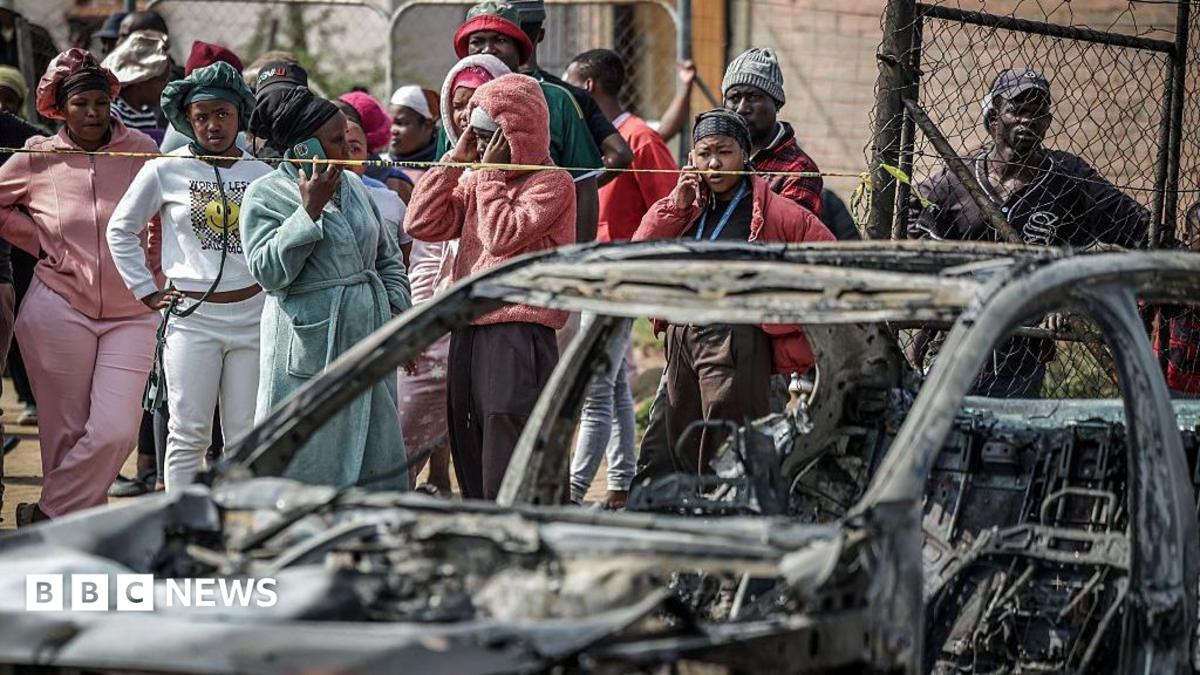
Twenty-seven people are dead following two separate mass shootings in South Africa that occurred only hours apart, in a weekend that has laid bare the country's persistent struggle with organised gun crime. The attacks, one at a bar near Johannesburg on Saturday evening and another outside an entertainment venue in a township close to Cape Town in the early hours of Sunday, are the latest in a series of incidents that have raised urgent questions about whether violence in the country is escalating.
In the first attack, eight gunmen stormed a bar close to Johannesburg, killing 17 people and injuring 15 others. Witnesses described a scene of chaos in which the attackers fired on patrons gathered outside the venue before pushing their way inside and continuing to shoot. Before fleeing, the gunmen set fire to two vehicles, apparently in an effort to destroy evidence or hinder pursuit. Police said the victims included 13 men and four women, and stressed that the motive remained unclear.
The second shooting took place in the early hours of Sunday morning, roughly a few hundred kilometres away, outside an entertainment venue in a township near Cape Town. Ten people were killed and a further 11 wounded. Of the fatalities, five died at the scene, while five others succumbed in hospital — a detail that suggests the death toll from that attack could yet rise, as medical staff continue to treat the injured.
Police said no arrests had been made in either case as of Sunday morning. Investigators have not publicly indicated a motive for either attack, and the absence of a clear explanation has added to the sense of uncertainty surrounding a weekend of violence.
The killings came just days after a separate mass shooting in Durban, where gunmen stormed a house in the KwaMakhutha township and killed 11 people. That attack, in which a tenth woman's body was later recovered as police probed the scene, underscores how quickly the country has been consumed by a run of deadly incidents.
South Africa has long been described as having one of the highest murder rates in the world, and the statistics behind that reputation are stark. In a country of roughly 62 million people, around 60 murders are recorded every day. Illegal firearms are readily available, and gun violence has proved a persistent feature of South African life for decades rather than a recent development.
What has changed, according to reporting, is the frequency and scale of the mass shootings. Analysts and commentators have warned that the country may be sliding into a worsening cycle, with violence frequently tied to territorial disputes among gangs involved in drug trafficking and illegal mining operations — two illicit economies that have grown in parallel and are believed to underpin much of the country’s violent crime.
The scale of the problem has been acknowledged at the highest levels of government. In February, President Cyril Ramaphosa described organised crime as the single most immediate threat facing South Africa's democracy, its society and its economic development — a framing that effectively placed criminal gangs at the centre of the country's national security concerns.
The government has responded by extending the reach of the security forces. Earlier this year, the military was deployed alongside police in areas recording the highest murder rates, an escalation intended to curb armed violence in the worst-affected communities. The presence of soldiers on the streets, visible in the wake of the Cape Town shooting, reflects that shift, though it also signals the depth of the crisis.
For investigators, the immediate challenge is establishing whether the Johannesburg and Cape Town attacks share a connection, whether either is linked to the Durban killings, and whether organised crime is behind them. The torching of vehicles at the first scene is a tactic often associated with gang operations seeking to frustrate forensic work or secure an escape.
For families of the dead, the questions raised by the weekend's violence are more immediate and more personal. Twenty-seven people lost their lives in the space of a single night, at a bar and at an entertainment venue — spaces that, until Saturday evening and Sunday morning, might have seemed routine places to gather with friends and family.
The pattern of the past fortnight suggests that individual tragedies are becoming part of a broader national reckoning. Whether the mounting pressure produces a decisive change in policing, gun control or the enforcement action taken against the criminal economies that profit from the violence remains uncertain. For now, the country is counting the dead and waiting for answers from a police force that had made no arrests by Sunday morning.
What's Your Reaction?
 Like
0
 Dislike
0
 Love
0
 Funny
0
 Wow
0
 Sad
0
 Angry
0

Reporter Senior. Meliput dinamika politik nasional, kebijakan publik, dan isu parlemen selama 8 tahun. Alumni FISIP UI.






Comments (0)