

Pope Leo Urges French Bishops to Eradicate 'Scourge' of Abuse During Historic Lourdes Pilgrimage
Pope Leo has issued a forceful appeal to the Catholic leadership of France, calling on the nation's bishops to eliminate what he described as the "scourge" of sexual abuse within t
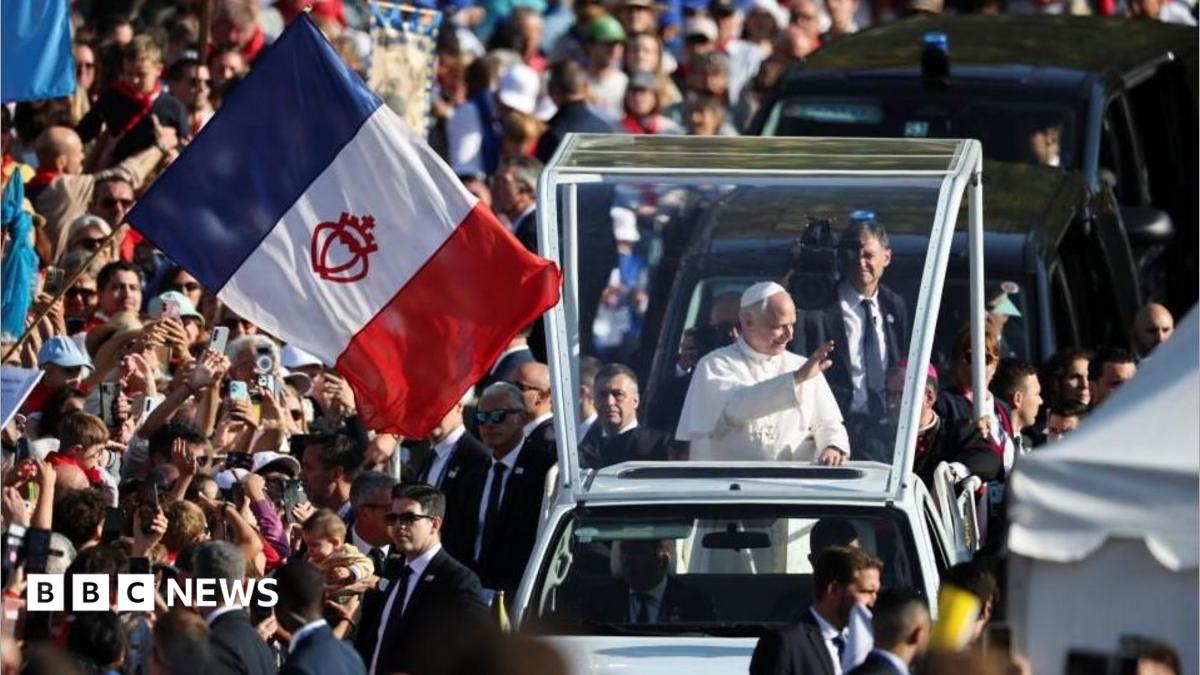
Pope Leo has issued a forceful appeal to the Catholic leadership of France, calling on the nation's bishops to eliminate what he described as the "scourge" of sexual abuse within the Church and to remain perpetually watchful in their safeguarding efforts. The pontiff's remarks came during a private gathering at the Sanctuary of Our Holy Lady of Lourdes, a site of profound spiritual significance in southern France, on the third day of his four-day apostolic journey to the country.
The meeting, held behind closed doors with senior church leaders, was part of a solemn sequence of events marking the Pope's first official visit to France since his election to the papacy in May 2025. The Vatican later released the Pope's comments to accredited journalists, ensuring that his message of accountability reached a wider audience beyond the confines of the bishops' conference.
In his address to the assembled bishops, Pope Leo acknowledged the determined efforts already undertaken by the French episcopate to confront the painful reality of abuse committed by clergy and lay church members within an ecclesial context. He stressed, however, that the work is far from complete, urging them to persevere along the path they have begun and to maintain the greatest possible vigilance. The Pope's choice of words underscored a recognition that institutional reform requires sustained commitment rather than one-time gestures of contrition.
The gravity of the crisis facing the French Church was laid bare by a landmark inquiry conducted in 2021, which concluded that approximately 330,000 individuals had been subjected to abuse as children over a period spanning seven decades. The report, produced by an independent commission, sent shockwaves through French society and prompted a reckoning within Catholic institutions across the nation. The scale of the findings placed the French abuse crisis among the most severe to have emerged in any country, intensifying calls for systemic change, compensation for survivors, and transparent governance.
Following his address to the bishops, the Pope celebrated Mass before thousands of worshippers gathered at the Meadow of the Shrine of Our Lady of Lourdes. The open-air liturgy represented a spiritual high point of the visit, drawing pilgrims from across France and beyond to the foothills of the Pyrenees. The Pope was also scheduled to meet privately with survivors of abuse later in the day, a encounter that many observers viewed as a critical test of his commitment to listening to those who have suffered at the hands of the Church.
The Lourdes leg of the papal visit followed a day of remarkable public engagement in Paris, where an estimated 700,000 people thronged the Place de la Concorde to hear the pontiff speak. The sheer scale of the gathering demonstrated the enduring ability of the papacy to mobilise crowds, even in a country whose modern political culture is defined by a strict separation between church and state. The Pope travelled down the Champs-Élysées Avenue in his open-topped popemobile, greeting followers who cheered and waved as he passed, a scene reminiscent of the enthusiastic receptions accorded to his predecessors.
On the previous day, the Pope held talks with French President Emmanuel Macron, underscoring the diplomatic dimension of the visit. The encounter provided an opportunity to discuss a range of issues at the intersection of faith, politics, and society, although the substance of their conversations was not immediately disclosed. The meeting highlighted the delicate balance the Vatican must strike in a nation that prizes secularism while retaining deep Catholic roots.
During the Mass in Paris, Pope Leo delivered a message that encouraged Catholics to embrace a faith that radiates outward rather than remaining confined to private devotion. He told worshippers that believers should let their faith overflow so that those they encounter may be refreshed. The exhortation framed Christianity as a dynamic force capable of renewing both individuals and communities, a theme that resonated with his broader pastoral emphasis on missionary outreach.
The pontiff also took time to address younger members of the congregation, describing them as "today's Church." He praised their enthusiasm, energy, and commitment, noting the joy they bring to Christian communities. The outreach to youth comes amid stark demographic shifts within French Catholicism. The proportion of the population attending regular worship has plummeted from roughly 35% in 1960 to under 5% today. Meanwhile, the number of priests has contracted dramatically, falling by two-thirds from 25,000 in 1990 to fewer than 9,000.
Despite these long-term declines, there are tentative signs of a religious revival in certain quarters. The number of adult baptisms has more than doubled over a five-year period, reaching 10,000 in 2025. Analysts suggest this trend may reflect a broader cultural search for meaning and community, as well as a renewed interest in traditional religious practices among younger generations. The Pope's visit appears designed, at least in part, to nurture and accelerate that momentum.
Pope Leo's itinerary in Lourdes was set to continue with a visit to the health facility at the sanctuary, where he was expected to meet with staff and residents. The facility, which cares for the sick and disabled, forms an integral part of the shrine's mission of compassion and healing. In the evening, the Pope was scheduled to participate in a torchlight procession, a devotional tradition that transforms the sanctuary into a river of flickering light as pilgrims carry candles in a solemn act of witness.
The sanctuary of Lourdes holds a unique place in Catholic devotional life, drawing millions of pilgrims annually who seek physical healing and spiritual consolation. According to tradition, the site is associated with apparitions of the Virgin Mary to a young peasant girl in the nineteenth century. The Pope's presence there carries profound symbolic weight, linking the Church's contemporary struggles with its historic identity as a source of hope and comfort.
The four-day visit represents the first papal trip to France since Pope Leo assumed the leadership of the Roman Catholic Church in May 2025. France has regularly been a destination for papal visits, reflecting its outsized role in the history of Catholic thought and culture despite its avowedly secular modern political structure. The apparent paradox of a deeply secular state playing host to mass religious gatherings underscores the complex relationship between faith and public life in the country.
Observers have noted that the visit comes at a pivotal moment for the Church in France. The abuse crisis has eroded trust in the hierarchy, while secularisation has diminished the Church's institutional influence. Yet the large crowds and the evident enthusiasm of young Catholics suggest that the Church retains a capacity to inspire devotion and to speak to questions of meaning that transcend purely political or social concerns. The Pope's twin emphases on accountability for past failures and outreach to future generations reflect a strategic vision aimed at restoring credibility and relevance.
As the visit draws toward its conclusion, the Pope's words at Lourdes will likely be remembered as a defining moment of his pilgrimage. By directly confronting the abuse scandal before the very bishops charged with implementing reform, he has placed the issue at the heart of his French journey. The private meeting with survivors further signals that listening to victims is not merely a procedural obligation but a moral imperative. For a Church seeking renewal in a sceptical age, the Pope's message appears to be that transparency, vigilance, and compassion are the indispensable foundations for the road ahead.
What's Your Reaction?
 Like
0
 Dislike
0
 Love
0
 Funny
0
 Wow
0
 Sad
0
 Angry
0

Reporter Senior. Meliput dinamika politik nasional, kebijakan publik, dan isu parlemen selama 8 tahun. Alumni FISIP UI.






Comments (0)