

AfD's Tobias Rausch Elected Speaker of Saxony-Anhalt Parliament, a First for Germany's Far Right Since WWII
For the first time since the end of World War Two, a far-right party has captured the speaker's chair in a German state parliament. Tobias Rausch, a 35-year-old member of the Alter
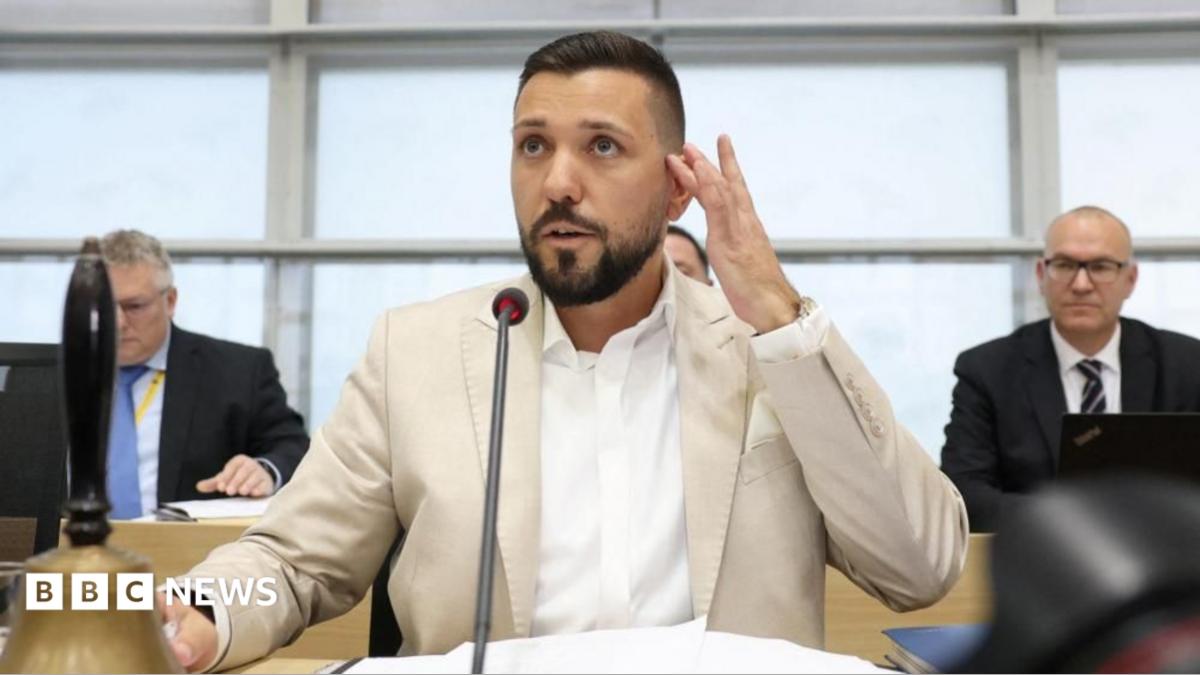
For the first time since the end of World War Two, a far-right party has captured the speaker's chair in a German state parliament. Tobias Rausch, a 35-year-old member of the Alternative for Germany (AfD), was elected on Tuesday to preside over the legislature in the eastern state of Saxony-Anhalt, marking a symbolic but deeply consequential milestone in the country's post-war political history.
Rausch's victory came roughly a month after the AfD scored a decisive win in Saxony-Anhalt's state election, a result that stunned establishment parties and upended assumptions about the durability of Germany's political firewall against the extreme right. Although the party fell three seats short of an outright majority in that vote, Rausch comfortably secured the speaker's post with the backing of nine lawmakers from outside his own caucus.
The vote took place as Saxony-Anhalt's newly elected representatives gathered for the parliament's inaugural constitutional session in Magdeburg. Outside the building, more than 300 demonstrators voiced their opposition, holding banners with the slogan "Never again is now" — a pointed inversion of the post-Holocaust pledge that has long anchored German political culture. One photograph from the scene showed a sign reading "2026. Never again is now," held aloft as the AfD's state leader, Ulrich Siegmund, spoke to reporters.
The abstentions and cross-party support that carried Rausch to victory have raised pointed questions about whether the firewall — the long-standing agreement among mainstream parties to refuse cooperation with the AfD — is beginning to crack. Five MPs from the hard-left BSW backed Rausch, but the identity of four other supporting lawmakers remains unclear. Fourteen of the conservative CDU's state MPs participated in the ballot, yet only five abstained as planned, prompting speculation that some may have voted for the AfD candidate. Before the vote, all 15 CDU representatives had publicly ruled out supporting the AfD, and one unconfirmed report suggested four may nonetheless have done so.
The outcome represents a direct challenge to Chancellor Friedrich Merz, who has repeatedly ruled out working with the far right at the national level. The CDU's official position would appear to be at odds with whatever transpired in the secret ballot, leaving the party facing uncomfortable questions about discipline and cohesion within its own regional ranks.
Rausch himself wasted little time in signalling his intentions. Speaking after the vote, he declared that "the days of political firewalls should be a thing of the past," explicitly rejecting the post-war consensus that has kept far-right parties out of positions of institutional authority. It was a remark that underscored just how much the AfD now feels empowered to normalise its role in German governance.
The Greens' regional leader, Susan Sziborra-Seidlitz, framed the moment in stark terms. She said a line had been crossed with the election of a far-right speaker and described it as a watershed moment. "We will not let ourselves be intimidated, and we will not sit by when rights are curtailed either here or for people in the state," she said, signalling that opposition parties intend to resist the AfD's encroachment rather than accommodate it.
The AfD is known for its pro-Russian and anti-immigrant positions, and it has advanced plans to segregate child refugees in schools. The party is also openly intolerant toward the LGBT community. Saxony-Anhalt's domestic intelligence agency classifies the AfD's regional branch as "right-wing extremist," a designation party leaders reject. Until this week, its lawmakers had occupied the right fringe of the state parliament. Ahead of Tuesday's inaugural session, however, the party successfully argued that it should now sit in the centre — a procedural shift that carries heavy symbolic weight in a chamber where seating arrangements reflect political legitimacy.
Rausch, a trained estate agent who has served in the parliament for a decade, is regarded as a close confidant of Siegmund, the charismatic local AfD leader now seeking to become state premier in December. While the speaker's role is largely ceremonial, it is far from powerless: Rausch will chair parliamentary debates, control access to the parliament building, and represent the legislature at official events. Those authorities give him meaningful influence over the tone and conduct of state politics.
Siegmund's own bid for the premiership remains uncertain. Like Rausch, he would need the support of 42 MPs in the 83-seat legislature. The BSW has ruled out entering a coalition with the AfD, saying instead that it would back a non-partisan candidate for state premier and abstain in December's vote. That stance leaves the AfD's path to the state's highest office narrow, even as the party celebrates its breakthrough in the speaker's chair.
Tuesday's events in Magdeburg will reverberate well beyond Saxony-Anhalt. They offer a preview of the dilemmas facing Germany's mainstream parties as the AfD consolidates its position in the country's east and tests the boundaries of institutional tolerance. For opponents, the election of a far-right speaker is a warning that norms once considered unassailable can erode quietly, one secret ballot at a time. For the AfD, it is proof that the firewall is not a wall but a door — and that it may now be ajar.
What's Your Reaction?
 Like
0
 Dislike
0
 Love
0
 Funny
0
 Wow
0
 Sad
0
 Angry
0

Reporter Senior. Meliput dinamika politik nasional, kebijakan publik, dan isu parlemen selama 8 tahun. Alumni FISIP UI.



Comments (0)