

Backpack the Brown Bear Wins Alaska's Fat Bear Week After Narrow Victory Over Rival 910
A hefty brown bear officially known as 89 Backpack has claimed the crown in this year's Fat Bear Week, edging out a challenger identified simply as 910 in a closely fought final ro
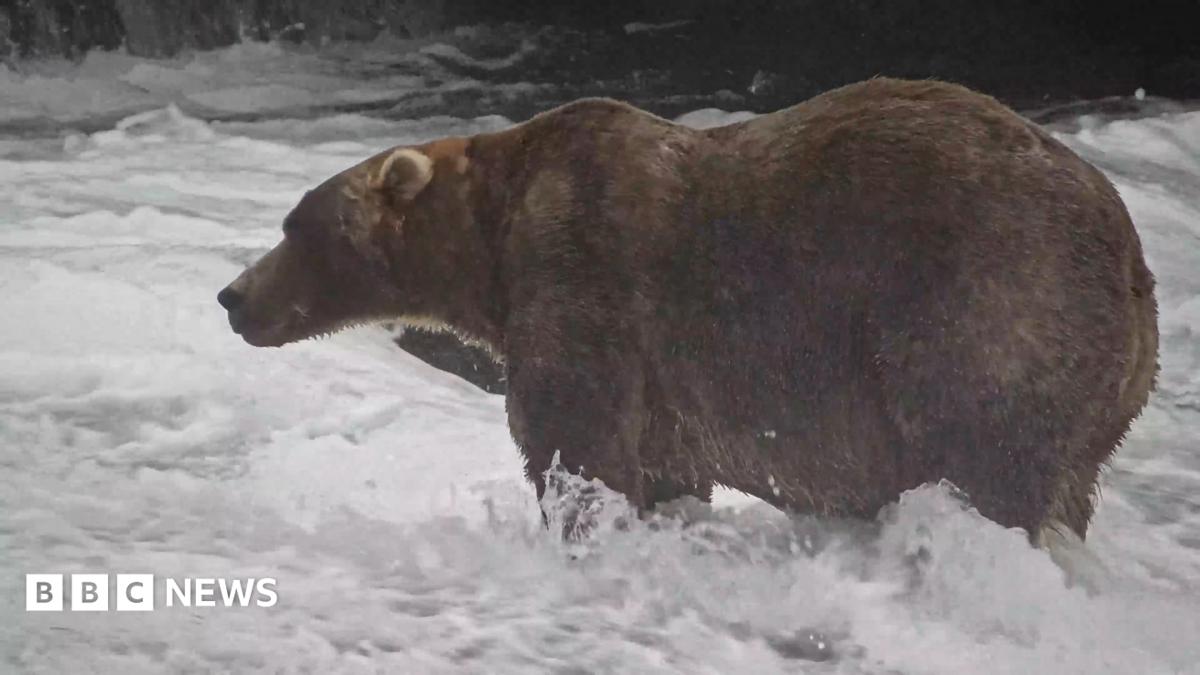
A hefty brown bear officially known as 89 Backpack has claimed the crown in this year's Fat Bear Week, edging out a challenger identified simply as 910 in a closely fought final round of the popular online tournament held at Katmai National Park in Alaska.
Backpack secured 103,344 votes against 910's 98,253, a margin of just over 5,000 ballots in a contest that drew animal lovers from around the globe. The US National Parks Service framed the competition as a "battle of size, skill, snack acquisition, and strategic loafing" — a tongue-in-cheek description that captures both the lighthearted spirit of the event and the genuine biological stakes involved for the bears.
Now in its thirteenth year, Fat Bear Week has grown from a modest park initiative into an international internet phenomenon. Last year alone, more than 1.7 million votes poured in from over 100 countries, underscoring how deeply the spectacle of these rotund predators resonates with audiences far beyond Alaska's borders.
The National Parks Service extended its thanks to the sixteen bears that "involuntarily participated" in the competition, a wry acknowledgement that the animals themselves have no say in their sudden celebrity status. The bears are tracked and documented by park staff and wildlife enthusiasts who follow their lives through live cameras positioned along the Brooks River.
Backpack's victory carries a notable family connection. His mother, a bear named Holly, took the Fat Bear Week title in 2019, making Backpack's win something of a dynasty moment in the competition's history. The lineage has clearly passed down more than just genetics — it has also produced a bear capable of capturing the public's imagination in its own right.
His name, perhaps surprisingly, has nothing to do with his physique. While one admirer described him as having both "chonk and the badonk," the Backpack moniker actually traces back to his cubhood, when he developed a habit of clambering onto Holly's back as she waded through the salmon-rich waters of the Brooks River. The image of a tiny cub riding atop its mother evidently left a lasting impression on the researchers and photographers who documented the park's bears.
Supporters celebrated Backpack's win with affection and humour. One fan affectionately called him a "big fuzzy boy," while another referenced the distinctive "light bulb shape" of his body — a silhouette shaped by months of relentless feeding. His official biography notes that his "quiet toughness has allowed him to find his niche alongside the biggest bears at Brooks River," suggesting a bear whose success owes as much to temperament as to appetite.
Yet the contest was not without controversy. Some followers of Bear 910 argued that she deserved the title, pointing out that she had raised both her own biological cub and an adopted niece — a remarkable feat of maternal dedication. One critic acknowledged Backpack's posterior but insisted 910 was "a larger bear all around," adding that "Backpack just has a bigger booty." Another 910 supporter wrote on the park's Facebook page that "she really put in the work this year," while a third voter summed up the sentiment with the declaration: "She round, she thick my girl 910 got my vote."
The precise final weights of both contenders have not been disclosed, leaving the outcome to rest on the combined judgement of online voters rather than a set of scales. That ambiguity is part of what makes the competition so engaging — participants must assess the bears' bulk through photographs and live footage, weighing evidence of girth, posture, and general roundness.
The biological context behind the competition is serious. Adult male brown bears typically reach an average of 408 kilograms by mid-summer and frequently add the equivalent of a quarter of their body weight by autumn. The largest males can tip the scales at more than 540 kilograms. Females, while smaller, can still exceed 300 kilograms, and cubs enter the world weighing only about half a kilogram — a remarkable transformation from tiny newborn to formidable predator.
Fat Bear Week unfolds against a backdrop of urgent necessity. Organisers explain that during hibernation, bears neither eat nor drink and lose roughly one-third of their body weight. "Their winter survival depends on accumulating ample fat reserves before entering the den," they wrote, making the autumn feeding frenzy a matter of life and death rather than mere indulgence.
From June until mid-October, the bears of Katmai gorge themselves on abundant food sources, most notably the salmon they snatch from the water using either their jaws or their paws. The Brooks River, where Backpack learned to ride on his mother's back, serves as a critical feeding ground during this period of intense consumption.
Backpack will soon retreat into hibernation, a dormant state that can last as long as six months. During that time, he will rely entirely on the fat reserves he accumulated during the summer and autumn months. When he emerges in spring, he will likely be significantly leaner — a transformation that regular followers of the competition have come to anticipate with each passing year.
The competition's enduring appeal lies partly in its simplicity. There are no complex rules or obscure statistics — just bears, cameras, and a public invited to judge which animal has best prepared itself for the long winter ahead. That accessible premise has turned a remote Alaskan national park into a global stage, and transformed individual bears into beloved characters with devoted fan bases.
For Katmai National Park, the event also serves an educational purpose. By drawing attention to the bears' feeding habits and hibernation cycles, organisers highlight the broader ecological significance of the park and the delicate balance that sustains its wildlife. The humour and enthusiasm surrounding Fat Bear Week ultimately help communicate genuine conservation messages to an audience that might otherwise never engage with wildlife biology.
As Backpack settles in for his long winter rest, his victory will be remembered as another chapter in the competition's growing legend. Whether he returns next year to defend his title remains to be seen — a question that will keep his supporters watching the Brooks River cameras closely when spring arrives.
What's Your Reaction?
 Like
0
 Dislike
0
 Love
0
 Funny
0
 Wow
0
 Sad
0
 Angry
0

Editor Politik. Mantan jurnalis cetak dengan spesialisasi politik elektoral. Menulis analisis kebijakan dan reportase parlemen.






Comments (0)