

German Chancellor Friedrich Merz Receives Crucial Backing from Regional Premiers as Pressure Mounts
The leaders of eight German federal states have formally voiced their support for Chancellor Friedrich Merz, seeking to quell mounting speculation regarding his political standing
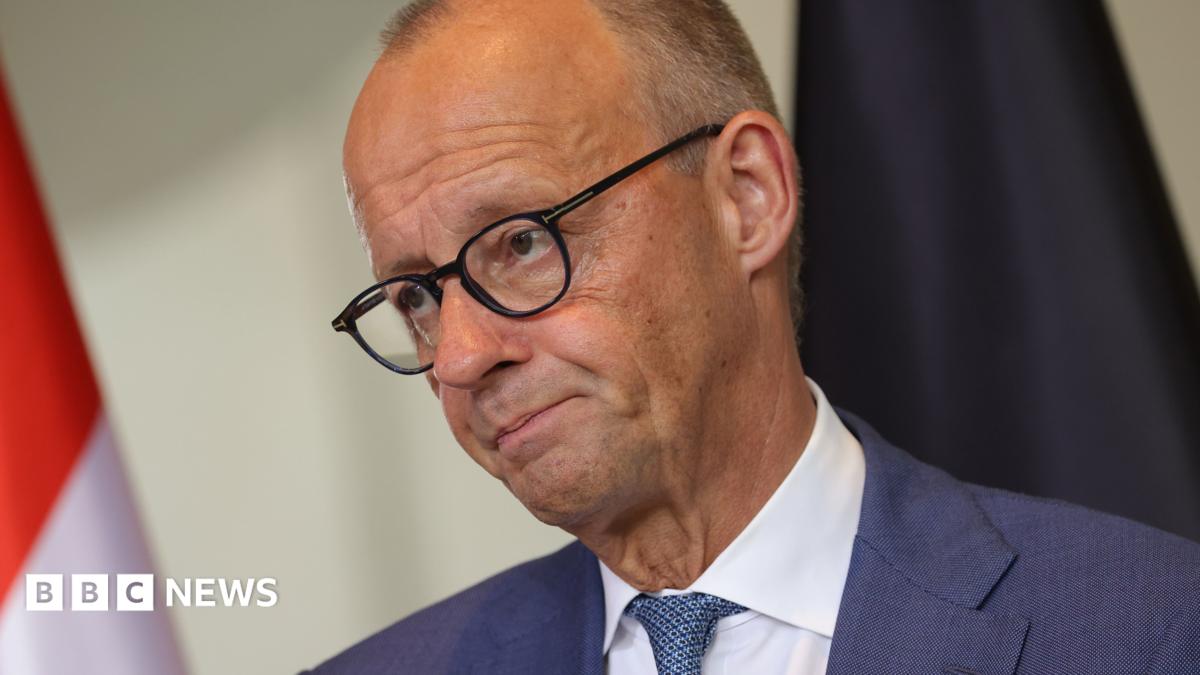
The leaders of eight German federal states have formally voiced their support for Chancellor Friedrich Merz, seeking to quell mounting speculation regarding his political standing and the viability of his leadership. The intervention comes at a precarious moment for the head of the federal government, who is grappling with historically low public approval figures and the rapid electoral ascent of the far-right Alternative for Germany party.
All eight regional heads of government belong to Merz’s conservative Christian Democratic Union. In a unified message, the premiers argued that rebuilding confidence among voters requires focused governance rather than internal division. They insisted that the party's restoration of trust depends on actively engaging with citizens and implementing effective policies, explicitly dismissing calls for debates concerning party personnel and leadership changes.
The joint declaration brought together the heads of state administrations across Germany, including the premiers of North Rhine-Westphalia, Berlin, Hesse, Saxony, Rhineland-Palatinate, Saxony-Anhalt, Thuringia, and Schleswig-Holstein. Their appeal underscored the necessity of preserving stability across the nation's political landscape, emphasizing that the federal republic demands an effective and resilient administration supported by a dependable majority within the Bundestag.
The high-profile display of unity reflects urgent efforts within the CDU to steady the ship following a bruising sixteen months in office for Merz. The chancellor has struggled to win over the broader German electorate, hindered by an abrasive personal communication style that critics argue has alienated voters. A recent poll published by Bild revealed that only 14 percent of respondents considered him suitable for the nation's top political office.
Anxiety within conservative ranks accelerated sharply following a devastating electoral collapse at the start of September in the eastern state of Saxony-Anhalt. In that contest, the anti-immigration AfD secured an unprecedented 43.8 percent of the vote, while the CDU tumbled to a distant second place with just 17.2 percent. The outcome marked the first time since the end of the Second World War that a far-right movement had come so close to governing a German state parliament.
Although the AfD remains three seats short of an absolute majority and mainstream political parties maintain a strict refusal to enter into formal coalitions with the far right, the result demonstrated the party's unprecedented strength and raised the possibility of an AfD-led minority government. The scale of the CDU's defeat dramatically intensified discussions surrounding a potential mid-term replacement of the chancellor, a scenario commonly referred to in domestic political circles as a "Kanzlertausch."
In the aftermath of the regional defeat, Merz adopted a confrontational stance, fiercely rebuking the AfD as a destructive political entity intent on realigning Germany's foreign policy toward Russia. He further escalated tensions by asserting that the far-right party's proposed migration policies would effectively amount to an ethnic cleansing of foreign skilled professionals. The AfD strongly rejected the accusations, describing them as baseless and repulsive, and announced it was pursuing a legal defamation complaint against the chancellor.
Despite the escalating friction, Merz's regional allies have sought to close ranks. In addition to the collective backing from the eight CDU premiers, Markus Söder, the leader of the Christian Social Union—the CDU's Bavarian sister party—and premier of Bavaria, has also reiterated his support for the embattled chancellor.
Nevertheless, internal party discipline faces an immediate trial with upcoming state elections in both Berlin and Mecklenburg-West Pomerania. According to party sources, CDU leadership figures are scheduled to convene on Sunday to coordinate their strategy and evaluate the potential fallout from the vote. The regional contests are widely viewed as a decisive barometer for Merz’s authority and future prospects.
Pre-election surveys indicate contrasting challenges across the two regions. In the capital city of Berlin, the race remains highly competitive, with the CDU and Die Linke competing for the top position while the Greens and the AfD follow closely behind. In Mecklenburg-West Pomerania, the AfD is projected to finish ahead of the centre-left Social Democratic Party, though it is expected to fall well short of securing an absolute majority.
The most catastrophic outcome for Merz would involve the CDU losing its governing role in Berlin while failing to attain the required threshold to maintain a parliamentary presence in Mecklenburg-West Pomerania. Such an electoral disaster would amplify doubts about whether the chancellor has become an unsustainable liability for the conservative alliance ahead of national contests.
Unlike other parliamentary systems such as the United Kingdom, where prime ministers are frequently ousted and replaced mid-term, post-war Germany maintains a strong political culture of stability. While a chancellor could theoretically be driven to resign through internal pressure or removed via a constructive vote of no confidence in the Bundestag, such mechanisms are regarded as exceedingly rare and difficult to orchestrate.
No prospective rival within the CDU has formally declared an intention to challenge the chancellor's authority. Nonetheless, prominent figures have been persistently mentioned as potential alternative leaders, including North Rhine-Westphalia Premier Hendrik Wüst, Federal Interior Minister Alexander Dobrindt, and CSU leader Markus Söder.
Merz's tenure has demonstrated significant contrasts between his policy ambitions and his political standing. Prior to officially assuming the chancellorship, he successfully generated broad consensus for a landmark 500-billion-euro defence infrastructure fund, securing international commendation for his decisive focus on European security and robust defence posture.
However, internal friction has long shadowed his political career. Merz required three separate campaigns across multiple years to finally secure the CDU party leadership. Furthermore, he suffered an unprecedented defeat during his initial parliamentary confirmation vote for chancellor, despite the existence of a formal coalition agreement with the SPD. That setback, unique in post-war German political history, highlighted enduring reservations about his leadership within his own parliamentary alliance—and reinforced expectations that he will fiercely resist any effort to relinquish the chancellorship he sought for decades.
What's Your Reaction?
 Like
0
 Dislike
0
 Love
0
 Funny
0
 Wow
0
 Sad
0
 Angry
0

Editor Politik. Mantan jurnalis cetak dengan spesialisasi politik elektoral. Menulis analisis kebijakan dan reportase parlemen.






Comments (0)