

Iran Appeals Court Upholds 74 Lashes for Singer Parastoo Ahmadi Over Hijab-Free Performance
An Iranian appeals court has upheld a sentence of 74 lashes for a well-known singer who performed without the compulsory hijab, according to her legal team. The ruling, confirmed o
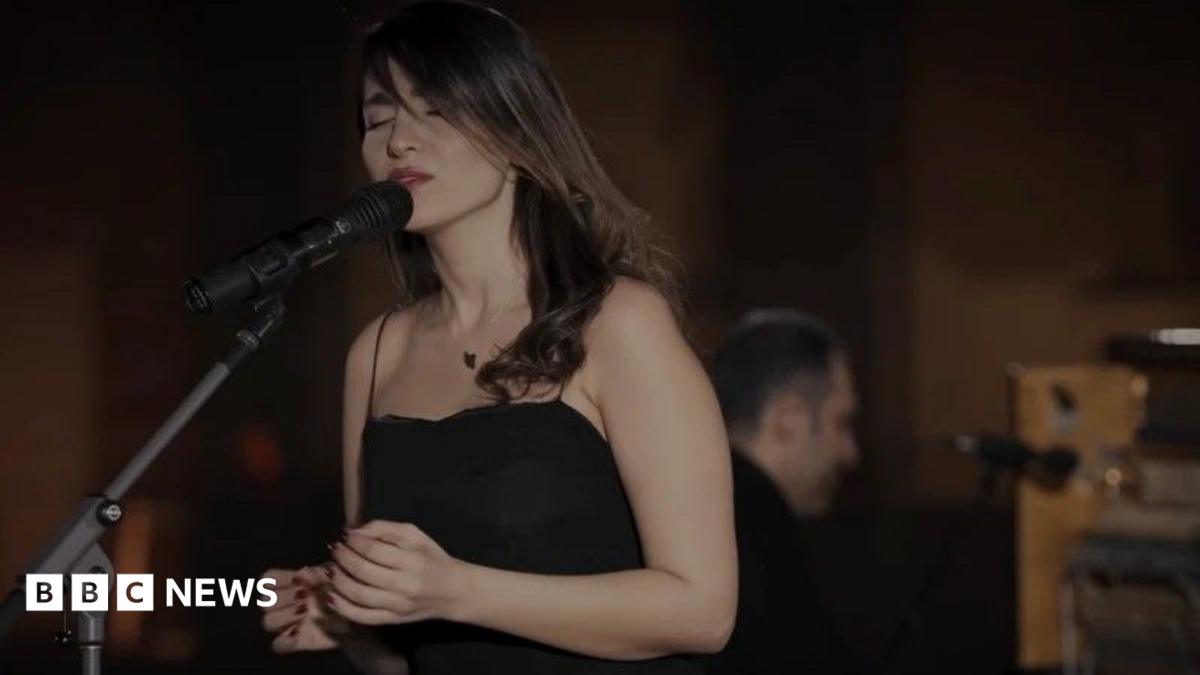
An Iranian appeals court has upheld a sentence of 74 lashes for a well-known singer who performed without the compulsory hijab, according to her legal team. The ruling, confirmed on Friday, closes off the latest avenue of appeal for Parastoo Ahmadi and eight members of her band and production crew, who were convicted over a concert that was livestreamed on her YouTube channel in December 2024. The decision was reported by BBC Persian and relayed by the defendants' lawyers, who expressed dismay that the higher court reached its verdict without holding a hearing.
The performance at the center of the case featured Ahmadi, 29, singing in a sleeveless dress, a direct challenge to Iranian regulations that bar women from public performances and require them to wear headscarves and modest clothing. The video quickly went viral, drawing millions of views and turning the concert into one of the most visible acts of defiance against the country's dress code since mass protests shook the Islamic Republic in 2022. Iran's judiciary responded by launching proceedings against the singer, arguing that the performance violated the country's legal and cultural regulations.
In June, a criminal court in Qom reportedly found Ahmadi and the other defendants guilty of several charges, including offending public decency through the publication of obscene and indecent material. Alongside the 74 lashes, the court imposed a two-year ban on audiovisual activities and a two-year prohibition on leaving the country. The penalties marked one of the harshest responses available for such charges, even though Iranian law also permits fines and lighter sanctions for similar offenses.
The appeal was rejected on Friday, according to the legal team, which said the Court of Appeal declined to hold a hearing despite having the option to do so. One of the lawyers told the BBC that the concert should never have been treated as a crime. In the lawyer's assessment, the trial court selected one of the most severe punishments available, and the appellate panel simply ratified that outcome. The lawyer suggested the primary motivation behind the ruling was deterrence — a signal intended to prevent similar events from taking place in the future.
Ahmadi's case has resonated far beyond Iran's borders. When news of the initial sentence emerged, it triggered widespread reaction among Iranians on social media. The exiled singer Googoosh, a beloved figure in Iranian music, wrote on Instagram expressing hope that the dark days would end, that women would regain the freedom to choose how they live and dress, and that artistic expression would once again flourish in the country. Another prominent musician, Hossein Alizadeh, declared he was willing to take 70 lashes in Ahmadi's place, a statement that captured the depth of solidarity within Iran's artistic community.
Human rights organizations have also condemned the punishment. Amnesty International warned that flogging constitutes cruel, inhuman and degrading treatment, and said it violates the absolute prohibition on torture and other ill treatment under international law. The organization's stance reflects a broader consensus among rights groups that corporal punishment of this kind is incompatible with Iran's international obligations, even as Iranian authorities continue to apply such penalties under their interpretation of Sharia law.
The sentence is not without precedent. In January 2024, Kurdish-Iranian activist Roya Heshmati was flogged 74 times after being convicted of violating public morals over a photo posted on social media that showed her without the hijab. According to the Kurdish rights group Hengaw, Heshmati described how a female officer forcibly placed a scarf on her head at a prosecutor's office in Tehran before a male officer whipped her shoulders, back, hips and legs. The parallel number of lashes in both cases has drawn attention to what appears to be a recurring sentencing pattern for women accused of dress-code violations.
Under Iranian law, which is grounded in the country's interpretation of Sharia, women and girls above the age of puberty are required to cover their hair with a hijab and wear long, loose-fitting clothing that conceals their figures. The rules extend to public performances, which women are effectively barred from giving. Enforcement has fluctuated over the years, with authorities periodically launching waves of arrests, issuing warnings, shutting down businesses and taking other measures aimed at compelling compliance.
The current climate of enforcement is complicated by broader regional tensions. Earlier this month, conservative politician Gholamali Haddad-Adel, a member of the Expediency Council and the father-in-law of Supreme Leader Mojtaba Khamenei, acknowledged that Iran's war with the United States and Israel meant authorities could not engage on the hijab front as much as they should for the time being. The war began at the end of February and has consumed significant state attention and resources, potentially altering the calculus around domestic social enforcement.
That conflict followed only weeks after Iranian security forces violently repressed another wave of mass protests sparked by the country's economic crisis, a crackdown that killed thousands of people. The scale of that repression, combined with the ongoing war, has created an environment in which the enforcement of dress codes and the prosecution of cultural figures carry heightened political weight. Ahmadi's case thus sits at the intersection of Iran's domestic social control and its broader security preoccupations.
The 2022 protests remain the defining backdrop for cases like this one. They erupted after the death in custody of Mahsa Amini, a 22-year-old Kurdish woman who was detained by morality police in Tehran in September of that year for allegedly wearing her hijab improperly. During the nationwide demonstrations that followed, women burned their headscarves or waved them in the air in defiance of the clerical establishment. Hundreds of people were killed as security forces moved to suppress the unrest.
Since those protests, many women and girls across Iran have stopped covering their hair in public altogether, an open rejection of the official dress code that has proven difficult for authorities to reverse. The state has responded with periodic crackdowns, but the persistence of the disobedience suggests that enforcement alone has not restored the previous status quo. Ahmadi's livestreamed performance can be understood as part of that same wave of visible, deliberate noncompliance.
For Ahmadi and her colleagues, the practical consequences now include the certainty of corporal punishment, a two-year freeze on their professional activities and a travel ban that keeps them inside the country. The appeals court's refusal to grant a hearing removes the most immediate legal remedy and leaves few domestic options for challenging the verdict. Their lawyers have framed the outcome as disproportionate and as evidence that the judicial process prioritized deterrence over the individualized consideration of the case.
The ruling also carries a broader message to Iran's cultural sector. By upholding lashes and professional bans for a single performance, the courts signal that artistic expression by women — particularly expression that disregards the mandatory hijab — will be met with severe consequences. Whether that message succeeds in suppressing future acts of defiance is uncertain, given the widespread public sympathy the case has generated and the continuing refusal of many Iranian women to comply with the dress code.
International reaction is likely to intensify following the appeals court's decision. Rights groups have already characterized the punishment as a violation of fundamental human rights, and the absence of a hearing will bolster arguments that the proceedings fell short of basic fair-trial standards. For now, the legal avenues available to Ahmadi and her co-defendants within Iran appear exhausted, and the sentence stands confirmed by the country's higher judiciary.
What's Your Reaction?
 Like
0
 Dislike
0
 Love
0
 Funny
0
 Wow
0
 Sad
0
 Angry
0

Editor Politik. Mantan jurnalis cetak dengan spesialisasi politik elektoral. Menulis analisis kebijakan dan reportase parlemen.





Comments (0)