

Iran Proposes Seven-Day Plan to Reopen Strait of Hormuz as US Signals It Is in No Rush
Iran has put forward a proposal to the United States that would see the Strait of Hormuz reopened to normal maritime traffic within one week, according to Iranian Foreign Minister
Iran has put forward a proposal to the United States that would see the Strait of Hormuz reopened to normal maritime traffic within one week, according to Iranian Foreign Minister Abbas Araghchi, who announced the offer during a visit to the United Nations in New York. Araghchi told reporters that the plan could be implemented "if the necessary conditions are met," explaining that those conditions are already laid out in the memorandum of understanding signed between Washington and Tehran in June. He emphasized that the initiative has been transmitted to the American side through Qatari intermediaries, adding that "the choice now rests with the United States."
The memorandum of understanding, signed on 18 June, was originally designed to halt hostilities and at least partially restore shipping through the strategic waterway. Its 14 points included a commitment that Iran would never pursue a nuclear weapon, an end to military operations on "all fronts" by the US, Iran and their respective allies, the lifting of a US naval blockade, and sanctions relief. The document also stipulated that Iran would use its "best efforts" to ensure the safe passage of commercial vessels through the strait and would hold discussions with Oman regarding future shipping arrangements. However, the agreement collapsed shortly after it was signed when both sides resumed military strikes.
Asked about the Iranian overture, a US official told the BBC that constructive discussions were underway through mediators, including on nuclear-related matters. Washington has not yet issued a formal response to the proposal. However, the Wall Street Journal, citing unnamed US officials, reported that President Donald Trump had rejected the deal. According to that report, Trump was privately doubtful that Iran would satisfy his demands and had told his staff he expected a renewed bombing campaign to be likely.
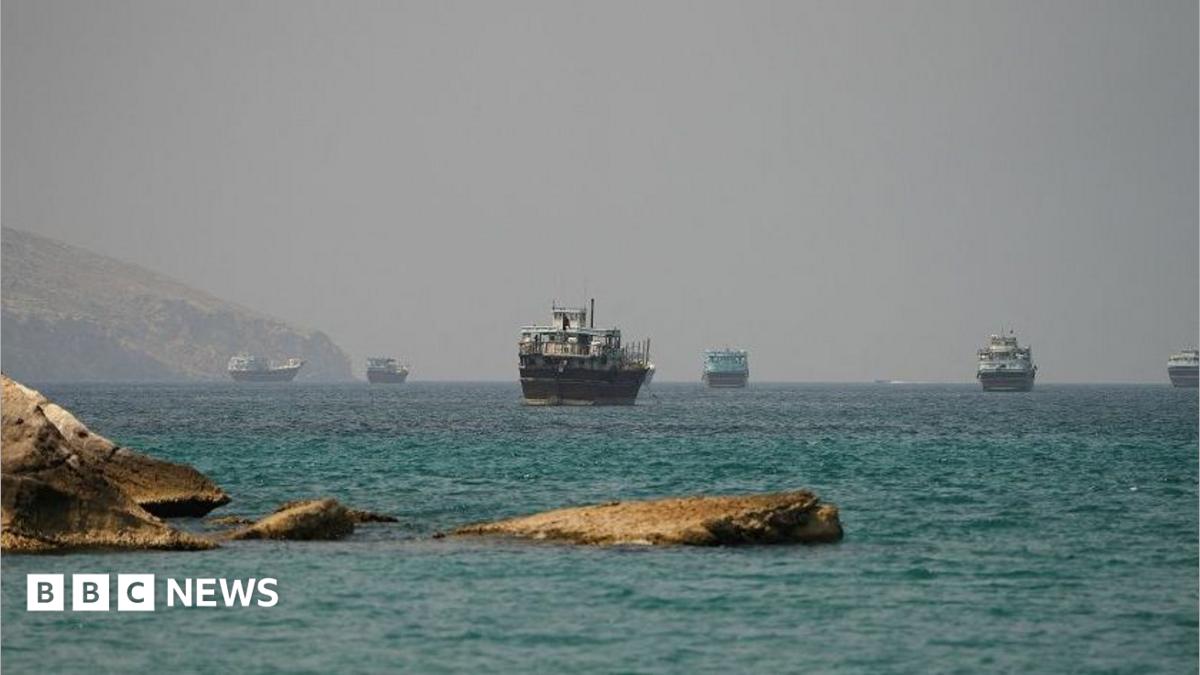
The Strait of Hormuz has been a focal point of the conflict since the US and Israel launched air strikes on Iran on 28 February. Tehran retaliated by attacking Israel and US bases in the Gulf, as well as targeting Arab Gulf allies of Washington, and by blocking the strait. Before the war, roughly 20% of the world's oil and liquefied natural gas passed through the narrow waterway. Its closure has triggered sharp swings in energy prices and intensified pressure on Trump to find a way to wind down the conflict, particularly with Congressional elections approaching in November.
Speaking to reporters, Araghchi declined to spell out the specific steps Iran wants the US to take but insisted that "the actions that the United States should take are not new. They are all already in the MOU." He added: "I can tell you if there is seriousness in the US side to come to a deal and reopen the Strait of Hormuz, everything is now prepared." A US official countered that Washington "is in a very strong position with control of the Strait of Hormuz, so we are not in a rush."
In a separate interview with CBS News, the BBC's US partner, Iranian President Masoud Pezeshkian said the ceasefire process "will begin from the very day they accept it." He recalled that the two sides had previously reached an understanding based on the memorandum signed in Pakistan, and said that if the US agrees to proceed along those lines, "everything will return to the way it was before." Pezeshkian also indicated that Iran would now permit United Nations nuclear inspectors to enter the country, rejecting allegations that Tehran is seeking to develop a nuclear weapon. "If they wish to come in and have inspections, we can reach accords and agreements vis-à-vis that specific topic within the negotiations," he said.
The stakes involved in reopening the strait are considerable. Shipping data cited by Reuters, drawn from the commodities analytics firm Kpler, shows a recent 10-day average of roughly 18 transits per day through the waterway, with daily figures falling as low as nine vessels on some days. Trump has claimed that his administration has succeeded in getting oil out through the strait despite the disruptions, but the reduced traffic underscores how far shipping volumes remain below pre-war norms. The closure has disrupted global energy markets, forcing importers to seek alternative routes and supplies while pushing prices through volatile swings.
Compounding the situation, Yemen's Houthi movement, which is aligned with Iran, has recently stepped up attacks aimed at disrupting oil exports from Saudi Arabia via the Red Sea on the opposite side of the Arabian peninsula. This month the group seized large stretches of strategically important Red Sea coastline in a rapid offensive, including the port of Mokha, which overlooks the Bab al-Mandab Strait, another critical chokepoint for international shipping. The Houthis have also targeted Saudi oil installations, further threatening regional energy infrastructure. US media has reported that Saudi Crown Prince Mohammed bin Salman has requested military support in response to these attacks.
The combination of the Hormuz closure and the Houthi campaign in the Red Sea presents a dual threat to global energy supply routes. Together, the two waterways carry a substantial share of the world's seaborne oil and gas, and simultaneous disruption at both points would leave exporters and importers with few viable alternatives. Analysts have warned that prolonged instability could force sustained increases in freight and insurance costs, adding to inflationary pressures in economies still recovering from earlier shocks. The situation also raises the risk of a broader regional escalation involving Gulf states that host US military bases.
Diplomatically, the Iranian proposal appears designed to test Washington's willingness to return to the framework of the June memorandum. By routing the offer through Qatar, Tehran has chosen a mediator with established channels to both sides, potentially allowing for indirect negotiations without the political cost of direct talks. Iran's apparent openness to renewed UN nuclear inspections may be intended as a confidence-building gesture, though it remains unclear whether such a step would be sufficient to satisfy US demands. The MOU's requirement that Iran never obtain a nuclear weapon has been a central pillar of the agreement, and any inspection arrangement would need to be verified to carry weight.
Washington's public posture suggests it sees little urgency to accept the offer on Tehran's terms. The US official's comment about controlling the strait and not being in a rush indicates that the administration believes military pressure gives it leverage. The Wall Street Journal report that Trump expects renewed bombing after the midterms suggests the White House may be prepared to wait, calculating that economic and military strain will eventually force Iran to make greater concessions. That calculation carries risks, however, since continued disruption to energy flows could harm US allies and global markets in the meantime.
For now, the fate of the seven-day reopening plan hinges on whether the two sides can bridge their differences over the memorandum's provisions. Iran insists the terms are already agreed and only require implementation; the US has yet to respond officially and appears sceptical of Iranian follow-through. With Congressional elections on the horizon and energy prices sensitive to every development in the Gulf, the coming weeks will determine whether the diplomatic opening narrows into a deal or collapses back into renewed military confrontation.
What's Your Reaction?
 Like
0
 Dislike
0
 Love
0
 Funny
0
 Wow
0
 Sad
0
 Angry
0

Editor Politik. Mantan jurnalis cetak dengan spesialisasi politik elektoral. Menulis analisis kebijakan dan reportase parlemen.



Comments (0)