

Jurgen Klopp Urges 'Positive Patriotism' and Squad Rejuvenation Amid German Political Tensions
Newly installed Germany manager Jurgen Klopp has called for a renewed sense of inclusive national identity, insisting that the national football team has a vital role in preventing
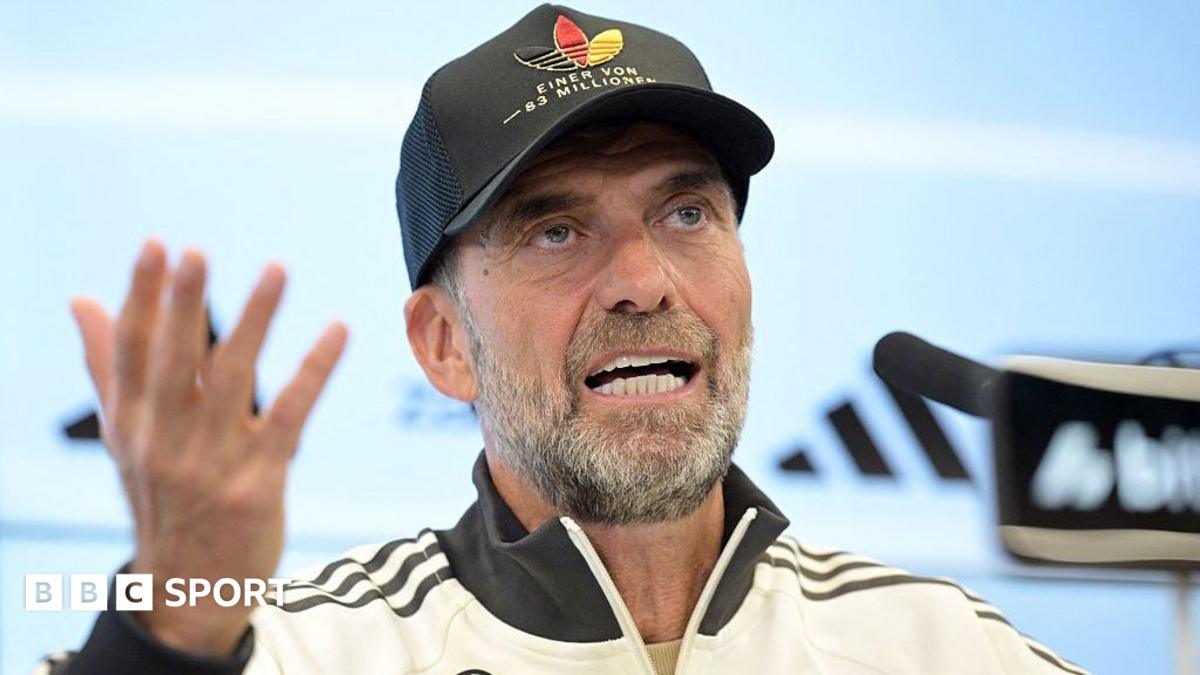
Newly installed Germany manager Jurgen Klopp has called for a renewed sense of inclusive national identity, insisting that the national football team has a vital role in preventing German pride from falling into the wrong hands following recent political developments. Klopp made the impassioned remarks during his first squad announcement press conference, directly addressing the broader civic climate following substantial electoral gains by the country's far-right.
The backdrop to Klopp’s introductory squad unveiling has been shaped by significant domestic political shifts, highlighted by the Alternative for Germany (AfD) party securing 43.8% of the vote in the regional parliament election in Saxony-Anhalt. That result left the anti-immigration party narrowly short of an outright majority, while further electoral tests loom imminently with upcoming state votes scheduled in Berlin and Mecklenburg-Western Pomerania.
The rise of the far-right in regional governance marks a sensitive chapter in contemporary German history. No far-right political faction has governed or controlled a German state since the conclusion of the Second World War, during which the Nazi regime orchestrated the Holocaust.
Addressing the media, the former Liverpool manager was quick to acknowledge that he does not view himself as a political authority, but he made clear that sportsmen and national figures have a responsibility to foster unity. He observed that recent regional election outcomes had drawn starkly divided reactions across the country, with some citizens unperturbed while others expressed profound alarm at the political trajectory.
From his perspective within sport, Klopp explained that he is eager to reclaim the national flag on behalf of the entire populace. He emphasized that displaying or waving the German flag should not provoke suspicion or discomfort among onlookers, but should instead represent an open expression of joy and gratitude for being born in, raised in, or welcomed as an immigrant into the nation.
To articulate this vision, Klopp noted that he prefers the concept of positive patriotism over the more traditional phrase national pride, which he cautioned is vulnerable to being misunderstood or co-opted. He underlined that an individual can hold deep pride in being German while simultaneously championing open-minded values, diversity, warmth, and basic kindness.
While emphasizing the cultural weight of the national team, the 57-year-old coach maintained perspective regarding the country's broader infrastructure and social priorities. Klopp acknowledged that having sufficient medical practitioners and social caregivers is ultimately far more consequential than football, yet he maintained that sport retains an unmatched ability to foster a collective sense of community.
Klopp's arrival in the national dugout comes after an unsettling period for the German men's team on the international stage. His appointment follows the departure of Julian Nagelsmann, who left the position after Germany suffered a disappointing second-round elimination at the hands of Paraguay during the summer World Cup.
Before taking on the task of reviving the national team, Klopp had spent time serving as the global head of soccer for the Red Bull organization following his departure from Liverpool in 2024. His return to the touchline now coincides with an inevitable generational transition for the four-time world champions.
The squad overhaul has been accelerated by the departures of several long-serving stalwarts. Legendary goalkeeper Manuel Neuer and veteran central defender Antonio Rudiger both confirmed their retirements from international football in the aftermath of the team's World Cup exit against Paraguay, creating prominent vacancies in the starting lineup.
In response to both the compressed calendar and the need for fresh blood, Klopp has named an extensive 44-man roster for the team's four upcoming UEFA Nations League fixtures, which are scheduled to take place over an intensive two-week span. The expansive selection signals a clean slate for the national setup, featuring 16 previously uncapped players.
To manage physical workloads across the congested international window, Klopp has divided the squad into two distinct playing groups. An initial 24-player pool will be utilized for the opening pair of fixtures, which begins with an away trip against the Netherlands in Amsterdam on 24 September, followed by a home encounter against Greece in Augsburg three days later.
Following the initial fixture window, the majority of the first group will be released back to their respective domestic clubs. Among those selected in the opening 24-man contingent are Premier League representatives Kai Havertz of Arsenal, Kevin Schade of Brentford, and Leeds midfielder Anton Stach.
The initial squad also features Bayern Munich playmaker Jamal Musiala. The young attacker has been included in the national setup despite enduring a concerning pre-season campaign with his club, during which he collapsed on two separate occasions during match action.
A separate 20-player contingent will assemble for Germany's concluding double-header, which will see the team host Serbia in Munich on 1 October before travelling to Thessaloniki to play Greece on 4 October. This second wave includes Brentford midfielder Vitaly Janelt, who has earned his first senior call-up to the national side alongside established names such as Liverpool's Florian Wirtz and Newcastle defender Malick Thiaw.
Through his expansive squad selection and outspoken social message, Klopp has set an ambitious tone for his tenure. As he embarks on his reign, the new manager aims to combine structural renewal on the football pitch with an inclusive vision that unites supporters across a divided nation.
What's Your Reaction?
 Like
0
 Dislike
0
 Love
0
 Funny
0
 Wow
0
 Sad
0
 Angry
0

Reporter Senior. Meliput dinamika politik nasional, kebijakan publik, dan isu parlemen selama 8 tahun. Alumni FISIP UI.





Comments (0)