

'No such thing as a white genocide, says South Africa's Roelf Meyer — the 'born Afrikaner' Trump won't meet
Washington — When Donald Trump told the world in 2025 that white Afrikaners were being exterminated in South Africa, Roelf Meyer had an immediate, personal reaction: "Is he talking
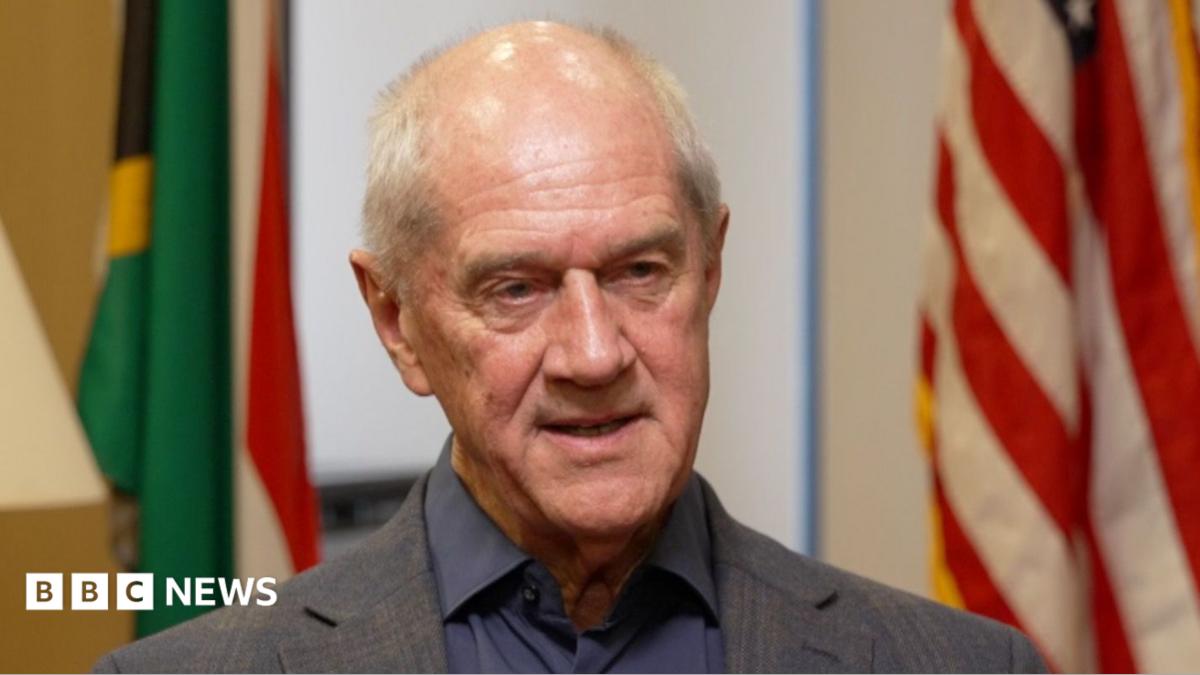
Washington — When Donald Trump told the world in 2025 that white Afrikaners were being exterminated in South Africa, Roelf Meyer had an immediate, personal reaction: "Is he talking about us?" Eighteen months on, the man he is — a "born Afrikaner" who helped negotiate the end of apartheid — says the premise of the US refugee programme built on that claim is false.
In an interview with the BBC, Meyer, South Africa's newly appointed ambassador to Washington, was blunt: the idea of a mass attack on the white Afrikaner minority simply does not exist. He said his own identity gives him the standing to make that assertion, adding that he has never experienced anything resembling what the US government says is happening to his community. Meyer also said he has never received a clear answer about where the "misdirection of information" originates — a pointed criticism of an allied government that has repeatedly embraced claims rejected by South Africa's political mainstream.
Meyer, who helped negotiate the end of white-minority rule in the 1990s on behalf of the National Party — the party that created and enforced apartheid — now says claims of a genocide have been discredited by every political party in his country, including parties that formally represent Afrikaners. That last point is central to his case: the accusation, he argues, is not being made by the community it is said to protect.
The trust between Meyer and President Cyril Ramaphosa, now a key African National Congress negotiator and incumbent president, was one reason Ramaphosa chose him for the Washington posting after diplomatic relations between the two countries soured. The other, Meyer said, was that Ramaphosa "saw the value of me being an Afrikaner". He was confirmed as ambassador in April. But he was quick to add a qualification: "But I'm not here to represent the Afrikaner only."
Trump's claims have had real-world consequences. After accusing South Africa of a white genocide in a White House meeting with Ramaphosa, the US president launched a refugee pathway for Afrikaners. According to figures cited in the BBC report, nearly 13,000 refugees have been admitted to the United States since then, and all but three of them are South African.
The administration is now planning to go further, with a notice sent to Congress on Tuesday indicating that up to 17,500 additional white Afrikaners will be admitted as refugees over the next 12 months. A White House spokeswoman defended the expansion, saying Trump "has provided a lifeline for Afrikaners, who are being raped, maimed, killed and driven off their property across South Africa." She accused the South African government and much of the media of brushing off "the horrific lived experiences of this community" and said the administration continues processing applications because "the president has a humanitarian heart".
Those lived experiences are not invented. One of those admitted to the US, who uses the name Lielie, told the BBC about her family's life on her stepfather's farm in South Africa, where they grew macadamia nuts and bananas. Despite walls around the house, an electric fence and eight bull terriers, she said she "feared the whole time" and that on three occasions she saw people entering the property. "Nothing was stolen, we weren't harmed," she said, "but there are friends of my husband, people that lived around us — they were brutally attacked."
Since moving with her family to Texas under the US refugee pathway, she said, her life has changed: she feels safer walking around and "my kids can actually play outside". Her account illustrates the central difficulty in the dispute — individual attacks on farms are real and often brutal, but the leap from a persistent, documented crime to the formal elimination of an entire racial group is not one that South African politicians, including Afrikaner-led parties, have accepted.
Not everyone in the white South African community is persuaded by the ambassador. SJ Du Venage, who lives on the country's west coast and is a council member of the right-wing Afrikaner party Freedom Front Plus, argues there is a "political drive towards killing white people, and killing the farmers on the farms". "There's absolutely an agenda to wipe us out here," he said. He is attempting to move to the US under the scheme opened by Trump's announcement.
The disagreement is also playing out on the ground in Washington. An Afrikaner lobby group is holding a vigil on Saturday on the National Mall, where thousands of white crosses will be placed to commemorate what organisers describe as victims of "farm attacks" — a form of commemoration that functions as a political statement in its own right.
South Africa has responded to the pressure with measures of its own. Last week, the Trump administration announced visa restrictions for South Africans it accused of being responsible for "race-based discrimination" against white people, and warned of further punitive steps if South African leaders did not address the issue. Crime statistics cited in the report complicate the American reading of events: police data indicate the majority of victims of crime in South Africa are Black.
Meyer said he would welcome a direct conversation with Trump about the reality of the situation in his country, arguing that as a "born Afrikaner" he carries the legitimacy to speak on the subject. Whether such a meeting happens may determine how far the rift between Washington and Pretoria goes — and how many more of the 17,500 planned arrivals take up a US refugee pathway built on a charge the South African ambassador says simply is not true.
What's Your Reaction?
 Like
0
 Dislike
0
 Love
0
 Funny
0
 Wow
0
 Sad
0
 Angry
0

Reporter Senior. Meliput dinamika politik nasional, kebijakan publik, dan isu parlemen selama 8 tahun. Alumni FISIP UI.






Comments (0)