

Nor'easter Batters Northeast US With Coastal Flooding, Blackouts and Cancelled Events as New York and New Jersey Declare Emergencies
A powerful nor'easter is battering the north-eastern United States this weekend, placing tens of millions of people in its path and already delivering widespread coastal flooding,
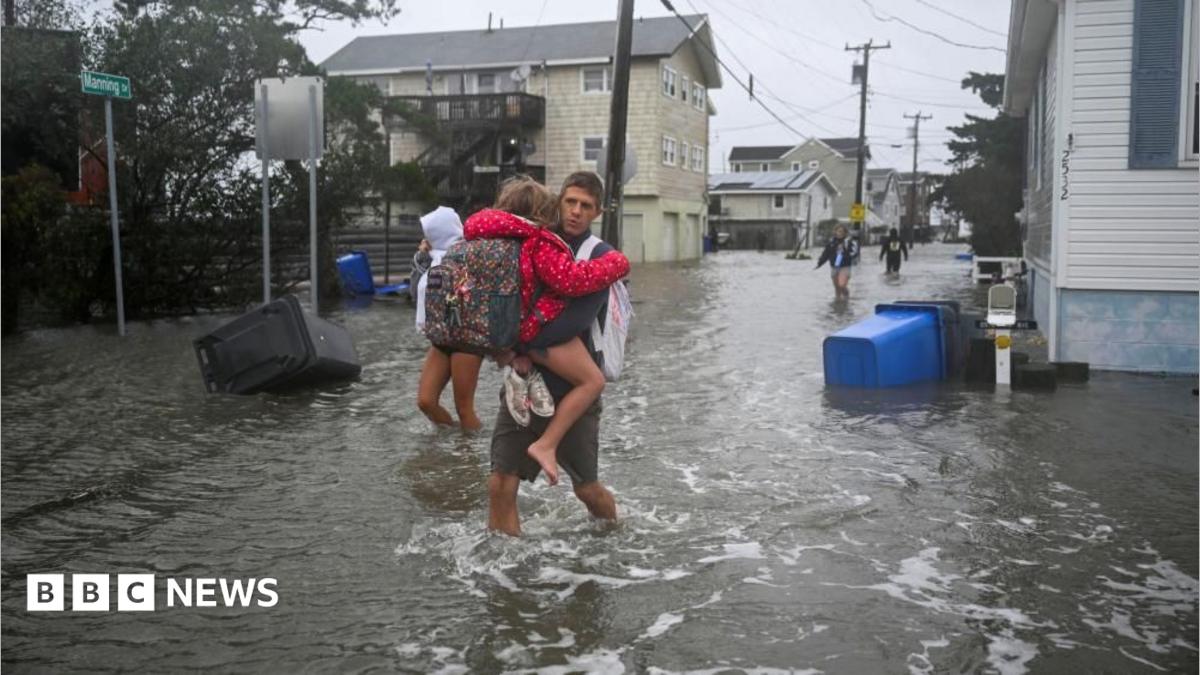
A powerful nor'easter is battering the north-eastern United States this weekend, placing tens of millions of people in its path and already delivering widespread coastal flooding, power cuts, severe travel disruption and the cancellation of major sporting and music events. By Saturday evening, governors in New York and New Jersey had both declared states of emergency, with New Jersey's shore communities bearing the brunt of the early damage.
Nor'easters — powerful coastal storms named for the north-easterly winds that drive them — are a recurring feature of the North Atlantic autumn. They typically develop offshore and then intensify as they track northward along the US East Coast, dragging moist air inland and piling seawater onto low-lying shores. This particular system has been forecast to peak on Saturday, delivering what forecasters describe as a combination of dangerous coastal flooding and beach conditions, strong winds and heavy rainfall across a broad swathe of the region, including New York City and Boston.
The US National Weather Service (NWS) has urged residents in exposed areas to act immediately rather than wait for conditions to deteriorate, warning of significant inundation in low-lying coastal areas, roads disappearing under water and damage to homes and businesses. The danger is not confined to the shoreline itself: barrier-island towns, bayside neighbourhoods and low-lying river and estuarine communities face the highest risk as storm surge coincides with heavy rainfall and elevated tides.
The storm's reach is enormous. Rain and strong winds are forecast from Virginia all the way to Maine, an arc that encompasses some of the country's most densely populated and heavily travelled territory. Major cities, commuter corridors and port facilities from the Mid-Atlantic to southern New England all sit within the warning zone, which is why transport, aviation and utilities have all been placed on alert.
In New Jersey, streets and homes were already submerged on Saturday in the coastal communities of Surf City and Manasquan, with residents in the Beach Haven West neighbourhood taking to kayaks to move along flooded roads and a man carrying children on a paddleboard. Governor Mikie Sherrill urged the state's residents to take the storm seriously, stay alert and follow local guidance from emergency officials rather than risk their lives.
Astronomical timing has made matters worse. Saturday's full moon coincides with the peak of the storm, and spring tides associated with a full moon push higher high tides and lower low tides. When those larger tidal ranges overlap with a powerful onshore wind and storm surge, coastal water levels can rise dramatically and push floodwater far inland, into areas that might appear relatively sheltered.
New York City officials are warning of wind gusts reaching 55mph (86km/h) throughout the weekend, a speed capable of bringing down trees and branches, damaging vehicles and structures and overwhelming parts of the electrical grid. Mayor Zohran Mamdani delivered a video message urging residents to stay home where possible and issued an emphatic warning against driving or walking through floodwater, which he said remains one of the biggest immediate risks to public safety.
Electricity losses are mounting. Nearly 150,000 households have so far lost power, according to tracking site poweroutage.us, with the figure expected to rise as the storm's strongest phase arrives overnight and during the day. Utilities in the region have historically struggled to restore supply quickly after coastal storms, because access to damaged lines is often blocked by flooding and debris.
The aviation disruption has been significant and is continuing to build. The Federal Aviation Administration advised travellers to check directly with their airlines for the status of individual flights, while flight-tracking service FlightAware reported more than 1,100 flights delayed and some 400 grounded. Boston Logan International Airport was among the venues where cancellations were posted on information boards, and travellers face a knock-on effect as disrupted aircraft and crews ripple through schedules for days to come.
Sporting fixtures have also been reshaped. The Boston Red Sox moved the second game of their weekend series against the Chicago Cubs from Sunday afternoon to next Friday, effectively clearing the entire weekend slate. In Major League Soccer, the match between Red Bull New York and St Louis City SC was cancelled, with league officials citing the same weather and travel concerns affecting fans and supporters trying to reach the venue.
The concert schedule has suffered significant casualties too. Ed Sheeran's long-awaited show at Gillette Stadium in the Boston area was called off for safety reasons, according to the venue, in a cancellation confirmed shortly before the storm arrived. In New York, the Global Citizen Festival in Central Park — headlined by Lauryn Hill, Wyclef Jean and John Legend — is not going ahead, with organisers citing the forecast conditions.
For organisers, promoters and venue operators, the calculus is straightforward. Large outdoor events depend on transport networks, staffing, security and public infrastructure that may all be degraded, and insurance and liability considerations make proceeding on the edge of a storm's reach untenable. With tens of thousands of tickets already sold, cancellations will mean refunds, rescheduling and considerable financial disruption for artists, crews and local businesses that had geared up for busy weekend trading.
Officials on both sides of the New York harbour are urging the public to stay informed, heed evacuation or shelter guidance, keep emergency supplies to hand and avoid unnecessary journeys. Residents in low-lying or previously flooded areas are particularly vulnerable, since nor'easters typically make their heaviest impact during the hours around high tide, meaning conditions can worsen overnight before improving.
With the storm forecast to peak on Saturday, the coming hours are likely to bring the most severe coastal inundation, the strongest winds and the heaviest rainfall, before conditions begin to ease and a lengthy cleanup, structural assessment and power restoration effort gets under way. For coastal communities from Virginia to Maine, the immediate priority remains staying out of the water and taking official warnings seriously — advice that governors and mayors alike have stressed repeatedly as the nor'easter bears down.
What's Your Reaction?
 Like
0
 Dislike
0
 Love
0
 Funny
0
 Wow
0
 Sad
0
 Angry
0

Reporter Senior. Meliput dinamika politik nasional, kebijakan publik, dan isu parlemen selama 8 tahun. Alumni FISIP UI.






Comments (0)