

Russia Unleashes Major Strikes on Ukraine's Power Grid as Winter Looms
Russian forces carried out their most extensive assault on Ukraine's energy infrastructure in months overnight, targeting the capital and its surrounding region in what Ukrainian o
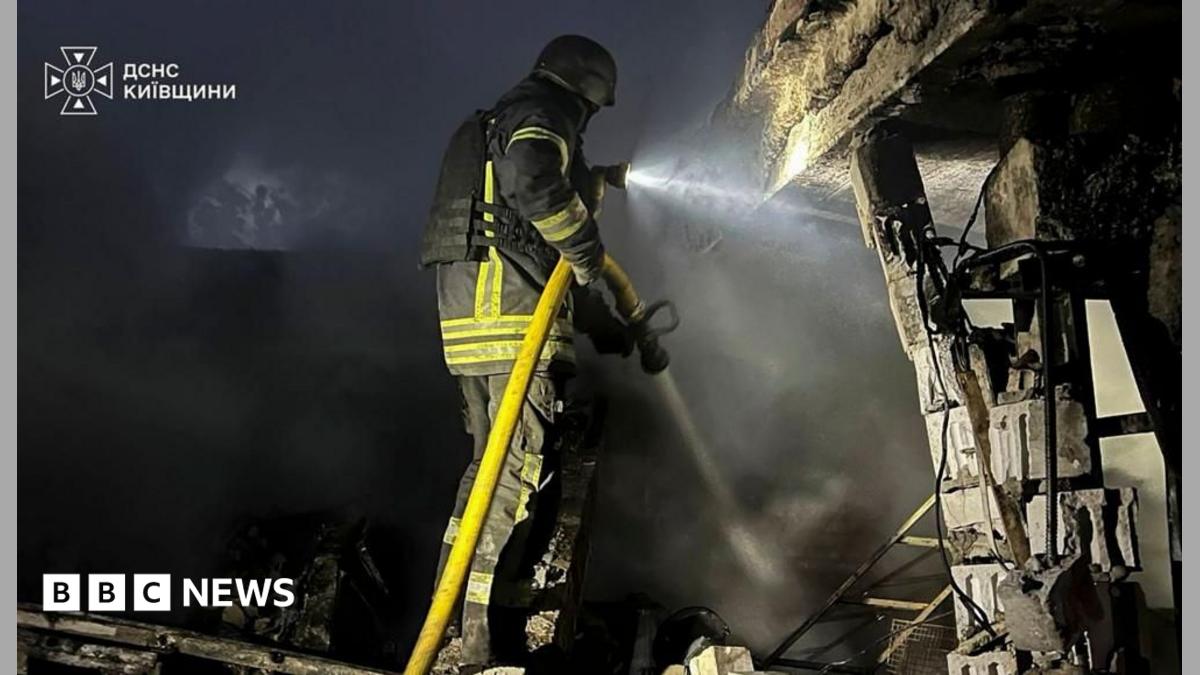
Russian forces carried out their most extensive assault on Ukraine's energy infrastructure in months overnight, targeting the capital and its surrounding region in what Ukrainian officials described as a mass and combined attack. Prime Minister Serhiy Koretskyi confirmed the scale of the bombardment, noting that it marked the first operation of its kind since the conclusion of the previous heating season.
The strikes resulted in at least six fatalities and left thirty-three individuals wounded across the country, according to local authorities. Among the dead was a child whose body was discovered beneath the rubble of a destroyed home in the Kyiv region, regional governor Timur Tkachenko reported. Kyiv Mayor Vitaly Klitschko stated that three people were killed in the capital itself, including a utility company worker who died at a warehouse facility.
The Russian defence ministry claimed that one of its primary targets was the Trypilska power station, which it identified as the largest supplier of electricity to Kyiv. Ukrainian officials have not yet verified this specific claim. The attack also disrupted power supplies significantly, with Ukraine's largest private energy firm, DTEK, announcing that electricity had been restored to eight thousand homes following what it described as a difficult night for the capital.
In a statement released via Telegram, Prime Minister Koretskyi emphasised the relentless nature of the campaign against Ukraine's energy grid. He observed that there has effectively not been a single day without enemy attacks on energy infrastructure since the summer. However, he noted that a mass and combined attack of this particular scale had not occurred since the end of the last heating season, underscoring the severity of the overnight bombardment.
The assault impacted eleven regions across the country, with residential buildings, social infrastructure, civilian enterprises, and railway facilities also targeted, according to the Prime Minister. President Volodymyr Zelensky reported strikes on critical infrastructure in the Zhytomyr, Mykolaiv, Kirovohrad, and Rivne regions. The widespread nature of the attack highlights the continued vulnerability of Ukraine's critical systems as the conflict persists.
By Wednesday, households in the Kyiv, Dnipropetrovsk, Donetsk, Sumy, and Kharkiv regions were still experiencing power outages, the energy ministry confirmed. State-owned grid operator Ukrenergo advised residents to refrain from using powerful electrical appliances between the hours of 10:00 and 16:00 local time due to lower than usual electricity supplies. This conservation measure reflects the strain on the national grid following the extensive damage.
In the capital, residents awoke to find the city shrouded in thick, acrid smoke after a night punctuated by the sound of explosions. An air raid alert remained in effect, and the distant echo of air defence gunfire resonated through the murky atmosphere. Authorities advised people in several districts to keep their windows closed until the smoke cleared, as the immediate environmental impact of the strikes became apparent.
The human toll extended beyond the capital. Two people were killed in the north-eastern Sumy region, according to Governor Oleh Hryhorov, while another person lost their life in the Mykolaiv region, acting regional governor Heorhiy Reshetilov confirmed. These incidents illustrate the geographic breadth of the assault, which affected both frontline areas and relatively safer regions in the west and centre of the country.
The attack follows a pattern of systematic targeting of Ukraine's energy infrastructure that has occurred every winter since Russia's full-scale invasion in 2022. Moscow currently controls approximately twenty percent of Ukrainian territory, and the strategy appears designed to demoralise the civilian population by depriving them of heat and power during the coldest months. Analysts suggest that this approach aims to strain Ukraine's resources and test the resilience of its population.
Ukrainian officials have been anticipating a protracted Russian assault on the energy grid throughout the autumn. The strikes on Wednesday represent a significant escalation in that campaign. The timing is particularly concerning as the country prepares for the winter heating season, a period when stable electricity and heat supplies are critical for the survival of millions of civilians in urban centres.
The use of combined strike packages—likely involving drones and various types of missiles—presents a complex challenge for Ukrainian air defences. The ability of Russian forces to overwhelm defences by saturating them with multiple targets simultaneously has been a key concern for military planners. The damage to the Trypilska power station, if confirmed, would represent a significant blow to the capital's power generation capacity.
International observers have consistently condemned attacks on civilian infrastructure, noting that such actions may constitute war crimes under international law. The targeting of power stations, water facilities, and residential buildings raises serious questions about the conduct of hostilities and the protection of civilians. The disruption of essential services creates a humanitarian crisis that extends far beyond the immediate physical damage caused by the explosions.
The aftermath of the strikes will require significant repair and reconstruction efforts, resources that Ukraine must divert from other critical needs. Energy workers have demonstrated remarkable dedication in restoring power under dangerous conditions, often working while air raid sirens continue to sound. The resilience of these workers and the broader population has been a defining feature of Ukraine's response to the ongoing aggression.
As winter approaches, the international community faces renewed calls to provide Ukraine with enhanced air defence systems and equipment to repair its battered energy infrastructure. The ability to protect critical facilities and ensure a stable power supply will be crucial in determining the humanitarian situation in the coming months. The strikes serve as a stark reminder that the conflict remains dynamic and that the civilian population continues to bear a disproportionate burden of the violence.
What's Your Reaction?
 Like
0
 Dislike
0
 Love
0
 Funny
0
 Wow
0
 Sad
0
 Angry
0

Reporter Senior. Meliput dinamika politik nasional, kebijakan publik, dan isu parlemen selama 8 tahun. Alumni FISIP UI.






Comments (0)