

Six-Year-Old Gaza Girl Endures Over 20 Surgeries as Ceasefire Collapses and Infection Threat Grows
A six-year-old girl in Gaza has undergone more than 20 surgical procedures as doctors struggle to contain recurring infections in wounds she sustained during an Israeli air strike
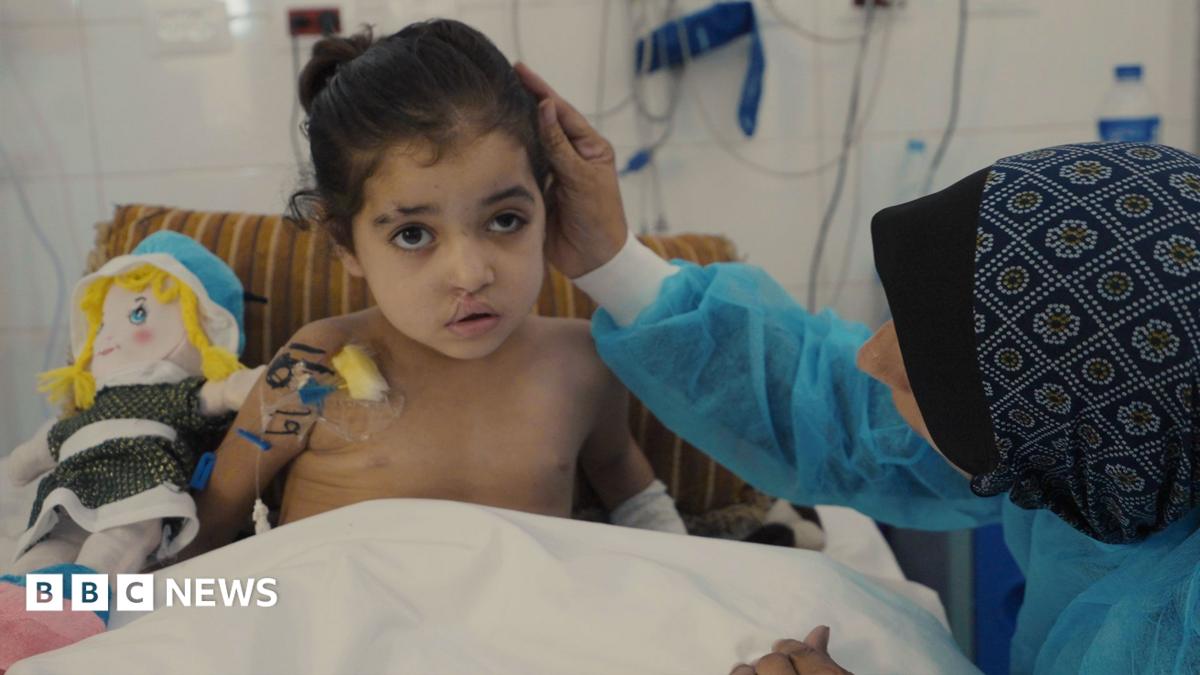
A six-year-old girl in Gaza has undergone more than 20 surgical procedures as doctors struggle to contain recurring infections in wounds she sustained during an Israeli air strike earlier this summer, according to reporting by BBC Eye Investigations.
Raseel al-Balawi was injured in late July when, according to witnesses, a tent she was inside at the al-Mawasi camp was struck by a helicopter-launched missile from the Israeli military. The encampment, located along Gaza's southern coast, has functioned as a designated humanitarian zone where hundreds of thousands of displaced Palestinians have sought shelter throughout the conflict.
The young girl's case has become emblematic of the broader medical crisis unfolding across the enclave, where the healthcare system has been brought to the verge of total collapse after more than a year of sustained bombardment. Hospitals that remain partially operational are reporting critical shortages of antibiotics, sterile dressings, surgical equipment, and anesthetics, leaving doctors unable to treat wounds that would be manageable under normal circumstances.
BBC Eye Investigations spent time with Raseel across the summer months, documenting her repeated hospital admissions as the fragile ceasefire that had briefly reduced hostilities began to falter and Israeli strikes resumed across the territory. The reporting team captured the grueling cycle of surgery, partial recovery, and relapse that has defined the child's life since the attack.
Medical staff treating Raseel say the infections in her wounds have proven extraordinarily difficult to eliminate, in part because of the contaminated environment in which she was injured and in part because of the limited arsenal of medicines available to them. Each time an infection appears to be coming under control, a new one emerges, requiring yet another operation and further depletion of her already weakened physical reserves.
The Israeli military, when approached by the BBC regarding the incident, stated that it has no record of the attack and added that it "regrets any harm to civilians." The response is consistent with the military's standard position on specific strikes that cannot be independently verified, though human rights organizations have repeatedly called for greater accountability and transparency in investigations of civilian casualties.
Witnesses who were present at al-Mawasi at the time of the strike described a scene of panic and confusion, with families scrambling to pull survivors from the wreckage of collapsed tents. The camp, which lacks permanent structures, offers virtually no protection against shrapnel or blast waves, and its dense population of displaced civilians makes it particularly vulnerable to mass-casualty events.
Raseel's ordeal reflects a wider pattern affecting thousands of children across Gaza who have been wounded in the conflict. Pediatric surgeons and international medical volunteers have described operating on patients multiple times for injuries that would typically require a single procedure, citing infection control challenges, supply shortages, and the impossibility of providing adequate post-operative care in overcrowded and unsanitary conditions.
The World Health Organization and other humanitarian agencies have warned repeatedly that the destruction of Gaza's medical infrastructure — including the targeting or forced closure of major hospitals — has created conditions in which preventable deaths from infection and untreated injuries are occurring at alarming rates. Only a fraction of the territory's pre-war hospital capacity remains functional, and even those facilities operate far beyond their intended patient loads.
The near-total destruction of water, sanitation, and electrical systems has compounded the medical emergency. Without clean water, reliable electricity, or proper waste disposal, wound care that would ordinarily be routine becomes a high-risk undertaking, and infections spread rapidly through hospital wards and shelters alike. Doctors report that they are often forced to choose between amputating limbs to stop the spread of infection or continuing futile attempts to save tissue with inadequate resources.
The BBC World Service has been filming across Gaza throughout the summer to document how children are coping amid the collapse of the basic infrastructure they depend on for survival. The resulting film, available on iPlayer, offers an extended look at the daily realities facing young people in the territory, including the psychological trauma of living under bombardment and the physical toll of untreated or partially treated injuries.
Ceasefire negotiations between Israel and Hamas have repeatedly stalled, and the periods of relative calm that have been achieved have proven short-lived. Each resumption of hostilities brings new waves of casualties into an already overwhelmed system, and medical teams describe a Sisyphean struggle to keep pace with the influx of wounded while simultaneously managing the long-term care of patients like Raseel who require sustained attention.
For Raseel's family, the uncertainty of the ceasefire process translates into a daily fear that the next strike could come before her treatment is complete, or that the next infection could prove resistant to the dwindling supply of antibiotics available to her doctors. Her case highlights the cumulative impact of a conflict in which medical care itself has become a casualty, and in which the most vulnerable patients bear the heaviest burden of a system stretched beyond its breaking point.
What's Your Reaction?
 Like
0
 Dislike
0
 Love
0
 Funny
0
 Wow
0
 Sad
0
 Angry
0

Reporter Senior. Meliput dinamika politik nasional, kebijakan publik, dan isu parlemen selama 8 tahun. Alumni FISIP UI.





Comments (0)