

The viral bureaucrats: why doing an ordinary job makes Indian officials unexpected heroes
Tukaram Mundhe did nothing a food safety inspector is technically supposed to do, and yet he has become one of the most talked-about government officials in India. At 51, the commi
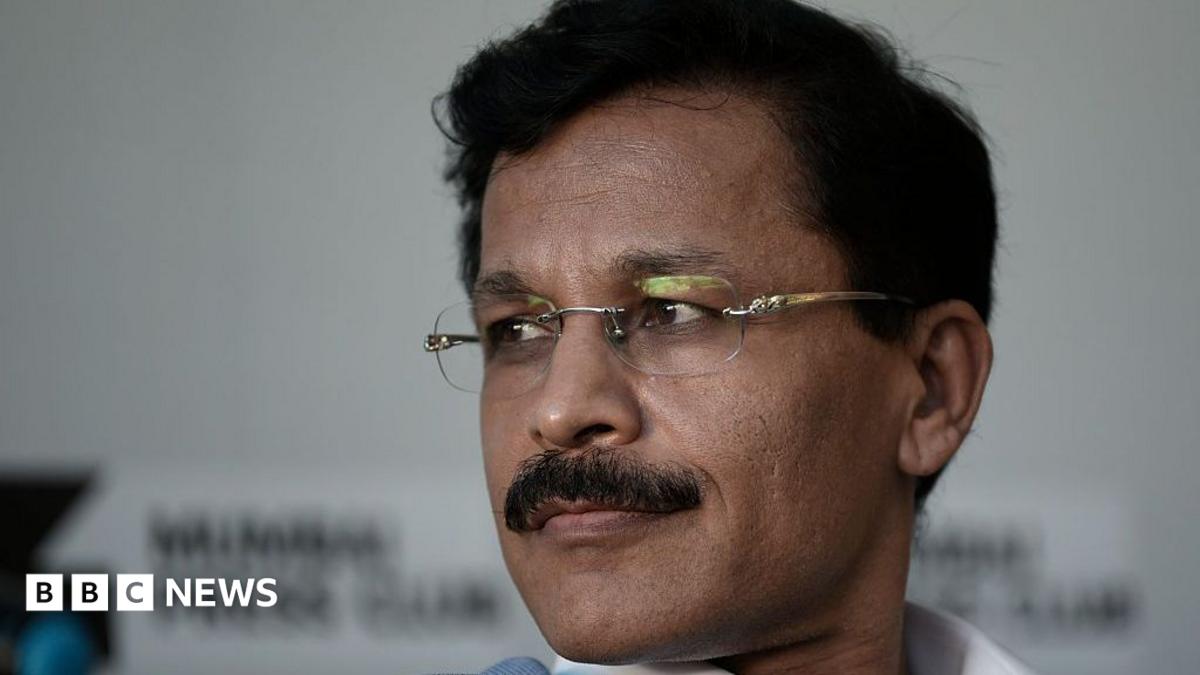
Tukaram Mundhe did nothing a food safety inspector is technically supposed to do, and yet he has become one of the most talked-about government officials in India. At 51, the commissioner of Maharashtra's Food and Drug Administration has spent the months since taking charge in May leading a succession of enforcement drives. His teams have descended on restaurants and other food businesses, documenting pest infestations, grim kitchens, unhygienic preparation and stocks of expired food sitting on shelves. He has also drawn attention to wide gaps between what hospitals pay for routine medical supplies and what the same items are then charged to patients.
None of that appears in any job description handed to him by the state. But it has turned him into a social media celebrity. Footage and photographs from the inspections have circulated widely, drawing hundreds of comments from people wishing that officers like him could be dispatched to fix food safety in their own states. The reaction is telling: the country has effectively begun treating competent, visible enforcement as a form of entertainment, or at least as a rare relief from frustration.
Mundhe's moment is not unique. In Gurugram, the fast-growing suburb south of Delhi, district town planner RS Batth has built a parallel reputation for acting against illegal construction and encroachments. In both cases, the response has been the same — hero-worship for officials who appear to be enforcing rules that others quietly ignore.
The obvious question is why. In India, civil servants administer the services people rely on in daily life: issuing documents, policing streets, regulating food safety, running healthcare. It is a job that carries enormous responsibility and little glamour. Yet those same officials are frequently accused — by the people they serve — of stalling, demanding bribes and forcing applicants to make repeated trips from office to office.
That contradiction produces the odd dynamic described here. When an official appears to cut through the red tape, the public reaction can be surprisingly enthusiastic, because the contrast with the everyday experience is so stark.
"What should have been normal has become exceptional," says Kamal Kant Jaswal, a retired civil servant. For many citizens, he argues, delays and indifferent treatment have become so routine that efficient governance now registers as the exception rather than the rule.
Rajesh Singh, 43, who works for a finance company in Delhi, described the other side of that equation. He has sat through long waits to get routine work completed, and longer processes to get complaints resolved. "What is supposed to take 24 hours, I have personally experienced being stretched to six months with no guarantee of a positive outcome even then," he says.
India has produced such figures before. One of the most prominent was TN Seshan, who became a household name in the 1990s as chief election commissioner, remembered for enforcing rules without fear of who might be offended. Kiran Bedi, the first woman to join the ranks of the Indian Police Service, was nicknamed "Crane Bedi" in the early 1980s after it became widely reported that she had an illegally parked car belonging to then prime minister Indira Gandhi towed away. The vehicle was in fact removed by a sub-inspector reporting to her; she later said she supported the decision. She went on to receive the Ramon Magsaysay Award, and remains a symbol of the uncompromising officer.
More recent examples include Ashok Khemka, who gained national attention after intervening in a controversial land transaction in 2012, and Neeraj Jadaun, a police officer praised for confronting a mob during deadly religious violence in Delhi in 2020. Together, these cases have made the figure of the honest, no-nonsense bureaucrat both widely recognisable and genuinely rare.
There is a persistent criticism, however, that runs in the other direction. An officer celebrated for enforcing the law can equally be faulted for applying it rigidly, without weighing the circumstances on the ground. Jaswal points out that a street vendor's stall may count as an unauthorised structure in the eyes of the law while also being a family's only source of income. In a country where millions migrate to cities in search of work, unsanctioned living spaces can be the only accommodation a newcomer can find.
That tension between legal purity and economic reality is what allows the same enforcement action to be described simultaneously as lawful and as cruel. Batth, for instance, has faced flak over his action against illegal encroachments, with critics alleging that his enforcement is selective and falls disproportionately on vulnerable people. In several videos that circulated online, he said his actions were carried out strictly under town-planning rules.
Mundhe has drawn similar complaints from sections of the food and hospitality industry, which have accused him of selective or unlawful action. He has rejected those allegations, saying his inspections are evidence-driven and that licences are suspended only in serious cases.
It is worth remembering, Jaswal says, that thousands of officials across the country do their jobs quietly and attract no attention at all. "Their work may not involve much direct contact with citizens, or may simply be less visible," he notes. The gap between those invisible workers and the officials who go viral is not one of effort, but of visibility.
The pattern, then, is less about exceptional individuals than about unusually low expectations. When public services function as intended, nothing is said; when they fail repeatedly, the disappointment becomes the defining memory. Against that background, an official who closes a restaurant for serving expired food, or who orders a demolition that is technically lawful but economically ruinous, becomes a character in a much larger argument — about whether the state can be made to work for the people who depend on it, and why, when it occasionally is, the response is one of disbelief rather than satisfaction.
What's Your Reaction?
 Like
0
 Dislike
0
 Love
0
 Funny
0
 Wow
0
 Sad
0
 Angry
0

Editor Politik. Mantan jurnalis cetak dengan spesialisasi politik elektoral. Menulis analisis kebijakan dan reportase parlemen.






Comments (0)