

Tigray Fighting Kills at Least 52 Civilians as Government Troops Advance on Mekelle
At least 52 civilians have been killed during three days of intense combat around the town of Alamata in Ethiopia's northern Tigray region, according to hospital sources who spoke
At least 52 civilians have been killed during three days of intense combat around the town of Alamata in Ethiopia's northern Tigray region, according to hospital sources who spoke directly to the BBC. The reported death toll offers one of the clearest indications yet of the human cost of the renewed hostilities, which erupted last week after months of mounting friction between Ethiopia's federal government and the political party that administers Tigray.
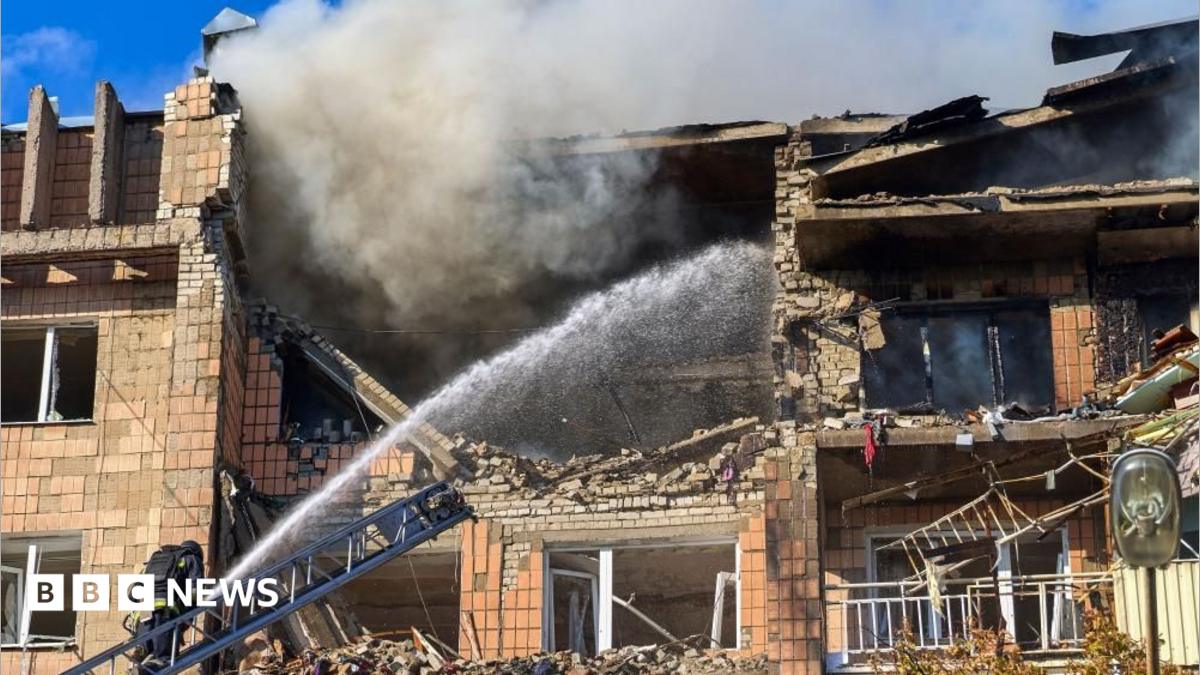
Medical staff at Alamata General Hospital, who requested anonymity for their own safety, described a harrowing scene in which heavy explosives and artillery fire struck residential neighbourhoods between Saturday and Monday. Among those killed were children, including an infant just three days old, as well as mothers and cattle herders. A single strike on the town's marketplace alone claimed twelve lives, the medic said, underscoring the indiscriminate nature of the violence in an area where civilians had little opportunity to flee.
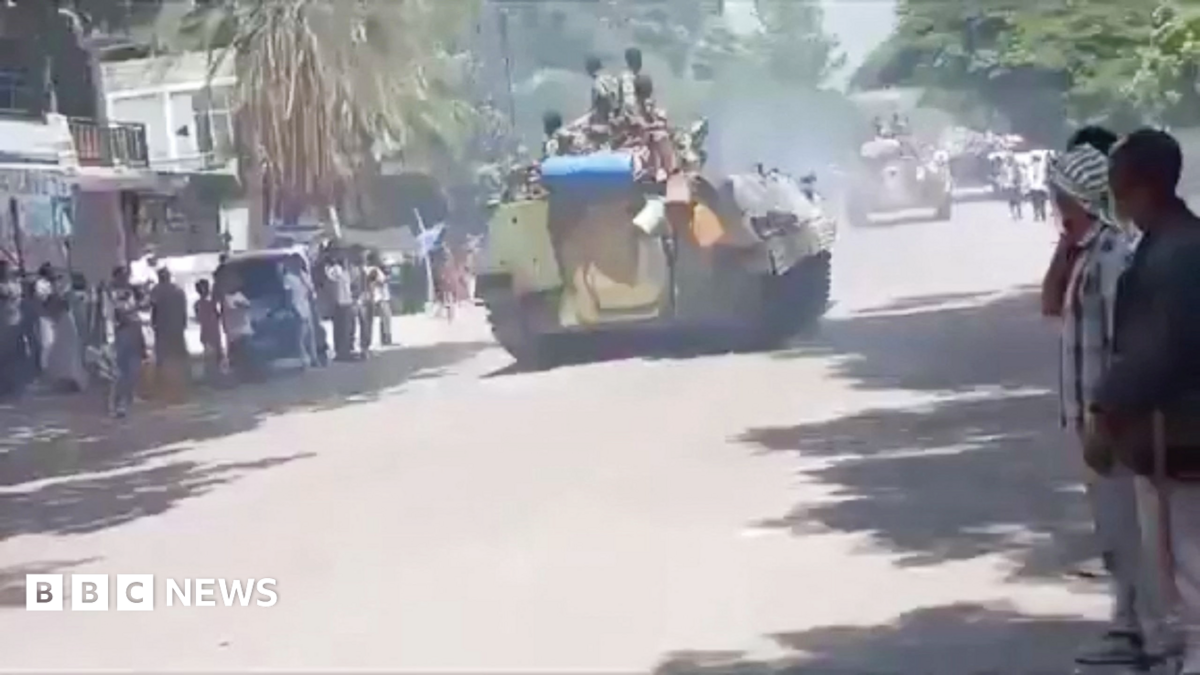
The latest developments suggest that federal troops have seized control of Alamata from regional fighters and now appear intent on pushing northward towards Mekelle, Tigray's regional capital. Video clips circulating on social media, verified by Reuters, showed army tanks and armoured vehicles moving through the town's streets after several days of clashes—imagery that would have been unthinkable during the fragile peace that followed the 2022 agreement ending the two-year civil war.
That agreement, known as the Pretoria deal, had raised hopes that one of the deadliest conflicts of the past decade was finally over. Instead, both sides now accuse each other of violating its terms. The Tigray People's Liberation Front (TPLF), which governs Tigray, insists it was responding to a federal offensive that included drone strikes. The government in Addis Ababa counters that Tigrayan forces attacked first after seizing control of airports across the region.
The renewed fighting has not been confined to Tigray. In the neighbouring Amhara region, clashes have disrupted daily life in and around Lalibela, a UNESCO World Heritage site renowned for its 13th-century churches carved from solid rock and a holy destination for millions of Orthodox Christians. A British tourist, who asked not to be named, told the BBC's Newsday programme that gunfire and artillery shelling could be heard throughout the week, describing a heavy military presence in the historic town.
The tourist was among 33 visitors stranded after Lalibela's airport closed to commercial flights last Wednesday. While fourteen Israeli tourists were evacuated by military helicopter on Monday and five others departed a day earlier via an NGO convoy despite warnings against road travel, the remaining group includes Americans, Israelis, Britons, South Koreans, South Africans, an Ethiopian-New Zealander and a Mexican. The stranded traveller noted that the situation had calmed over the past two days and that the airport, still under military use, might reopen on Thursday.
The fighting around Lalibela has pitted the federal army against an Amhara militia that has aligned itself with Tigrayan fighters—an alliance that would have seemed improbable during the civil war, when Amhara forces fought alongside the government against the TPLF. In September, that militia joined other Ethiopian armed movements to form a seven-member coalition whose stated goal is the removal of the government in Addis Ababa, a development that has significantly widened the scope of the conflict.
Regional spillover remains a serious concern. TPLF fighters are also engaged in the Afar region, a strategically vital corridor that connects landlocked Ethiopia to the ports of Djibouti and serves as the country's principal trade lifeline. Any prolonged disruption there could have severe consequences for Ethiopia's already fragile economy. Meanwhile, there are fears that neighbouring Eritrea could be drawn into the war, with the Ethiopian government accusing Asmara of supporting the armed groups—an allegation Eritrea denies.
The humanitarian situation in Tigray is deteriorating rapidly. Since the fighting began, the government has suspended banking services across the region, and internet access has been cut, though it remains unclear who ordered the shutdown. Medical charity Médecins Sans Frontières has reported that more than 700 wounded people have been admitted to hospitals it supports in Tigray, a figure that likely represents only a fraction of the true casualty count given the communications blackout.
A separate source in Alamata described a worsening crisis as the town swelled with people fleeing nearby areas on foot, some walking for as long as an hour in the hope of finding safety. "Everything is blocked—no banking service, no money transfer, no power, no internet, no phone," the source told the BBC. "People are in crisis, simply suffering, everyone is desperate and frustrated." The town's rapid population increase has placed additional strain on already limited food, water and medical supplies.
The BBC is unable to report from Tigray and surrounding areas, and the communications cutoff has made it extraordinarily difficult to verify events on the ground. Information reaching the outside world has come largely through hospital contacts, social media footage and the accounts of those who manage to leave. This information vacuum has raised concerns among international observers that the full scale of the violence may not be known for some time.
In an effort to bridge the communication divide, the Tigray Broadcasting Service, based in Addis Ababa, has launched an initiative to help reconnect families separated by the telecoms shutdown. The broadcaster plans to collect video messages through its Telegram channel from people outside the region and air them via satellite television, offering a modest but meaningful link for those desperate for news of loved ones.
The international community has yet to mount a coordinated response to the escalating crisis, though diplomats are watching closely. The 2022 peace deal was hailed as a landmark achievement that ended a conflict estimated to have killed hundreds of thousands of people, and its apparent unravelling threatens to plunge the Horn of Africa into another protracted and destabilising war. With both sides trading blame for the outbreak of hostilities and no clear path back to the negotiating table, the prospects for a swift return to calm appear increasingly remote.
For the civilians of Alamata, Lalibela and the surrounding regions, the immediate priority is survival. Aid agencies warn that without restored access to banking, electricity and telecommunications, the humanitarian crisis will only deepen. The coming days will prove critical in determining whether the current fighting remains contained or escalates into a broader conflagration—one that could once again engulf one of Africa's most populous nations.
What's Your Reaction?
 Like
0
 Dislike
0
 Love
0
 Funny
0
 Wow
0
 Sad
0
 Angry
0

Reporter Senior. Meliput dinamika politik nasional, kebijakan publik, dan isu parlemen selama 8 tahun. Alumni FISIP UI.





Comments (0)