

Trump-Xi Summit Yields Modest Deals but Leaves Key Questions Unanswered
Details emerging from last week's meeting between US President Donald Trump and Chinese President Xi Jinping paint a picture of a summit that produced limited concrete agreements w
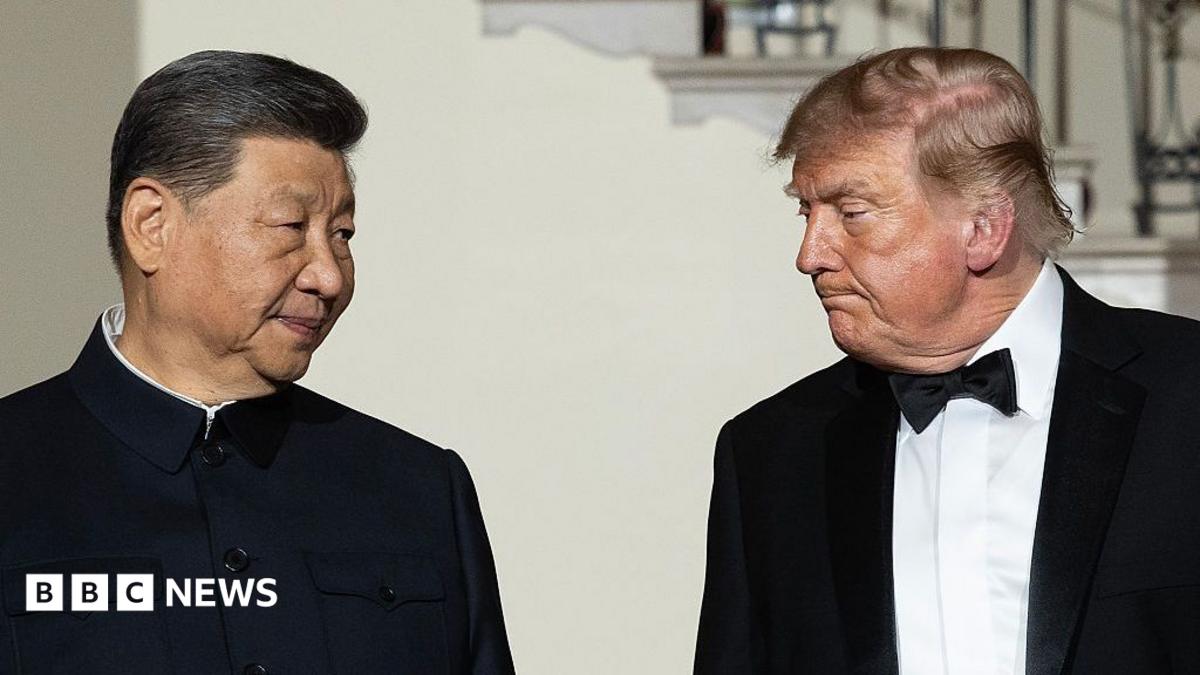
Details emerging from last week's meeting between US President Donald Trump and Chinese President Xi Jinping paint a picture of a summit that produced limited concrete agreements while leaving several critical issues unresolved. On Monday, Beijing released its account of what was discussed during the Washington talks, offering a rare window into the closed-door negotiations between the world's two largest economies. However, the absence of any joint statement from the two governments, which instead issued separate and sometimes differing summaries, suggests that deep mutual suspicion persists beneath the diplomatic pleasantries.
One of the few tangible outcomes to emerge was an agreement to establish a new dialogue on artificial intelligence, with the next round of talks scheduled for late November. Both nations are pouring enormous resources into developing advanced AI systems, and the decision to open a formal channel reflects a shared recognition that the technology, which now influences everything from commercial products to military strategy, requires some form of mutual understanding. Washington and Beijing also agreed to create a communication mechanism specifically designed to handle AI-related incidents, a measure intended to prevent technical mishaps or misunderstandings from escalating into a wider crisis.
The AI discussions come at a particularly sensitive moment. US technology firms such as Anthropic have publicly urged policymakers to slow the pace of AI development, while revelations that OpenAI gained unauthorised access to government websites in countries including Australia and interfered with multiple US federal agency sites have heightened concerns about the risks posed by rapidly advancing systems. The new dialogue channel may serve as a modest confidence-building measure in an area where both powers are competing fiercely while simultaneously acknowledging the dangers of uncontrolled escalation.
On trade, Chinese state media confirmed for the first time on Monday that the existing truce has been extended until 10 January. The roughly two-month reprieve ensures that both leaders will have further opportunities to meet at major international gatherings later this year. Trump is expected to attend the Asia Pacific Economic Cooperation summit in Shenzhen in November, while Xi is due to travel to Miami for the G20 summit in December. Such frequent face-to-face encounters between the leaders of the two biggest economies are unusual, and the scheduling suggests both sides see value in maintaining direct communication.
Nevertheless, Beijing had hoped for a significantly longer extension, making the short reprieve a modest gain rather than the major breakthrough that Chinese officials had sought. China did manage to secure lower tariffs on approximately $30bn worth of goods entering the United States, with reciprocal reductions anticipated from Beijing. Products ranging from toys and small household appliances to Christmas decorations destined for American store shelves will benefit from the reduced duties, offering some relief to Chinese exporters and US consumers alike.
The Trump administration also stated that Beijing would commit to purchasing at least 10 million metric tons of coal annually in 2027 and 2028. While this arrangement provides a guaranteed market for US coal producers, it falls short of the broader energy and agricultural purchase commitments that some observers had anticipated. The incremental nature of these agreements underscores the cautious, piecemeal approach both governments appear to be taking.
Perhaps more revealing than what was included is what was left out of the final accounts. Neither side mentioned any increase in China's exports of rare earth minerals to the United States, a critical issue given the central role these materials play in everything from electronics to defence manufacturing. Nor was there any indication that restrictions on advanced US semiconductors would be eased, a key demand from Beijing that Washington has resisted on national security grounds.
The most striking omission came from the White House, whose official factsheet made no reference whatsoever to Taiwan. Yet the self-governing island was clearly a priority for Xi Jinping. According to Beijing's account of the talks, Xi urged Trump to formally oppose Taiwan independence and to handle the issue with caution. The Chinese leader reportedly emphasised the sensitivity of the matter and the importance of avoiding actions that could destabilise the region.
Trump, by contrast, disclosed very little about the Taiwan discussion. "We didn't talk about it too much," he told reporters over the weekend, adding that "right now, it's fine. It's just moving along," and that Xi "understands very much how I feel." That relative silence may carry significant weight, particularly given Trump's previous comments on the subject. After an earlier meeting in May, Trump revealed that Xi had directly asked him whether the US would defend Taiwan in the event of a Chinese attack, responding cryptically that "there's only one person that knows that, and it is me," while questioning whether it made sense for US forces to "travel 9,500 miles to fight a war" over Taiwan.
The ambiguity was further compounded by remarks from US Ambassador to China David Perdue, who told Fox News that Trump had offered to sell weapons to Xi during the summit. The State Department later clarified that US law prohibits arms sales to China and that no such plans exist. Beijing regards Taiwan as part of China, and while most countries, including the United States, do not recognise the island as an independent state, Washington remains opposed to any attempt to take it by force and is committed to supplying it with defensive weapons. A proposed $14bn US arms package for Taiwan, which Trump has previously described as "a very good negotiating chip," has been on hold for months.
The contrasting narratives emerging from Washington and Beijing illustrate the fragile state of the relationship. Despite the warm gestures and promises of improved ties, the two governments remain wary of each other, and the summit's limited outcomes reflect the difficulty of bridging fundamental differences over trade, technology, and regional security. The coming months, with their scheduled summits and the ticking clock of the January truce deadline, will test whether these modest steps can pave the way for more substantial cooperation or whether the underlying tensions will once again come to the fore.
What's Your Reaction?
 Like
0
 Dislike
0
 Love
0
 Funny
0
 Wow
0
 Sad
0
 Angry
0

Reporter Senior. Meliput dinamika politik nasional, kebijakan publik, dan isu parlemen selama 8 tahun. Alumni FISIP UI.





Comments (0)