

Lula's gambling ban puts football's finances — and Brazil's election — on the line
Brazilian President Luiz Inácio Lula da Silva has signed a provisional order prohibiting all sports betting and online casinos, delivering a shock to an industry legalised only in
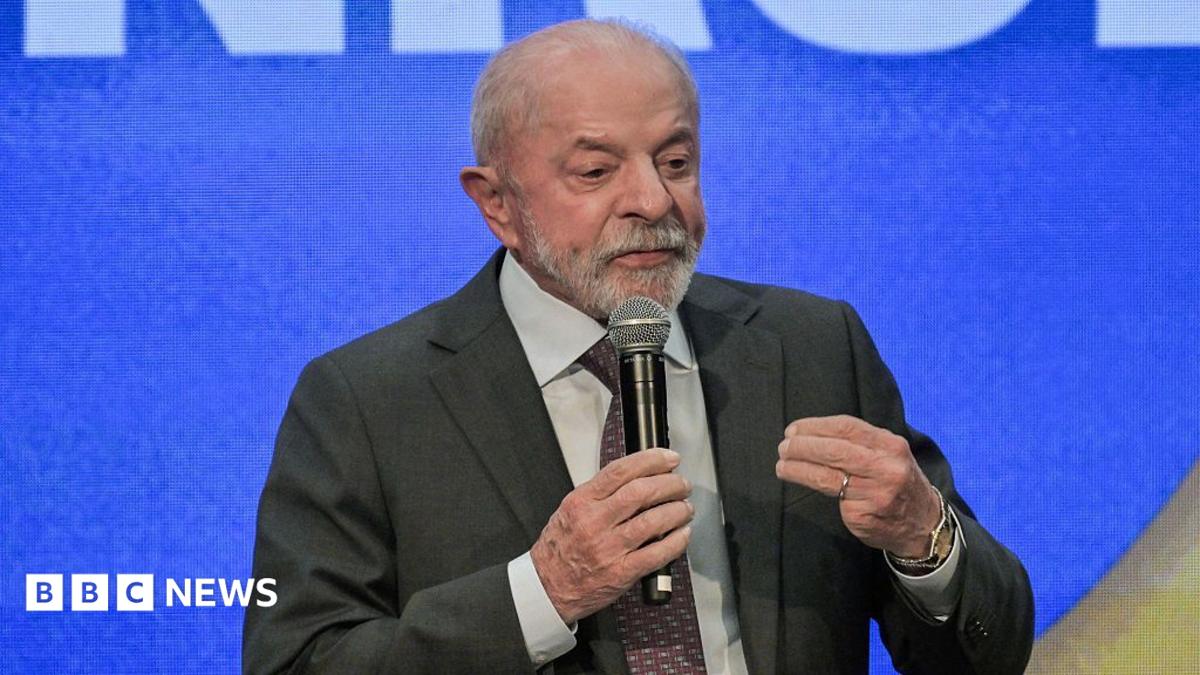
Brazilian President Luiz Inácio Lula da Silva has signed a provisional order prohibiting all sports betting and online casinos, delivering a shock to an industry legalised only in 2018 and doing so with barely a week to go before the first round of the country's presidential election. Lula, 80, is seeking a fourth term, and the timing of the crackdown has immediately been questioned by the campaign of his opponent, Flávio Bolsonaro.
The order, signed on Friday, states that it "prohibits all sports betting and online casinos". Because it is provisional rather than permanent, it must be approved by Congress within 120 days to remain in force. Lula signed a second bill the same day that would establish criminal offences connected to fixed-odds betting, the most common form of online sports wagering, giving the government a legal route to enforcement as well as a prohibition.
The scale of what is being halted is substantial. Most forms of gambling — casinos, slot machines — remain illegal in Brazil, but online betting, permitted under President Michel Temer's administration in 2018, has grown rapidly in popularity ever since. Broadcasters report that the sector took in 62.5bn Brazilian reais in 2025, the same year in which the leading clubs received 1.1bn reais (about $212m or £160m) in payments from betting companies. Those figures explain why the measure is being contested as much in boardrooms as on the campaign trail.
Lula framed the decision as a public health intervention. Calling the industry a "cancer", he said "either we remove the tumour, or it kills us". He described families who had sold everything they owned because of a member's gambling addiction, and earlier in the week, at the UN General Assembly, accused the sector of "transforming addiction into profit". In a statement on X, he said there were "no restrictions" on the industry, particularly for stopping children and teenagers from accessing betting sites, adding: "We won't allow betting companies to profit at the expense of Brazilian families' income and lives."
Part of the appeal was aimed squarely at Lula's predecessor. The president acknowledged that online betting had been permitted under Temer, but argued that it had expanded "without regulation under Bolsonaro's management" — a pointed criticism of the administration of Jair Bolsonaro, whose son is now his political rival. The contrast is intended to be stark: a champion of the regulated market against a permissive one, in a race that recent polls show as almost level.
Flávio Bolsonaro did not accept the framing. Speaking at a campaign rally in Rio de Janeiro on Friday, according to Reuters, he called the gambling crackdown "populist, hypocritical and politically motivated", and accused Lula's rival of playing politics with the issue. The accusation is difficult to disentangle from the calendar: the first round is just over a week away, and the polls put Lula and the younger Bolsonaro neck and neck, making an announcement with obvious electoral appeal to a segment of voters who dislike gambling.
The most vocal opposition has come not from politicians but from Brazilian football. Grêmio, one of the so-called "big twelve" clubs, said ahead of the announcement that sports betting firms had become "one of the main sources of revenue for sports" since they were legalised. The club warned that a change in the law "will not only be an open door for illegal betting, but a fatal blow to Brazilian football, leading many clubs to insolvency". Teams warned that sponsors could withdraw, and while the 1.1bn reais paid to clubs in 2025 is a fraction of overall industry revenue, it has been vital in a competition where broadcasting rights have historically been thin.
The trade body representing much of the industry made a similar economic argument. The Brazilian Institute for Responsible Gaming (IBJR), which says it represents around 75% of the domestic betting sector, said a total ban on fixed-odds betting risked not only the industry but potentially 58–73bn reais in revenue. It also questioned the policy's logic: "The ban also doesn't eliminate existing demand", the institute said, adding that punters who turned to illegal operators would no longer have "access to protection mechanisms provided in the regulated environment" — such as self-exclusion and account controls. IBJR urged the federal government to strengthen betting rules instead of outlawing online and fixed-odds wagering altogether.
That argument runs against the grain of public sentiment. A survey by Atlas and Bloomberg published this week found that about 59.9% of Brazilian adults support banning internet betting — suggesting the government is responding to a majority view even as it risks the loss of sponsorship money and tax income, and even as much of that revenue is being lost anyway to operators that would migrate out of the legal market.
The practical timetable is tight. Punters and bookmakers have until 5 October — the day of the first round — to withdraw any funds left in existing betting accounts, and new deposits have already been barred. Anyone still holding a balance after that date faces having it forfeited or frozen, a prospect that has prompted concern among bettors and operators about the treatment of customer money during the transition.
For Lula, the immediate question is political survival of a different kind: whether his allies in Congress will back the decree inside the 120-day window, or amend it to exclude fixed-odds betting, the product that generates most of the industry's revenue. A weakened or withdrawn order would undercut the rhetorical promise he made in announcing it, just as a full enforcement would cost the clubs that bankroll the national game. Both the first-round result and the congressional vote will now be watched as closely as the football calendar.
What's Your Reaction?
 Like
0
 Dislike
0
 Love
0
 Funny
0
 Wow
0
 Sad
0
 Angry
0

Editor Politik. Mantan jurnalis cetak dengan spesialisasi politik elektoral. Menulis analisis kebijakan dan reportase parlemen.






Comments (0)