

Serbia's President Vučić Steps Down After Months of Protest, Setting Up Double Election Before Year's End
Serbia's long-serving president, Aleksandar Vučić, has resigned from office, a decision that follows more than a year of sustained anti-government demonstrations and mounting publi
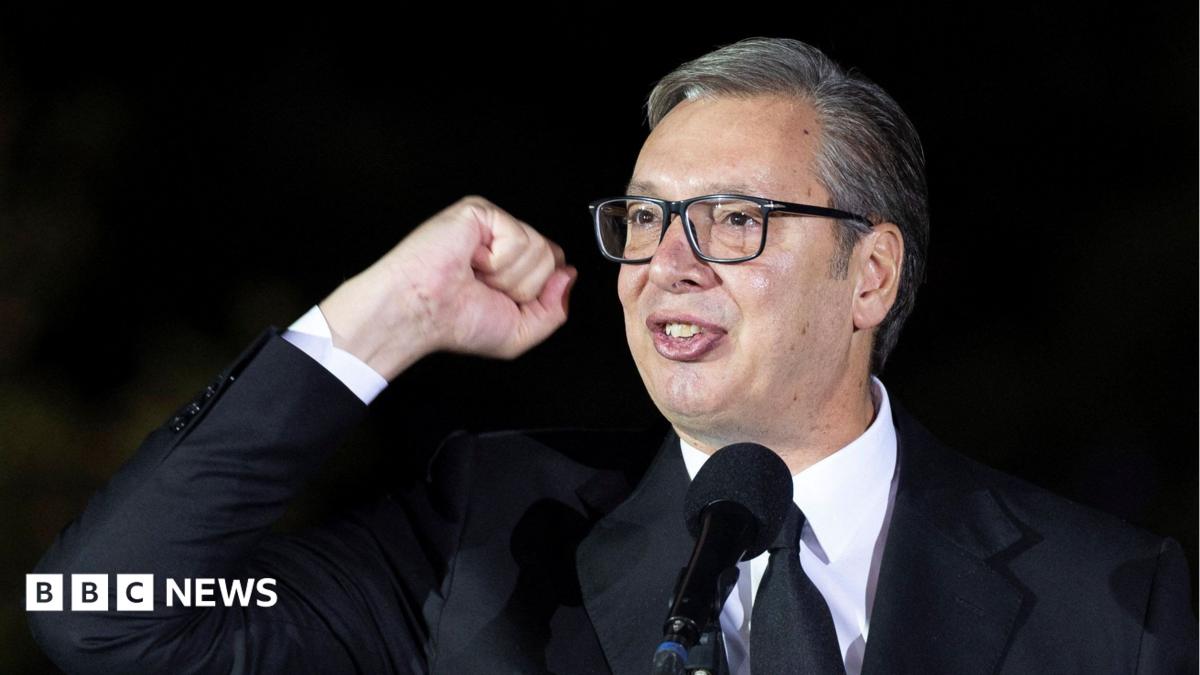
Serbia's long-serving president, Aleksandar Vučić, has resigned from office, a decision that follows more than a year of sustained anti-government demonstrations and mounting public frustration over corruption allegations. He made the announcement while speaking to supporters gathered outside the presidential building in Belgrade, the capital, framing his nine years in power as a period in which his administration had safeguarded peace and stability in the Balkan nation.
The resignation did not come as a complete surprise. Vučić had signalled as early as June that he intended to step down, and he is now running as his party's candidate for prime minister in parliamentary elections scheduled for late October. Serbia's constitution prevents him from seeking a third term as president, meaning that even before his formal resignation, his time in the country's highest office was constitutionally limited.
The political upheaval traces back to November 2024, when a canopy at the railway station in Novi Sad collapsed and killed 16 people. The tragedy became a rallying point for widespread anger. The station's renovation had been promoted as a showcase of national progress, and Vučić had publicly tied himself closely to the project. For many Serbians, the deaths exposed what they saw as years of negligent governance and corner-cutting under Vučić's Progressive Party.
What began as grief-driven outrage soon widened into a broader movement. Students, teachers, factory workers and farmers joined demonstrations, forming a coalition of protesters that cut across Serbia's social and economic divides. The scale of the unrest was unprecedented in recent Serbian history, with one rally in Belgrade in March 2025 drawing an estimated 325,000 people, described at the time as the largest demonstration the country had ever seen.
The government attempted to calm the situation through a series of resignations by officials connected to the railway disaster and the wider corruption allegations. Those concessions failed to satisfy protesters, who continued to take to the streets throughout the summer. The mood hardened further after accusations of police brutality emerged, with clashes between demonstrators and riot police in Belgrade in late June and the torching of ruling party offices in August 2025.
Vučić's opponents argue that the Novi Sad collapse was not an isolated administrative failure but a symptom of a system in which political loyalty and profit have too often been placed ahead of public safety. Supporters of the president, by contrast, maintain that his governments delivered economic growth, attracted foreign investment and kept Serbia stable in a volatile region. The divide between those two readings of his legacy now forms the fault line of the coming election campaign.
Under Serbia's constitution, a presidential election must be held within three months of a president's resignation. Vučić has indicated that the vote will take place roughly a month after the snap parliamentary election in late October, a contest his party called in response to protest demands that included early elections. The result of that sequencing is that Serbian voters will go to the polls twice before the end of the year, first to choose a new parliament and then to choose a new head of state.
Until a new president is elected, parliamentary speaker Ana Brnabić, a fellow Progressive Party member and a former prime minister, will serve as interim president. The arrangement keeps the party's grip on the formal levers of state power intact during the transition, even as Vučić himself moves from the presidency toward a possible return as prime minister.
Among Vučić's final acts in office was the use of his constitutional pardon powers to release 49 people, according to the Serbian public broadcaster RTS. The group reportedly included 23 students as well as party loyalists suspected of offences connected to what Vučić described as the "terrible events we have gone through over the past year and a half." The pardons are likely to be heavily criticised by the opposition, which has accused the authorities of selectively prosecuting protesters while shielding government supporters.
The parliamentary race will pit Vučić's Progressive Party against two main challengers: a student-led anti-corruption movement called Students Win, and a coalition of pro-Western opposition parties operating under the name European Serbia. The emergence of the student movement as an electoral force is notable, given that it grew out of the same protest wave that began with the Novi Sad disaster and has since become one of the most organised expressions of public dissent in the country.
Vučić has been a dominant figure in Serbian politics for more than a decade. He became prime minister in 2014 and won his first presidential term in 2017. Throughout his time in office, he has pursued a balancing act in foreign policy, publicly stating his desire for Serbia to join the European Union while also cultivating close ties with Russia and encouraging Chinese investment in the country. That ambiguous positioning has drawn criticism from pro-European voters and praise from those who favour closer relations with Moscow and Beijing.
Whether Vučić remains at the centre of Serbian politics now depends on the outcome of the October parliamentary election. If his party prevails and he becomes prime minister, he would retain significant executive authority even after leaving the presidency. If the opposition and the student-led movement make substantial gains, Serbia could be set on a markedly different course, with consequences for its EU accession path, its relations with Russia and the wider balance of power in the Balkans.
For now, the country enters an unusual dual-election period with an interim president, a caretaker government structure and a protest movement that has transformed itself into an electoral challenger. The coming months will test whether Serbia's institutions can manage two national votes in quick succession, and whether the anger that brought hundreds of thousands into the streets can be channelled into a durable political alternative.
What's Your Reaction?
 Like
0
 Dislike
0
 Love
0
 Funny
0
 Wow
0
 Sad
0
 Angry
0

Reporter Senior. Meliput dinamika politik nasional, kebijakan publik, dan isu parlemen selama 8 tahun. Alumni FISIP UI.


Comments (0)